Search This Blog

Showing posts with label bureaucracy. Show all posts

Thursday, July 23, 2026

IACC Extends Comment Period

 In The Politics of Autism, I discuss the Interagency Autism Coordinating Committee and research priorities.

Ella Ruder at Becker's Behavioral Health:
The Interagency Autism Coordinating Committee has extended the public comment period for its working draft of the 2026–2028 IACC Strategic Plan to 30 days after autism advocacy organizations and other stakeholders requested additional time to review the proposal.

The committee said the extension responds to outreach from autism organizations and other stakeholders seeking more time to review and engage with the draft. According to Sylvia Fogel, MD, IACC chair, a 90-day review period requested by some advocates could “delay the committee’s timely fulfillment of its responsibilities under the Autism CARES Act of 2024.” Comments should be submitted by Aug. 20 at 5 p.m. ET.

An IACC meeting currently scheduled for July 31 is expected to be rescheduled, with a new date and other details to be announced.

Before the extension was granted, several national autism advocacy organizations issued a joint statement criticizing the original public comment process, saying the review period was too short for a document exceeding 300 pages and urging HHS and the IACC to allow additional time for meaningful public input.

Wednesday, July 22, 2026

IACC Comment Period

 In The Politics of Autism, I discuss the Interagency Autism Coordinating Committee and research priorities.

From the Profound Autism Alliance:

This week, the Interagency Autism Coordinating Committee (IACC), the federal committee that shapes national autism research and policy priorities, released a 336-page draft Strategic Plan for 2026–2028.


Public comment closes this Friday, July 24 at 5 PM ET.


The plan itself names an important reality: "when support is delayed or difficult to access, the burden doesn't disappear, it shifts to the family." A four-day window on a 336-page document places that same weight on caregivers who are already carrying a full load.

We're asking the IACC to extend the comment period by 90 days. This would provide an opportunity for caregivers, self-advocates, and professionals to read this fully and respond with the care it deserves.


Here's how you can help:


Submit a public comment requesting that the public comment on the strategic plan be extended to 90 days. This is a reasonable amount of time and reflects the realities of caregivers of people with profound autism who deserve an opportunity to engage. Adding a line or two about your personal experiences as a caregiver if applicable would make this request even more compelling.


The IACC requests the public comment be emailed to

IACCPublicInquiries@mail.nih.gov.

Please forward this to others, asking them to send a quick email too. The more voices weighing in on this, the better. Thank you for taking time to take action.


Monday, December 1, 2025

Breaking Up Collaboration in Special Ed Programs

In The Politics of Autism, I write about social servicesspecial education, and the Individuals with Disabilities Education Act (IDEA).  The original name of the legislation was the Education for All Handicapped Children Act.

Trump and Vought are now accomplishing their goal of ravaging the law. Instead of shifting it to a block grant, they have tried firing most of the staff who enforce it. 

Coordination has always been a problem for disability programs.  These changes will make it worse.

 Mackenzie Wilkes at Politico:

Education Secretary Linda McMahon has already launched plans to transfer her department’s elementary, technical and international programs to other agencies. So far, she hasn’t moved to offload the special education programs, which are required by a 50-year-old federal law. But officials have declined to rule out transferring them in the future. That worries advocates who say the move could undermine the federal government’s ability to guarantee children with disabilities get the education they are legally entitled to receive.

“While everything isn’t perfect, and many families still struggle to obtain what their children need, we’ve made huge progress in the last 50 years, and we can’t allow the clock to be turned back,” said Stephanie Smith Lee, who served as director of the Office of Special Education Programs under former President George W. Bush.

...

But states would still be responsible for following the law even if they can’t get as much help from a special education office that moves to another agency that lacks expertise or has to operate with fewer employees.

“Individualized education plans aren’t going away, so the impact on students and local schools is not going to be felt today or tomorrow, but this is going to be a definite eroding of our entire system of special education,” said Smith Lee, policy and advocacy co-director at the National Down Syndrome Congress.

And siloing off the special education office from the Office of Civil Rights, which investigates discrimination complaints, and from the agency’s K-12 offices, whose administration was moved to the Labor Department as part of the new plans, could dampen coordination. Smith Lee said it’s taken years to get the department’s K-12 offices focused on general education and the department’s special education offices to work together.

“This is breaking up the collaboration that has taken decades to achieve,” Smith Lee said.


Tuesday, March 5, 2024

Strengthening Coordination of Autism Research and Support Services

Uncertainty and complexity are major themes of The Politics of Autism.

Political scientist Steven M. Teles has coined a term that comes in handy for any discussion of autism services: kludgeocracy. In computing, a “kludge” is a system consisting of ill- matched elements or parts made for other applications. Engineers patch it together and hook it up to an existing system in order to solve a new problem. Kludges are complicated, hard to understand, and subject to crashes. Teles says that this description fits much of American public policy: “From the mind-numbing complexity of the health care system … our Byzantine system of funding higher education, and our bewildering federal-state system of governing everything from the welfare state to environmental regulation, America has chosen more indirect and incoherent policy mechanisms than any comparable country.
US Government Accountability Office
Autism Research and Support Services:
Federal Interagency Coordination and Monitoring Efforts Could Be Further Strengthened
GAO-24-106446
Published: Feb 28, 2024. Publicly Released: Feb 28, 2024.


The National Institutes of Health (NIH), within the Department of Health and Human Services (HHS), plays a key role in supporting the coordination of autism activities across 18 federal agencies, including the Departments of Defense and Education. For example, NIH manages the Interagency Autism Coordination Committee (IACC), a federal advisory committee composed of federal agencies and public members, through its Office of National Autism Coordination.

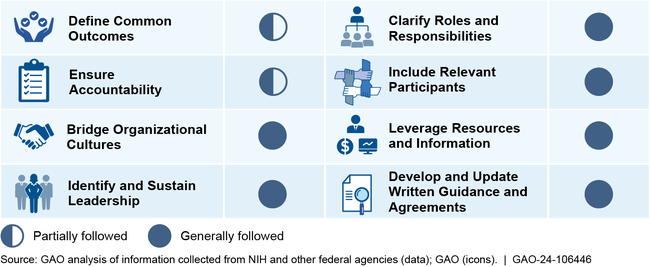
GAO found that NIH, in support of the IACC and the National Autism Coordinator, generally followed six of eight key collaboration practices that GAO's prior work has shown can be effective in enhancing and sustaining interagency collaborative efforts among federal entities. For example, NIH has taken steps to bridge organizational cultures by convening meetings of the IACC.

Assessment of the National Institutes of Health's (NIH) Role in Supporting Coordination of Federal Autism Activities Compared with Leading Practices for Interagency Coordination

Assessment of the National Institutes of Health's (NIH) Role in Supporting Coordination of Federal Autism Activities Compared with Leading Practices for Interagency Coordination

GAO found NIH efforts to support interagency coordination partially followed the remaining two collaboration practices, including ensuring accountability. For example, although IACC strategic plans describe high-level progress made toward autism activities, they generally have not described how progress made relates to goals. NIH officials stated their progress tracking approach is driven by established processes, some of which are required by law. Establishing a clear process for tracking progress would help to determine progress toward IACC's goals and that interagency efforts are effective.

NIH helps ensure federally funded autism activities are not unnecessarily duplicative through various activities, such as holding meetings and through data and information reviews. However, GAO found the processes used by NIH's Office of National Autism Coordination were not documented. For example, NIH does not have written procedures describing the steps these staff should follow when reviewing federal autism research information for potential duplication. Although NIH officials stated that they believe current monitoring processes are sufficient, documenting these procedures will help ensure they are properly designed and executed to provide reasonable assurance that duplication is not occurring.

Tuesday, January 16, 2024

Policy Priorities and Navigation

 In The Politics of AutismI discuss the difficulties facing families of newly-diagnosed children.

Patricia Wright at Psychology Today:

The federal government has increased attention to the needs of the autism community for the past couple of decades. But there is much more to do as these issues remain:

  • High rates of underemployment and unemployment for autistic individuals
  •  Families and caregivers report tremendous stress and lack of access to services and supports
  • Students with autism underperform in school
  • Community service providers struggle to attract and retain talent
  • The deeply rooted stigma and stereotypes about autistic people are pervasive

Addressing access to care is a reasonable first step to promoting well-being. The burden of accessing care is tremendous for families. Indeed, family navigation is the first service noted in the Report to Congress.

To repeat from a December post:

 The U.S. Department of Health and Human Services (HHS) has released the 2022 Report to Congress on Supportive Services for Individuals with Autism. This report was requested by the U.S. House of Representatives Committee on Appropriations in House Report 117-96.

From pp. 76-77 of the report:
The complexity of the supportive services landscape points to one important area of need: family navigation supports to help families identify and coordinatecare among the various providers, service types, and forms of coverage. Services are often fragmented among many different providers and in some cases, families may not be aware of the types of supports that are available to them. Families who are already facing significant functional impairments and disabilityassociated life stressors may have to shoulder additional burden of navigating complicated gatekeeping requirements before even identifying whether appropriate supports and services are actually available in their community. In some instances, providers may receive conflicting guidance on whether or not they are able to serve a person with autism, or if they should be referred to other services specific for those with DD. As a result, autistic individuals’ co-occurring conditions, such as mental health conditions, may go unaddressed. Family navigation services have been found to be effective in improving access and adherence to services over time,371 but tools designed specifically for families following a diagnosis of autism are currently limited.372 To be offered starting in October 2022, a new Medicaid health home benefit for children with medically complex conditions is a step towards meeting this need. This benefit will help state Medicaid programs provide person-centered care management, care coordination, and patient and family support. Fragmentation of the service system may be further improved by enhanced “wrap-around” or “continuum of care” services. Wrap-around services refer to the practice of providing all the various services that anindividual may need over time across different areas in their life (e.g., home, school, community). Wrap-around service delivery is a team-based, collaborative case management approach where a number of professionals work together to provide a holistic program of supports. This coordinated approach can help to improve outcomes for individuals and their families.373,374

Saturday, December 30, 2023

Complexity of Services

Uncertainty and complexity are major themes of The Politics of Autism.

Political scientist Steven M. Teles has coined a term that comes in handy for any discussion of autism services: kludgeocracy. In computing, a “kludge” is a system consisting of ill- matched elements or parts made for other applications. Engineers patch it together and hook it up to an existing system in order to solve a new problem. Kludges are complicated, hard to understand, and subject to crashes. Teles says that this description fits much of American public policy: “From the mind-numbing complexity of the health care system … our Byzantine system of funding higher education, and our bewildering federal-state system of governing everything from the welfare state to environmental regulation, America has chosen more indirect and incoherent policy mechanisms than any comparable country."
The U.S. Department of Health and Human Services (HHS) has released the 2022 Report to Congress on Supportive Services for Individuals with Autism. This report was requested by the U.S. House of Representatives Committee on Appropriations in House Report 117-96.
From pp. 76-77 of the report:
The complexity of the supportive services landscape points to one important area of need: family navigation supports to help families identify and coordinatecare among the various providers, service types, and forms of coverage. Services are often fragmented among many different providers and in some cases, families may not be aware of the types of supports that are available to them. Families who are already facing significant functional impairments and disabilityassociated life stressors may have to shoulder additional burden of navigating complicated gatekeeping requirements before even identifying whether appropriate supports and services are actually available in their community. In some instances, providers may receive conflicting guidance on whether or not they are able to serve a person with autism, or if they should be referred to other services specific for those with DD. As a result, autistic individuals’ co-occurring conditions, such as mental health conditions, may go unaddressed. Family navigation services have been found to be effective in improving access and adherence to services over time,371 but tools designed specifically for families following a diagnosis of autism are currently limited.372 To be offered starting in October 2022, a new Medicaid health home benefit for children with medically complex conditions is a step towards meeting this need. This benefit will help state Medicaid programs provide person-centered care management, care coordination, and patient and family support. Fragmentation of the service system may be further improved by enhanced “wrap-around” or “continuum of care” services. Wrap-around services refer to the practice of providing all the various services that anindividual may need over time across different areas in their life (e.g., home, school, community). Wrap-around service delivery is a team-based, collaborative case management approach where a number of professionals work together to provide a holistic program of supports. This coordinated approach can help to improve outcomes for individuals and their families.373,374

Sunday, December 24, 2023

Caregivers of Autistic Adults Face Red Tape

 In The Politics of Autism, I write:

When disabled people reach their 22d birthday, they no longer qualify for services under IDEA. ... People in the disability community refer to this point in life as “the cliff.” Once autistic people go over the cliff, they have a hard time getting services such as job placement, vocational training, and assistive technology. IDEA entitles students to transition planning services during high school, but afterwards, they have to apply as adults and establish eligibility for state and federal help. One study found that 39 percent of young autistic adults received no service at all, and most of the rest got severely limited services.
Samara M. Wolpe, Amanda R. Johnson, Sunny Kim have an article at The Journal of Autism and Developmental Disorders titled "Navigating the Transition to Adulthood: Insights from Caregivers of Autistic Individuals." They conducted ten semi-structured interviews with caregivers of autistic young adults focused on transition to adulthood.
The difficulty of locating appropriate services for their child was a frequently expressed sentiment among participants. Many participants expressed the sentiment that, even when they found a seemingly suitable service that they thought would benefit their child, there was so much bureaucratic red tape that they were unable to obtain the service in time to use it and spent much of their free time fighting with service coordinators or attempting to get through to service professionals. One parent best summarized the experiences of wading through the restrictions put in place to limit access to services:
It's a constant battle with Regional Center to get anything that you know benefits your kid. It’s so hard because they control everything, so you have to be polite… it's this constant churning of emotion because you want more for your kid and then you also understand why it's hard to get it, so there's this constant feeling like you're always in battle.” (Natalie)
Additionally, parents expressed frustration with navigating the Regional Center’s vendoring system. One participant stated:
“It’s so exhausting for the families, and then there's so much red tape… For example, they publish their list of vendors, but it's alphabetized, and for consumers of all age ranges for example, birth to 60 … well that's not helpful! I don’t need to know the name of the vendor. I need to know which vendors offer Adult Services, and what services they offer.” (Natalie)
Even those parents and caregivers who are able to get in touch with Regional Center coordinators and add themselves to the waitlist reported difficulty actually obtaining services. One parent (Liza) explained, “He's still living at home and we're in the process of trying to get him into supportive living, you know, we have an agency that agreed to work with us, but everybody's having a really hard time finding staff now so they're long waiting lists.” Even when services have been identified and the organization has agreed to provide the service, families still recalled waiting inordinate amounts of time to have the promised service come to fruition.

Wednesday, December 6, 2023

Kludgeocracy and Employment

Uncertainty and complexity are major themes of The Politics of Autism.

Political scientist Steven M. Teles has coined a term that comes in handy for any discussion of autism services: kludgeocracy. In computing, a “kludge” is a system consisting of ill- matched elements or parts made for other applications. Engineers patch it together and hook it up to an existing system in order to solve a new problem. Kludges are complicated, hard to understand, and subject to crashes. Teles says that this description fits much of American public policy: “From the mind-numbing complexity of the health care system … our Byzantine system of funding higher education, and our bewildering federal-state system of governing everything from the welfare state to environmental regulation, America has chosen more indirect and incoherent policy mechanisms than any comparable country."

 Marjorie Solomon and colleagues have a commentary at Autism Research titled "The challenges and promises of competitively employing autistic adults in the United States." 

[In] the U.S., IPS {Individualized Placement and Support] traditionally is delivered within states' mental health versus DD service systems, and this raises important questions related to its implementation with fidelity in autistic individuals served by the DD system. First, we are finding that in the California system of Regional Centers (state centers to provide services for people with disabilities), a single service coordinator takes responsibility for all service coordination (e.g., housing, independent living, transportation and mental health) in addition to supported employment for their large caseloads. Service delivery in general may be less integrated than it is in the mental health system, where it is customary for large teams working with the client on their employment, independent living, mental health, and general case coordination, to meet regularly to discuss client services. This is likely because in the mental health system, employment is considered a critical component of mental health. Employment is not at the core of what Regional Center coordinators do, and they may be unable to even stay abreast of all the employment programs and services available to their clients, given their many responsibilities. It also bears mention that, the improved integration of vocational and mental health services for autistic workers could be very useful given the high percentage of autistic individuals with mental health issues (Rast et al., 2021).

Surprisingly, upon initiating the Project we anticipated that adapting IPS for the autistic adults would be our largest challenge. Instead, we are finding that service system issues are more critical and although service systems differ by county, state, and locality, we believe that integration issues are common to them all. While both efforts may be costly and require systems change, as stated in the opening section of this Commentary, helping persons with autism to achieve lasting CIE is perhaps the most cost-effective, and socially beneficial way to improve outcomes for them, so it remains a worthy goal with potential synergistic outcomes. It is still early days, but we are hopeful that we are building a partnership within our local DD service community that can help break down barriers between agencies, engage in coordinated problem solving, and think creatively about resource and funding streams and thereby co-create a more integrated, comprehensive, and responsive supported employment system for all California adults.

Friday, November 17, 2023

Advice to Autism Parents

 In The Politics of Autism, I write that autism parents must be advocates for their children, who in turn must grow up to be advocates for themselves.

Very quickly, parents will learn that there is no one-stop shopping in the autism world.  Various providers offer various services, with various levels of support from the government, which largely depends on where one lives. Wherever they turn, parents run into red tape.  “Trying to obtain services for a special-needs child is a never-ending process,” one mother told a Tennessee journalist. “Taking care of the children is much simpler than taking care of the paperwork.”

Paolo Zialcita at Colorado Public Radio:

As most Americans will tell you, navigating the healthcare system is hard. For parents of children with disabilities, it can be even harder. 

Jenee Allen, the mother of autistic 5-year-old Beckett, said navigating Health First Colorado, the state’s Medicaid system, is like stumbling in the dark.

“If it was more streamlined, we wouldn't spend so many hours just trying to figure this out for our kiddos,” Allen said.

Allen and other parents said there’s no clear guide to getting pediatric disability services through the state’s Medicaid program. While large, engaged parent communities exist online, Allen said, every parent seems to have a different experience.

“I feel like I understand the disability process now,” she said. “However, if you put the information out there, even on the autism groups I'm on, everyone will kind of have a different answer and so you wonder if there's multiple pathways to get there and you just found a pathway.”

Multiple parents who spoke with CPR News agreed. But they all identified a few things that all parents can do to understand the system and get their children the care they need.

Allen’s tip was simple: Be a diligent note taker.

“Keep all your records. Write down who you talk to,” she said. “If you find a phone number that you connect to, only call that number and keep records of all your emails and all your phone calls so that no one can … say something didn't happen.”

Saturday, January 21, 2023

Coordination

In The Politics of Autism, I discuss the policy paradoxes of the issue.  I presented a paper titled "Autism and Accountability" at the 2020 Annual Meeting of the American Political Science Association.  

The abstract:
We expect policymakers to be accountable to the public for their handling of public issues. The case of autism presents fundamental difficulties. First, the boundaries of autism have shifted over the years, and they remain contested. Second, there are multiple publics with radically different views about the character of the issue. Third, there is no single “autism policy.” Instead, the issue spans multiple issue areas where responsibility is diffused and the connections between policy outputs and outcomes are difficult to establish. The paper ends with modest recommendations for improving our knowledge base.

Full text:  here: https://www.scribd.com/document/475658529/Autism-and-Accountability

From the 2023 IACC Draft Strategic Plan: 

Autism- and disability-related programs exist at numerous federal agencies to address a wide variety of issues ranging from health, research, disability services, justice, housing, employment, transportation, military needs, communication, and other diverse issues. Given the large size and distributed nature of federal activities, the U.S. Congress and federal agencies have also put in place several structures to coordinate federal activities around disabilities and, in some cases, autism specifically. These coordination structures foster interdepartmental and interagency communication and collaboration on issues that are essential to autism and disability-related federal activities.
The Interagency Autism Coordinating Committee (IACC) is a foundational part of the federal coordination structure for autism that was created under the Children’s Health Act of 2000 (Public Law106-310), reconstituted under the Combating Autism Act of 2006 (CAA; Public Law 109-416), and most recently reauthorized under the Autism Collaboration, Accountability, Research, Education, and Support (CARES) Act of 2019 (Public Law 116-60). It is the only autism-specific interagency federal advisory committee in the federal government. The Autism CARES Act of 2019 outlines requirements for the membership of the IACC, which includes officials representing an array of federal departments and agencies and public members who represent a variety of perspectives within the autism community. Collectively the committee provides advice to the HHS Secretary concerning issues related to autism and coordinates federal autism efforts. 
In 2014, Congress added a new component to the federal coordination structure by requiring in the Autism CARES Act of 2014 the designation of a National Autism Coordinator (NAC), “an existing official within the Department of Health and Human Services to oversee, in consultation with the Secretaries of Defense and Education, national ASD research, services, and support activities.” The duties of the NAC include coordinating and implementing federal autism research, services, and support activities, taking into account the IACC Strategic Plan, as well as ensuring that federal ASD efforts are not unnecessarily duplicative. The NAC accomplishes cross-agency and cross-departmental coordination in part through the activity of the Federal Interagency Workgroup on Autism (FIWA), an all-federal working group of representatives from multiple federal departments and agencies, most of which are also represented on the IACC. The NAC has led the development of several comprehensive reports to Congress on federal autism activities and other projects requiring cross-agency collaboration.
A third layer of interagency and intra-agency coordination is composed of a series of federal advisory committees and coordinating committees that work on specific issues related to autism and disabilities. At the National Institutes of Health (NIH), the NIH Autism Coordinating Committee coordinates NIH intra-agency efforts on autism research. Other advisory committees and agencies across the federal government that contribute to federal coordination on issues of relevance to autism and disabilities include:
  • 2021-2023 IACC Strategic Plan for Autism Research, Services, and Policy Draft January 2023 11
  • Recognize, Assist, Include, Support, and Engage (RAISE) Family Caregivers Act Council (family caregiver issues)
  • Federal Partners in Transition (youth with disabilities)
  • National Council on Disability (a federal agency for disability policy)
  • Interdepartmental Serious Mental Illness Coordinating Committee (mental illnesses that may cooccur with autism)
  • National Advisory Committee on Individuals with Disabilities and Disasters (disaster preparedness and response)
  • Advisory Committee on Accessible Air Transportation - ACCESS Advisory Committee (disabilities and air transportation).

 Each of these advisory committees focuses on specific topics related to disabilities, which are informative to the efforts of the IACC to coordinate autism activities.

Tuesday, December 6, 2022

The Cost of Red Tape

Uncertainty and complexity are major themes of The Politics of Autism.

Political scientist Steven M. Teles has coined a term that comes in handy for any discussion of autism services: kludgeocracy. In computing, a “kludge” is a system consisting of ill- matched elements or parts made for other applications. Engineers patch it together and hook it up to an existing system in order to solve a new problem. Kludges are complicated, hard to understand, and subject to crashes. Teles says that this description fits much of American public policy: “From the mind-numbing complexity of the health care system … our Byzantine system of funding higher education, and our bewildering federal-state system of governing everything from the welfare state to environmental regulation, America has chosen more indirect and incoherent policy mechanisms than any comparable country."

 Steven M. Teles, “Kludgeocracy: The American Way of Policy,” New America Foundation, December 2012. Online: https://static.newamerica.org/attachments/4209-kludgeocracy-the-american-way-of-policy/Teles_Steven_Kludgeocracy_NAF_Dec2012.d8a805aa40e34bca9e2fecb018a3dcb0.pdf


 Justin Schweitzer, Emily DiMatteo, and Nick Buffie at the Center for American Progress:
Just as it is expensive to be poor, it is expensive to be disabled. Households with disabled adults need 28 percent more income, on average, to achieve the same standard of living as adults without a disability. Moreover, the added costs of medicines and medical procedures, accessibility accommodations in homes and transportation, and many other regular expenses are exacerbated by the fact that disabled workers—if they are able to work and are employed—earn just 74 cents for every dollar earned by their nondisabled counterparts; Black and Hispanic disabled workers, in particular, earn 60 and 61 cents, respectively, for every dollar earned by nondisabled, full-time white workers. The extra cost of living for disabled people is often referred to as the “disability tax.”

Administrative burdens within programs intended to help people with disabilities add another dimension to the disability tax, often financially but also through additional drains on disabled people’s time, energy, and physical and mental well-being. Broadly speaking, experts have identified three categories of costs that administrative burdens impose: 
  1. Learning costs derive from the complexity of these systems and a lack of public education and awareness about a program’s existence, eligibility, benefits, and rules as well as how best to navigate the entire process.
  2. Psychological costs are the health impacts of the stress, stigma, and lack of autonomy that come with navigating these programs’ administrative processes.
  3. Compliance costs are all the time, energy, and money spent completing administrative requirements. These have also been referred to as the “time tax.”
The disability community often uses a metaphor called the “spoon theory,” coined by writer Christine Miserandino, to describe how people with chronic illness have limited energy to spend on daily tasks. This energy—symbolized by spoons—can vary on a given day depending on the individual’s medical condition and other variables. According to this metaphor, each activity uses up a spoon, forcing individuals to make difficult decisions about what activities, no matter how small, they can do. Specifically, administrative burdens often sap what little energy disabled people have, which can make it challenging for them to complete the rest of their daily responsibilities.
  1. .


Wednesday, December 30, 2020

The Mental Health of Autistic Children

The Politics of Autism discusses health care, and explains that autism services can be complicated, creating difficulties for autistic people and their families

Connor M. Kerns, Jessica E. Rast, and Paul T. Shattuck have an article at The Journal of Clinical Psychiatry titled "Prevalence and Correlates of Caregiver-Reported Mental Health Conditions in Youth With Autism Spectrum Disorder in the United States."  The abstract:

Objective: Mental health conditions (MHCs) have substantial personal and economic costs for children with autism spectrum disorder (ASD); yet, a current population-based prevalence estimate is lacking.

Methods: This study included 42,283 caregivers of children (ages 3–17 years) from the 2016 population-based National Survey of Children’s Health. Prevalence and correlates of caregiver-reported MHCs were estimated in children with ASD and compared with those in children with intellectual disability (ID), children with special health care needs (SHCN), and “all others” (no ASD, SHCN, or ID).

Results: 77.7% of children with ASD had ≥ 1 MHC; 49.1% had ≥ 2. The most common MHCs were behavior/conduct problem (60.8%), anxiety problem (39.5%), attention deficit disorder (ADD)/attention-deficit/hyperactivity disorder (ADHD) (48.4%), and depression (15.7%). Substance abuse was the only MHC less common in ASD. MHCs were more common in youth with ASD versus SHCN, “all other” youth, and those with ID. MHCs were common in ASD by ages 3–5 years (44.8% ≥ 1 condition) and increased with age (85.9% ≥ 1 condition, ages 12–17 years). Among children with ASD, girls had twice the odds of an anxiety problem, those with ID had 4 times the odds of behavior/conduct problem, and those with childhood adversity had greater odds of an anxiety problem (odds ratio [OR] = 2.66) and ADD/ADHD (OR = 1.99).

Conclusions: Caregiver-reported MHCs are prevalent in children with ASD in the US from a young age and characterize > 85% by adolescence. There is an outsized need for effective MHC assessment and treatment of these youth that demands expedient innovation in both MHC and developmental disability policy and practice.

At Healio, Joe Grimigna reports on the study:

Evidence-based assessment and treatment of [mental health conditions] in ASD should be used to reduce this demand by clarifying which children are most in need of and likely to benefit from available treatments,” Kerns and colleagues wrote. “Nonetheless, there is an incongruence between the ubiquity of [mental health conditions] in ASD and the disconnected disciplines and support systems for developmental disability and mental health that exist. Advances in research are likely to be realized only if steps are also taken to implement health care policies and training initiatives that support integrated developmental and mental health care going forward.”

Indeed, the fragmentation of the service system is a pervative problem for people with developmental disorders.


Wednesday, October 7, 2020

Fragmentation, Confusion, and Disability

Uncertainty and complexity are major themes of The Politics of Autism.

Political scientist Steven M. Teles has coined a term that comes in handy for any discussion of autism services: kludgeocracy. In computing, a “kludge” is a system consisting of ill- matched elements or parts made for other applications. Engineers patch it together and hook it up to an existing system in order to solve a new problem. Kludges are complicated, hard to understand, and subject to crashes. Teles says that this description fits much of American public policy: “From the mind-numbing complexity of the health care system … our Byzantine system of funding higher education, and our bewildering federal-state system of governing everything from the welfare state to environmental regulation, America has chosen more indirect and incoherent policy mechanisms than any comparable country."

 Steven M. Teles, “Kludgeocracy: The American Way of Policy,” New America Foundation, December 2012. Online: https://static.newamerica.org/attachments/4209-kludgeocracy-the-american-way-of-policy/Teles_Steven_Kludgeocracy_NAF_Dec2012.d8a805aa40e34bca9e2fecb018a3dcb0.pdf


Is disability policy health policy? Is it education policy? Is it labor-force policy? Or is it social welfare? From the perspective of a family, these distinctions make little sense. I have subsequently found they are similarly confusing to congressional staffers. For children with disabilities, disability policy is education policy, and we were clueless. I was like Alice in Wonderland, lost in a place where I understood the words people spoke, but they made no sense to me.

Services for disabled children are more fragmented and confusing than anything I had ever run into in health care. Your health insurance covers some things, typically those things that prevent and treat the disease that causes your disability. The things you need to work, go to school, or function in your daily life as a consequence of your disability are generally not covered by health insurance. Instead, you are in a whole new world. If you are birth to age 21 (in some states older) and need services and technology to go to school, they might be covered as part of special education, under IDEA. If you are age 18–65 and need them to be able to work, they might be covered by your state vocational rehabilitation agency. If you are over 65, your state or local agency for the aging might pay for something that is needed to maintain your independence and stay out of a nursing home. If medical insurance, educational programs, vocational rehabilitation, social services, or aging agencies won’t pay for what you need, maybe you can pay for it yourself, get a grant, or try crowdfunding.
...

The core problem goes back to that decision by Congress in the 1970s to place much of the responsibility for providing disability services to school-age children on schools. It makes a certain amount of sense. Not all kids have health insurance. Children spend the majority of their waking hours in school. Public schools can provide universal access. They might not have all of the expertise one would need to assess and manage all children with all kinds of disabilities, but they can receive federal and state funding to support specialized instruction, related services, and assistive technology.

But not all schools are created equal. According to the US census, in fiscal year 2016 New York spent $22,366 per pupil and Utah spent $6,953. Where we live, at the border of Kansas and Missouri, the states spent $9,960 and $10,313, respectively. Schools face funding shortfalls along with challenges finding experts for less common disabilities. And Congress has never met its promise to fund the educational mandate of special education at 40 percent of the “excess” costs of educating special education children. In March 2019 Rep. Jared Huffman (D-CA) introduced the IDEA Full Funding Act in the House, but there has been no further action since then.

In my role as a special-needs mom, everyone told me that my job was to advocate for my child. Of course I would advocate for my child. Who wouldn’t? The better question is, who cannot?

Navigating the fragmentation of services, the complexity of eligibility rules, and the sometimes adversarial processes of determining appropriateness of services is more manageable for those with time, money, education, and expertise. This means that the likelihood that a child will receive the medical, educational, and rehabilitative services and equipment they need to improve their functioning and start their education on a level playing field can depend on their parents’ situation and supports. This is, of course, true of our medical and educational systems as a whole, but for disabled kids and their parents, the stakes are even higher.

Friday, September 11, 2020

Autism and Accountability

In The Politics of Autism, I discuss the policy paradoxes of the issue.  Today I am presenting a paper titled "Autism and Accountability" at the 2020 Annual Meeting of the American Political Science Association.  
The abstract:
We expect policymakers to be accountable to the public for their handling of public issues. The case of autism presents fundamental difficulties. First, the boundaries of autism have shifted over the years, and they remain contested. Second, there are multiple publics with radically different views about the character of the issue. Third, there is no single “autism policy.” Instead, the issue spans multiple issue areas where responsibility is diffused and the connections between policy outputs and outcomes are difficult to establish. The paper ends with modest recommendations for improving our knowledge base.

Full text:  here: https://www.scribd.com/document/475658529/Autism-and-Accountability

Thursday, July 30, 2020

Conflict Over Liability

In The Politics of Autism, I write about IEPs and FAPE. The Supreme Court ruled in Endrew F. v. Douglas County School District that the Individuals with Disabilities Education Act (IDEA) requires public schools to provide heightened educational benefits to students with disabilities.


Corey Mitchell at Education Week:
In a joint report issued this month by AASA, the School Superintendents Association; the National School Boards Association, and the Association of Educational Service Agencies, the groups document growing concern among school leaders about IDEA-related litigation as schools struggle to fulfill students' individualized education programs during the pandemic.
...
More than four months have passed since schools began to shut down to curb the spread of coronavirus. Thus far, just a handful of federal lawsuits have been filed on behalf of students who receive special education services.
Anticipating the numbers will soon rise, the organizations behind the report wanted Congress to include the liability protections in the latest round of COVID-19 response legislation, but their request did not make the cut.
Lindsay Jones, the executive director of the National Center for Learning Disabilities, said the report and the related push for legislation was just another attempt to push for waivers that would let schools off the hook for their responsibility to educate all students.
"That report is a wolf in sheep's clothing," Jones said during the Education Writers Association's National Seminar earlier this month. "There's not much evidence that these types of lawsuits are coming forward."

Wednesday, June 17, 2020

Disability Employment in the Federal Government

In The Politics of Autism, I discuss the employment of adults with autism and other developmental disabilities. Many posts have discussed programs to provide them with training and experience.  

About 39 percent of individuals with disabilities hired during 2011 through 2017 stayed less than 1 year and approximately 60 percent stayed less than 2 years. Of the total individuals without disabilities hired during that same time period, approximately 43 percent stayed less than 1 year and approximately 60 percent stayed less than 2 years.
Although targeted data tracking and analyses could help pinpoint root causes contributing to departure rates, the Office of Personnel Management (OPM) does not track or report retention data on disabled employees. Doing so, and making such data available to agencies would facilitate more comprehensive analyses of the retention of employees with disabilities and identify needed improvements.
Officials at three agencies GAO examined—Department of Justice (DOJ), Small Business Administration (SBA), and Social Security Administration (SSA)—used various practices to increase hiring, such as training staff on Schedule A—a commonly used hiring authority to employ individuals with disabilities. However, the agencies neither assess the impact of training nor how it relates to contributing to performance goals of increasing the number of disabled hires.
Agencies are expected to track performance related to providing reasonable accommodations. The selected agencies reported having processes in place for receiving reasonable accommodations requests, but only SSA has procedures for obtaining feedback from employees after an accommodation is provided. Without such feedback, DOJ and SBA are limited in their ability to assess the continued effectiveness of reasonable accommodations provided to employees.
Why GAO Did This Study
Federal agencies are required to provide equal opportunity to qualified individuals with disabilities in all aspects of federal employment.
GAO was asked to examine agencies' efforts to increase the employment of individuals with disabilities. Among other objectives, this report examines: (1) the extent to which agencies met the 2010 federal goal to hire an additional 100,000 individuals with disabilities by 2015, and the retention rates of those employees between 2011 and 2017; and (2) practices selected agencies used to increase hiring and retention of individuals with disabilities.
GAO analyzed data and documents from OPM and interviewed agency officials. GAO interviewed officials from DOJ, SBA, and SSA about their efforts to enhance employment opportunities for disabled persons. GAO selected these three agencies because they represent a range of agency size and relatively high or low percentages of total employees with disabilities.
What GAO Recommends
GAO is making 6 recommendations: OPM should track and report retention data; DOJ, SBA, and SSA should assess training impacts; and DOJ and SBA should obtain employee feedback on reasonable accommodations. OPM and SSA concurred with GAO's recommendations; SBA concurred with one and partially concurred with one recommendation; DOJ did not agree or disagree with the recommendations. GAO continues to believe all recommendations are warranted.
For more information, contact Yvonne D. Jones at (202) 512-6806 or jonesy@gao.gov.

Bar chart showing number of persons with disabilities employed in full-time permanent positions and part-time or temporary positions

Monday, January 20, 2020

Transition Planning, Implementation, and Outcomes

In The Politics of Autism, I write:
When disabled people reach their 22d birthday, they no longer qualify for services under IDEA. ... People in the disability community refer to this point in life as “the cliff.” Once autistic people go over the cliff, they have a hard time getting services such as job placement, vocational training, and assistive technology. IDEA entitles students to transition planning services during high school, but afterwards, they have to apply as adults and establish eligibility for state and federal help. One study found that 39 percent of young autistic adults received no service at all, and most of the rest got severely limited services.
Claire Snell-Rood and colleagues have an article at Autism titled "Stakeholder Perspectives on Transition Planning, Implementation, and Outcomes for Students with Autism Spectrum Disorder."  The abstract:
Little is known about factors impacting poor post-school outcomes for transition-age students with autism spectrum disorder. Guided by the Exploration, Preparation, Implementation, and Sustainment implementation science framework, we sought to better understand the interdependent impacts of policy, organizational, provider, and individual factors that shape the transition planning process in schools, and the subsequent process through which transition plans are implemented as youth access services and gain employment after school. We conducted focus groups with individuals with autism spectrum disorder, parents, classroom teachers, school administrators, adult service providers, and state policymakers (10 groups, N = 40). Participants described how core tenets of the individualized education planning process were not reliably implemented: planning was characterized by inappropriate goal-setting, ineffective communication, and inadequate involvement of all decision-makers needed to inform planning. After school, youth struggled to access the services stipulated in their transition plans due to inadequate planning, overburdened services, and insufficient accountability for adult service providers. Finally, a failure to include appropriate skill-building and insufficient interagency and community relationships limited efforts to gain and maintain employment. Diverse stakeholder perspectives illuminate the need for implementation efforts to target the provider, organizational, and policy levels to improve transition outcomes for individuals with autism spectrum disorder.

Service fragmentation is a big problem. From the article:
Respondents noted that schools were good at setting the goals, but implementation was often the challenge, commented one parent: “I was looking [at the goals] and I was like ‘Wow, these are great IEP objectives. If only they would have done them!’” At present, schools are not accountable to reach the IEP goals— leading some school administrators and policymakers to wonder if a standard of measurement could influence the planning process. In addition, many parents and policymakers hoped for resources that could provide a map of the options available to young adults with ASD that would “guide you through the next ten years.” Such a resource could inform parents and individuals to be better prepared before IEP meetings, and could also enable networking and advocacy among families.
As outlined by EPIS, an EBP [evidence-based practice] requires identification and involvement of the key critical players acting conjointly within a set of interdisciplinary collaborative relationships to provide effective services. In contrast, as noted consistently by several participants above, transition planning lacked an inter-organizational structure to support and sustain collaborative planning and implementation of services. Key players tended to operate within separate and usually different organizational policies, goals, and priorities that supported their unique mandates (employment, academic achievement) with no clear process for creating and sustaining the kind of integrative planning and goals needed for successful transition.