Search This Blog

Showing posts with label abuse. Show all posts

Saturday, August 3, 2024

Slapper's Attorney Says He is Remorseful

 In The Politics of Autism, I write about the everyday struggles facing autistic people and their families, including violence against autistic children.

Matthew Rodriguez at KCBS-TV:

The attorney representing the man seen slapping an autistic boy at a Pacoima bus stop expressed his client's remorse after the arraignment for the misdemeanor case.

"He's extremely saddened and remorseful about the incident," attorney James Blatt said. "Had he had knowledge that this young boy was autistic or had some disability, he would have never approached him."

Blatt represents Scott Sakajian, who was caught on camera slapping 10-year-old Alfred Morales on July 9 after the child grabbed the hood ornament on his Mercedes-Benz. Morales' uncle Arturo Sanchez said the Sakajian made a U-turn and smacked the kid despite the family apologizing and saying Morales had autism.

"My client obviously should not have touched him under any circumstance," Blatt said. "My client has an acceptance of responsibility."

Sakajian did not appear at his arraignment because of threats, according to his attorney.

Fortunately, the community has rallied behind the child's family, which was homeless

Wednesday, July 17, 2024

Slapper Faces Charges

In The Politics of Autism, I write about the everyday struggles facing autistic people and their families, including violence against autistic children.

Vivian Chow at KTLA-TV:

The man who was caught on video slapping an autistic boy in Pacoima now faces [misdemeanor] criminal charges.

Scott Sakajian, a Sun Valley resident, was charged with willful cruelty to a child and battery on a person, according to the Los Angeles City Attorney’s Office.

Sakajian is accused of slapping Alfredo Morales, 10, after the boy touched the emblem on his Mercedes-Benz sedan on July 1.

Alfredo and his older sister, Claudia Morales, were crossing the street when the incident happened.

Sakajian made an immediate U-turn and followed the siblings to a bus stop. He stepped out, walked over to Alfredo who was sitting on a bench and slapped him.

His sister tried intervening and explained that Alfredo had autism, but the man still struck the boy.
Cell phone video of the confrontation went viral on social media, leaving community members outraged. The family also filed a police report.

Since the incident, Alfredo’s family, who is homeless and lives out of a broken truck, have been surrounded by an outpouring of support, with many saying they resonated with the story.

Saturday, July 13, 2024

Happy Postscript to a Disturbing Story

 In The Politics of Autism, I write about the everyday struggles facing autistic people and their families, including violence against autistic children.


Cell phone video of the confrontation went viral on social media, leaving community members outraged. A police report was also filed by the family.

Alfredo’s family is homeless and lives out of a broken truck at a Sun Valley park. The boy’s father, Miguel Morales, recently lost his job at a restaurant and is struggling to make ends meet.
Following a successful GoFundMe campaign and fundraising event, the Morales family said they were overwhelmed by the generosity and kindness of strangers.

On July 12, their broken pickup truck was towed to a local dealership, Airport Marina Ford, for a complete makeover.

“It’s situations like this when you see it and if there’s something you can do, it’s imperative to step up and do what you can,” said Dan Theroux, General Manager of Airport Marina Ford.

Alfredo and his sister ride the bus daily to make a food and grocery run for the family. They were taking their usual bus route on July 1 when the confrontation happened. Many community members resonated with the story and wanted to support the Morales family in any way they could.

...

A GoFundMe to help the Morales family can be found here.

Thursday, July 4, 2024

Mercedes Driver Slaps Autistic Kid

In The Politics of Autism, I write about the everyday struggles facing autistic people and their families, including violence against autistic children.

 Vivian Chow at KTLA-TV:

Cell phone video captured the moment a man slapped a child with autism for touching his car in Pacoima.

Alfredo Morales, 10, and his older sister were crossing the street at Laurel Canyon Boulevard and Osbourne Street when the boy reached out and touched the emblem on the man’s Mercedes-Benz sedan.

The man made an immediate U-turn and followed the two siblings to a bus stop where he pulled over. That’s when he walked over to Alfredo who was sitting on a bench and slapped him.

His sister, who was heard apologizing, tried to intervene, but the man was still able to strike the boy.

Friday, June 21, 2024

States Warn About Shrub Oak


Jennifer Smith Richards and Jodi S. Cohen at Pro Publica
Two more states are now scrutinizing a New York boarding school for autistic students and have warned school districts about troubling conditions there.

In Connecticut, education officials visited Shrub Oak International School and alerted districts that a state watchdog group determined there were ongoing “serious safety concerns” at the unregulated for-profit private school. Separately, the state’s Department of Developmental Services, which serves residents with intellectual disabilities and autism, has decided to stop sending more students there, an agency spokesperson told ProPublica. That agency described the facility as looking “more akin to a penal institution than an educational campus.

Washington education authorities, meanwhile, visited Shrub Oak this month and warned school districts to contact the state before considering enrolling students there. Officials are reviewing the state’s relationship with the school, officials told ProPublica.

The scrutiny of Shrub Oak comes as a ProPublica investigation published in May documented how parents and workers repeatedly asked New York authorities to investigate their concerns at the school to no avail.

Monday, June 17, 2024

Residential Treatment Facilities

In The Politics of Autism, I discuss the civil rights of people with autism and other disabilities

The Senate Finance Committee has issued a staff report titled Warehouses Of Neglect: How Taxpayers Are Funding Systemic Abuse In Youth Residential Treatment Facilities

 In July 2022, the Senate Committee on Finance (the Committee) and Senate Committee on Health, Education, Labor, and Pensions launched an investigation into allegations of abuse and neglect at Residential Treatment Facilities (RTFs) operated by four providers – Universal Health Services (UHS), Acadia Healthcare (Acadia), Devereux Advanced Behavioral Health (Devereux), and Vivant Behavioral Healthcare (Vivant). Since then, the Committee has engaged in a sweeping inquiry, reviewing over 25,000 pages of company productions, holding dozens of conversations with behavioral health stakeholders, and visiting RTFs on the ground.
Children should receive high-quality mental health services in the least-restrictive environment that meets their needs. Children are sent to RTFs by private and public actors, including parents and guardians, psychiatrists, child welfare agencies, the juvenile justice systems, and educational systems. The Committee has jurisdiction over many RTF placements funded through the Medicaid program and the Social Security Act’s child welfare provisions, through which RTF providers are paid per diems for the children in their care.
The RTF providers optimize per diems by filling large facilities to capacity and maximize profit by concurrently reducing the number and quality of staff in facilities. The Committee’s investigation found that children at RTFs suffer harms such as the risk of physical, sexual, and emotional abuse at the hands of staff and peers, improperly executed and overused restraint and seclusion, inadequate treatment and supervision, and non-homelike environments. These harms amount to acute safety concerns and have long-term effects, including suffering, trauma and even death. Taken together, the Committee finds that these harms are endemic to the RTF operating model.

...

 At its core, the RTF model typically optimizes profit over the wellbeing and safety of children. The rampant civil rights violations that children experience in RTFs are a direct consequence of the industry’s model. RTFs employ substandard labor practices and avoid investments in physical maintenance. So long as providers are allowed to proceed with business as usual, children will continue to suffer.

Last week, the committee held a hearing on the subject. 

Saturday, June 8, 2024

Autistic Teen Dies After Abuse by Jail Guards

In The Politics of Autism, I discuss interactions between the justice system and autistic people.

Erin Glynn and Laura A. Bischoff at the Columbus Dispatch:
Inside the Montgomery County Jail, guards taunted, belittled and threatened Isaiah Trammell, a 19-year-old who had autism spectrum disorder.

Deputies on the overnight shift told Trammell he was "ridiculous," "embarrassing" and "acting like an ass," surveillance video shows. Officers strapped Trammell into a restraint chair two separate times and threatened more time in the chair if he didn’t calm down.

Trammell couldn’t calm himself. He banged his head on the cell door, howled and repeatedly screamed “Let me out!”

Head-banging or other self-injury behaviors are more prevalent among people with autism. For Trammell, it was a dangerous coping mechanism that he continued during his brief time in jail.

“You remember how that restraint chair felt? Remember what the sergeant said? You're gonna go in for 10 hours next time you go in there. You want to do that?" one officer told Trammell, hours after he had been released from the chair the first time.

One officer said they couldn't use the restraint chair, prompting another to respond: “Just put the chair in front of his (expletive) cell so he stops. Give him a constant reminder.”

The restraint chair is supposed to be a last resort, only used in extreme circumstances and when the safety of the incarcerated person or others is in danger. Staff are supposed to use other interventions first, such as offering medication.

Trammell begged for his medications, a phone call and a blanket. No one heeded his pleas.

Less than 10 hours after entering jail, Dayton paramedics loaded Trammell into an ambulance.

He died three days later. The coroner ruled it a suicide − a ruling Trammell's mother wants changed.

Montgomery County Sheriff Rob Streck said Trammell shouldn’t have been in jail, given his mental health issues.

Trammell's case isn't an outlier. A USA TODAY Network Ohio investigation found that most of the 16,000 people in Ohio jails each day suffer from mental illness.

Wednesday, May 8, 2024

Shrub Oak

In The Politics of Autismdiscuss the use of restraint and seclusion, along with cases of abuse.  In America's complex system for dealing with autism, oversight is uneven, and people on the spectrum can fall through the cracks.

Jennifer Smith Richards and Jodi S. Cohen at Pro Publica report on  Shrub Oak International School, an expensive private residential facility in Westchester County, New York:

No state agency oversees Shrub Oak, which enrolls a range of students with autism including those whom other schools declined to serve and who have severe behavioral challenges and complex medical needs. The private, for-profit school chose not to seek approval from New York’s Education Department.

That means it has gotten no meaningful oversight and state officials have had no authority over the school — over who works there, whether money is spent properly and if the curriculum and services are appropriate for students with disabilities.

Even without New York’s approval, Shrub Oak receives public money from school districts across the country that pay tuition for the students they send there.

Shrub Oak opened in 2018 with grand promises: beautiful dorms, an indoor therapy pool, an equestrian stable, a restaurant-quality kitchen, sophisticated security, round-the-clock care and cutting-edge education for students with autism from around the world.

Some of those promises never materialized. A ProPublica investigation — based on records from school districts, court documents and interviews with nearly 30 families and just as many workers — also found accusations of possible abuse and neglect: unexplained black eyes and bruises on students’ bodies, medication mix-ups, urine-soaked mattresses and deficient staffing. Many parents and workers, armed with confidential documents and photos of student injuries, described their futile efforts to get authorities to intervene.

...

Shrub Oak is among the most expensive therapeutic boarding schools in America. Tuition for residential students is $316,400 this school year. Many students require a dedicated aide for 16 hours a day, bringing the total to $573,200. Shrub Oak currently enrolls about 85 students, ages 7 to 23, from 13 states and Puerto Rico.

Though the school touts its expertise with students who need constant care, police records detail young people swallowing aluminum foil, plexiglass, diapers and their own feces; putting their heads or fists through windows; and running away as recently as late March.


Friday, March 29, 2024

Abuse in California

 In The Politics of Autism, I discuss services for people with disabilities.

Regional centers are private nonprofits that contract with California's Department of Developmental Services to coordinate or provide services for people with developmental disabilities. The 21 regional centers help disabled people and their families find and access a variety of services.

At LAT, Rebecca Ellis reports on abuse at Elwyn-Mayall, a home in Northridge for developmentally-disabled adults.

In California, an alphabet soup of bureaucracies is tasked with making sure people with developmental disabilities are not abused — and if they are, making sure those responsible are held accountable.
But advocates say the oversight system has broken down in California, allowing problem homes to stay in business and abusers to circulate through them.

The California Department of Social Services, which licenses group homes, often takes the lead on big investigations and can permanently bar employees from all homes if it finds enough evidence that abuse occurred. But advocates say complaints of abuse are rarely proved, making it easy for problematic staff, like Fabunmi, to drift from one home to another.

“The state doesn’t have enough investigators to do the sort of due diligence that’s required to understand what really happened,” said Jody Moore, a lawyer who represented Carter and specializes in cases of abuse in nursing and group homes.

...

In the last five years, the state has investigated 25 complaints alleging adults in Elwyn homes were injured or physically mishandled, according to publicly available investigation reports from the state’s licensing division. All but three were not substantiated.

The regional centers, meanwhile, have the power to impose sanctions on problem homes, including pulling their contract. But advocates say they rarely do, instead encouraging families to move their loved one out of the home — a “sanction” that families say is useless when there’s nowhere to go. On Nov. 2, the north county regional center sent Elwyn-Mayall a letter that cited state regulations, saying they would recommend relocation and “discuss the consequences of refusing to relocate” with families immediately. Nobody 
moved.

Former and current staff at regional centers say there’s little appetite for cracking down hard on providers when there’s a shortage of beds, particularly for those who need the most intensive support. It leaves staff with an essential question: How bad does the care have to be before it is worse than nothing?

“I’ve heard of vendor programs where the [inspectors] went in and the place is infested with bedbugs, the sheets haven’t clearly been changed in months, and they really are faced with a tough choice,” said a former longtime regional center staffer who spoke on the condition of anonymity to discuss her past employer. “They know there’s no open beds. So what do they do?”


Monday, November 7, 2022

Abuse in Malibu


Jonah Valdez and Howard Blume at LAT:
The family of two twins who are nonverbal has won a $45-million judgment against the Santa Monica-Malibu school system after suing over alleged physical abuse by a teacher’s aide who, they said, used hand sanitizer to inflict pain on the autistic children.

The school system declined to comment on the specifics of the civil case but is weighing whether to appeal the size of the judgment or the verdict itself.

The teacher’s aide, Galit Gottlieb, also declined to comment, on the advice of attorneys representing the school system. District officials would not say whether she is currently employed by the Santa Monica-Malibu Unified School District.

...
After a teacher reported the alleged abuse to authorities in January 2018, the Los Angeles County Sheriff’s Department conducted a wellness check at the home of Charles and Nadine Wong, the twins’ parents, but did not charge or arrest Gottlieb, district officials told The Times. Contacted Thursday, the Sheriff’s Department confirmed that a wellness check was made on Feb. 1, 2018, but could not immediately provide additional information.
...

The boys, who have a form of nonverbal autism, were seven at the time, and the Wongs said they had been making progress: attending birthday and Halloween costume parties, socializing with relatives and friends and interacting with other children at Juan Cabrillo Elementary School in Malibu.


The complaint alleged that Gottlieb, who was assigned as an aide to the twins, used inappropriate methods to control their behavior in the classroom and on the bus to and from school. These methods included twisting their arms and putting hand sanitizer onto the twins’ dry, cracked hands, knowing it would cause them pain, court documents said.

Tuesday, September 20, 2022

An Incident in Kansas

In The Politics of Autism, I discuss interactions between police and autistic people.  Police officers need training to respond appropriately.  When they do not, things get out of hand

Tim Hrenchir at the Topeka Capital-Journal

A Jackson County sheriff's deputy used his Taser on a 12-year-old autistic boy without warning as the youth sat handcuffed, shackled and hogtied in the deputy's vehicle.

The state's law enforcement oversight body says Matthew Honas on Feb. 23 used excessive force multiple times on the boy, including tying him up in a manner that threatened "his ability to breathe properly."

The Kansas Commission on Peace Officers' Standards and Training on Aug. 22 issued an order of reprimand to Honas. While Honas was discharged March 3 from his deputy's job in Jackson County, the commission chose not to revoke his certification as a law enforcement officer.

The encounter was captured on Honas' in-car camera, KSCPOST said.

Jackson County counselor Lee Hendricks rejected The Topeka Capital-Journal's open records request for the video.

Friday, March 25, 2022

Restraint in Texas

In The Politics of Autismdiscuss the use of restraint and seclusion.  Many posts have mentioned these techniques, both in schools and facilities for people with disabilities.

 Kaley Johnson reports at The Fort Worth Star-Telegram:

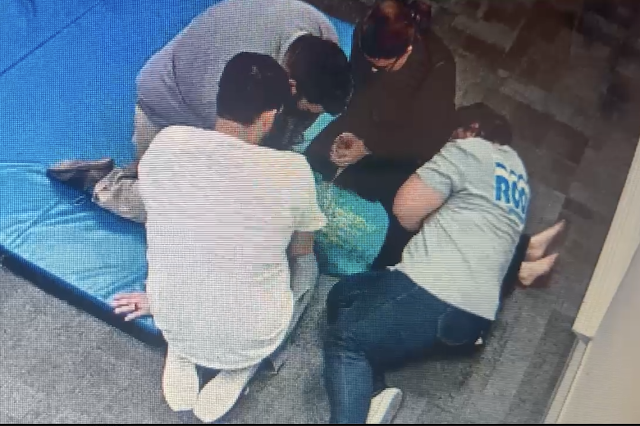
Staff at a Weatherford elementary school restrained a 7-year-old on the autism spectrum multiple times per day within a 53-day period, according to a lawsuit from the student’s mother. In this screen grab from surveillance footage, four staff members assist in holding the child down because, according to his mother, the child bit his own arm. Surveillance footage K.S.


The allegations of abusive restraints at Weatherford are not an anomaly, advocates say. Advocates say children at Texas schools are excessively restrained by overworked or under-trained staff members, causing physical and mental trauma. Students with disabilities are disproportionately restrained compared to the general population of students, according to a 2020 study by Disability Rights Texas, and often the restraint is in response to behaviors that stem from the child’s disability. Texas laws often protect school staff from legal repercussions for restraining children, advocates and attorneys say, leaving parents with little recourse when they feel their child is being abused at school under the guise of safety restraints.


Saturday, July 17, 2021

Shock, Rotenberg, and Autistic People

In The Politics of Autism, I write:

For those who remain at larger residential institutions, the horrors of yesteryear have generally ended. In 2012, however, a ten-year-old video surfaced, showing disturbing image of an electric shock device at the Judge Rotenberg Center in Canton Massachusetts. Staffers tied one student to a restraint board and shocked him 31 times over seven hours, ignoring his screamed pleas to stop. The Rotenberg Center is the only one in the nation that admits to using electric shocks on people with developmental disabilities, including autism. Center officials said that they had stopped using restraint boards but insisted that shocks were necessary in extreme cases to prevent officials insist the shock program is a last resort that prevents people with severe disorders from hurting themselves or others.
Recently, a federal appeals court overturned an FDA ban on the use of electric shock devices to correct aggressive or self-harming behavior. The Center said it will continue using them.

 Eric M. Garcia at The Independent:

Frequently, the press has framed parents who send their kids to a center like JRC as being loving advocates who know what’s best for their children. This is compounded by the fact that many autistic people subjected to shocks have intellectual disabilities, which means they are less likely to be taken seriously. As a result, the interests of parents are seen as synonymous with the needs of autistic and otherwise disabled people.

There is no doubt that parents can be good advocates for their kids. Throughout much of my travels while writing my book We’re Not Broken: Changing the Autism Conversation, I met parents who were relentless in their pursuit of adequate services and who wanted to ensure their children were living a happy life. My own mother was also an indefatigable advocate for me when autism was less understood than it is now.

But it is naive to assume that all parents know exactly what their disabled offspring want or need.

Oftentimes, parents can be pressured into accepting the necessity of “treatments” like shock therapy, as the FDA reported in 2016. But even if parents are fully aware of the conditions, they still don’t have to live with the consequences of having shocks regularly administered to them.

...

' Unfortunately, what non-autistic people want for autistic people pervades every facet of policy, from research to treatment to employment opportunities. It’s becoming increasingly clear that that is not acceptable — and not helpful. Rather, the focus should be on what autistic people say they need, even if how they communicate is not considered conventional or easily understood.

Thursday, October 15, 2020

The NC Handcuff Story Is Going National

In The Politics of Autism, I discuss interactions between police and autistic people.  Police officers need training to respond appropriately.  When they do not, things get out of hand.


One such case, in North Carolina, is starting to get national attention.

 Teo Armus at WP:

The school resource officer was not in the room when a 7-year-old boy with autism, whose mother said he was overwhelmed by the comings and goings in his classroom, began spitting inside his special-needs school in Statesville, N.C.

But when the officer, Michael Fattaleh, arrived on the scene, he put the boy in handcuffs, taunted him and pinned him to the ground, according to body-cam footage of the September 2018 incident that was recently published by WSOC.

“You ever been charged with a crime before?” Fattaleh asked, pressing the boy’s head against a pillow on the floor. “Well, you’re fixing to be.”

So began an interaction that lasted nearly 40 minutes, as the child began crying and yelling that he was in pain and two special-needs teachers looked on without intervening.

More than two years later, after the body-cam footage was released, his mother is suing the school board, the Statesville city government and Fattaleh, who resigned days after the incident from his job as a police officer. The woman, identified only as “A.G.” in the suit, alleges the parties in question violated the constitution, participated in negligence and inflicted emotional distress on her and her son.

Rebecca Riess at CNN:

During other moments of the incident, while the 7-year-old is lying face down on the floor, with his hands cuffed behind him, Fattaleh appears to check on the boy's well-being, asking "Can you breathe?" and "Are you hot? Are you warm?"
When the boy's mother arrives, the officer tells her that her son "is going to be charged with one count of assault, maybe two," the video shows.
Among other things, the lawsuit seeks to hold Fattaleh liable for inflicting "unnecessary and wanton pain and suffering" on the boy, saying he suffered "severe and permanent psychological injuries and was forced to endure extreme pain, suffering, and emotional distress and mental anguish together with a total deprivation of his rights guaranteed him by the Constitution."
Interim Statesville Police Chief David Onley initiated an internal affairs investigation of the incident, the Statesville Police Department said in a statement.

Saturday, October 10, 2020

Cop Cuffs Seven-Year Old, Holds Him Down for 38 Minutes

In The Politics of Autism, I discuss interactions between police and autistic people.  Police officers need training to respond appropriately.  When they do not, things get out of hand.


Michael Gordon at The Charlotte Observer:
The video from former Statesville Police Officer Michael Fattaleh’s body camera shows him rushing across a classroom toward two women who are sitting with a small boy.

“OK, I’ve got him. He’s mine now,” Fattaleh says. He takes the 7-year-old, autistic child from the women, handcuffs the boy’s arms behind his back and presses him to the floor.

According to the video of the Sept. 11, 2018, incident, the student remains in that position for the next 38 minutes. Sometimes he sits quietly. Other times he sobs in apparent pain or pleads for Fattaleh to let him go.

“I’ve got all day, dude,” the officer says early in the encounter. “... If you are not acquainted with the juvenile justice system, you will be shortly.”

The boy’s crime? According to a new lawsuit filed by the child’s mother, identified as A.G., Fattaleh says he saw the special needs student spitting in a “quiet room” at the Pressly Alternative School in Statesville.

The officer repeatedly pledged to charge the boy with assault later that day, telling the boy’s mother the child had become combative, punching and kicking, behavior that is not apparent during the video. It remains unclear whether the charges were ever filed.


Wednesday, July 15, 2020

Disability, Race, and the Police


Autistic people may have poor eye contact or engage in repetitive behaviors, which may strike police officers as suspicious. They also might be slow to react to police commands, which can cause a routine stop to spin out of control. In Greenville, South Carolina, one news account tells of an autistic man named Tario Anderson: “Officers said they saw Anderson walking on the sidewalk and tried him to question him. They said when they put a spotlight on Anderson, he put his hands in his pockets, started walking the other way and eventually started running from them. He was shocked with a Taser and arrested because he didn’t follow the officers’ commands.”[i] Anderson is also African American, which adds another dimension to the story. In the wake of incidents in which African Americans had died at the hands of white police officers, one father wrote of his autistic son: “What if my son pulling back from a cop is seen as an act of aggression? What if a simple repetitive motion is mistaken for an attempt at physical confrontation? If a cop is yelling at my son and he doesn’t respond because he doesn’t understand, what’s stopping the cop from murdering my boy in cold blood?”[ii]

I know that I am not alone when it comes to worrying that a loved one with autism, or a developmental disability, or mental health challenges will one day encounter the wrong cop — one who won't recognize that special needs people often require patience. I recently spoke about my worries concerning my son on CNN and the response from viewers who empathized with my fears was overwhelming. One email was particularly moving.
"I saw you today on CNN. While I was trying to process the horrible news that just doesn't seem to stop, I heard you mention your concerns for your son. When you began to speak about his autism and how much you worry about the constant possibility of him being shot for being a young Black man and an autistic young man, my tears spilled over. My son is 30 and autistic. My son is white but he is your son. Your son is Black but he is my son. Today (shown on CNN crawl) in Jerusalem, the Israeli police shot and killed a Palestinian man who they later learned had Autism. I am Jewish but that man is my son. That man is OUR son.
The intersection of so many kinds of lives binds us together. We must find a way for all of our sons and daughters to be safe. To be loved and safe.
I pray for reconciliation, recognition, and rebuilding of the shredded social fabric of the United States. Thank you for sharing your story.” - Faye
I was truly touched by Faye’s words, and I do believe America would be a much better place if more people could see the world through eyes as honest and loving as hers. But every time I turn on the news and see the story of an Elijah McClain, an innocent, unarmed Black man who was murdered by police, I am reminded that my son is not Faye’s son. My son is a Black man, and to racist cops that makes him only one thing — a suspect.
Chelsey Cox at USA Today:
About one-third of people killed by police have a mental or physical disability, McDeid said. A Washington Post tally found nearly a quarter of those shot and killed by police had a mental illness.
Six years ago, Dontre Hamilton, who had schizophrenia, was shot 14 times by a Milwaukee police officer who had not received any specialized training on interacting with people with mental illness. After George Floyd's death, people of color with disabilities were inspired to march for Hamilton and others, The Milwaukee Journal Sentinel reported.
...
A study conducted in 2019 by the nonprofit Stop Street Harassment found that people with disabilities are more likely to experience sexual harassment and assault. People with disabilities were the victims of sexual or aggravated assault, robbery and rape at twice the rate of people without disabilities, according to a summary released in 2017 by the Bureau of Justice Statistics.
One in five surveyed said their disability made them a target.
“Clearly people can tell by interacting with me or observing me that I'm not ... normal by ableist definitions of normal, even if they wouldn't know the specific language to use. But many people would think, ‘that person is a target,’ ” said [Lydia X. Z.] Brown, who has autism and survived a near-sexual assault.
In a Washington survey of people with disabilities who said they experienced harassment, only 12% said they filed a police report. Distrust of police was one reason, according to a report by the D.C. Office of Human Rights. The office found that people with disabilities are publicly targeted for harassment more often than any other marginalized group aside from immigrants.

Sunday, June 28, 2020

Facebook Takes Down Videos Targeting Public Health Officials


Kevin Baxter at LAT:
Facebook, facing a boycott from advertisers and growing pressure from employees over the posting of material that incites violence, has removed at least four videos targeting public health officials who have called for people to stay home and wear facial coverings to slow the spread of COVID-19.
Facebook CEO Mark Zuckerberg has long resisted calls to regulate political content on the popular website, which has more than 221 million users in the U.S. But the stepped-up rhetoric of content on the website and an expanding advertising boycott that added Verizon, Unilever, Hershey and Coca-Cola in the last two days has forced Zuckerberg to back down.
Facebook stock fell seven percentage points Friday.
“If we determine the content may lead to violence …. we’re going to take that content down no matter who said it,” Zuckerberg told CBS News.
The inciteful videos Facebook removed Thursday were from a group called the Freedom Angels Foundation, which is known for its opposition to California’s efforts to mandate vaccinations. CNN, which reviewed the videos, said the posts make a number of false claims, including that children are being removed from their homes because of the coronavirus, face masks cause people to pass out, and COVID-19 is not a virus.

Saturday, June 27, 2020

Anti-Vaxxers and Anti-Maskers

In The Politics of Autism, I analyze the discredited notion that vaccines cause autism. This bogus idea can hurt people by allowing diseases to spread  And among those diseases could be COVID-19.
Hannah Wiley at The Sacramento Bee:
At every stage of the pandemic, California’s anti-vaccine activists have foreshadowed what their fight against a future vaccine to prevent COVID-19 could look like.
“If we can’t win the mandatory mask argument, we won’t win the mandatory COVID-19 vaccination argument,” Larry Cook, founder of the Los Angeles-based group Stop Mandatory Vaccination, wrote in a June 21 tweet. “They are 100% connected.”
Trump's "Operation Warp Speed" is giving antivaxxers an opening.
“I’m already hearing some states talking about pushing a vaccine mandate for the coronavirus, even though it hasn’t been developed yet,” said V is for Vaccine leader Joshua Coleman.
Coleman’s group coordinated a rally at the Capitol Tuesday for “ex-vaxxers,” or people who no longer vaccinate their kids, to protest what they consider censorship of their perspectives. Registration for the event cost participants $42.
“I’m worried that (the coronavirus) issue is going to be used as an excuse,” Coleman continued, “that the ‘antivax community’ is being careless and it’s time to censor them completely and remove them from social media platforms.”
...
State Senators Shannon Grove, R-Bakersfield, and Mike Morrell, R-Rancho Cucamonga, also spoke at the event and were honored for voting last year against Senate Bill 276, a vaccine crackdown law that Democrats approved and Newsom signed.
...
The protests and social media posts haven’t necessarily surprised Leah Russin, founder of pro-vaccine and parental advocacy group Vaccinate California, but they have worried her.

Russin has worked for years against California’s anti-vaccine lobby to get immunization laws written by state Sen. Richard Pan, D-Sacramento, passed at the Capitol. Senate Bill 277 four years ago eliminated personal beliefs from the list of reasons school kids can skip their shots. SB 276 last year increased oversight of doctors who issue high numbers of medical exemptions for students.
At STAT, Senator Pan rites about the anti-vaxxers:
Since mid-April, 27 state and local health leaders across 13 states have resigned, retired, or been fired, some citing threats and pressure from outside groups.
..
The attack on public health goes all the way to the desk of President Trump, who recently retweeted a post with the hashtag #FireFauci.

Politicians who politicize the coronavirus pandemic are emboldening extremists who target public health officers like Dr. Nichole Quick, the chief health officer of Orange County, Calif., and Dr. Amy Acton, director of the Ohio Health Department, both of whom recently resigned their public health posts. At an Orange County Board of Supervisors meeting, an anti-vaccine extremist threatened Quick and announced her home address, inciting protesters to visit her house. In Ohio, armed demonstrators marched outside Acton’s home. These missions were straightforward: Bully public health officials into supporting their demands.
...

California is not the only state where legislators and public health advocates have been threatened. Similar intimidation tactics were used in Oregon, Washington, New York, New Jersey, and Colorado. Physicians such as Paul Offit, Todd Wolynn, and Nicole Baldwin have endured personal attacks, including fake practice ratings and death threats, for supporting vaccination. Parents sharing stories of their children who died of vaccine-preventable diseases have faced heartbreaking hatred and bullying from the same extremists, as have individuals who speak out in support of vaccines.
The extremists are crowing about their success in forcing the resignations of Quick and Acton, and are planning to target more public health officers.

Wednesday, June 24, 2020

Public Health Under Siege

In The Politics of Autism, I analyze the discredited notion that vaccines cause autism. This bogus idea can hurt people by allowing diseases to spread  And among those diseases could be COVID-19.

Alan Greenblatt at Governing:
Across the country, health officials have been met with armed protesters at their homes and been subjected to anti-Semitic or transphobic slurs. On social media, they encounter posts that include phrases such as “let’s start shooting” and “bodies swinging from trees.” As the nation faces its gravest health challenge in more than a century, many leaders in public health are reluctantly leaving the field.
...
It’s true that there have been protests over health policy questions before, from abortion to the Affordable Care Act. Death threats have also become a fact of life for prominent physicians promoting vaccine use, given the virulence of the anti-vaccine movement.
But anger has never been so deep in so many places as during the coronavirus pandemic. Health officials, who have possessed shutdown authority in many jurisdictions for more than a century, haven’t had to use it for decades. People aren’t used to having their freedoms impinged upon so widely or for so long.
“People are enormously frustrated and angry and worn down, and so they lash out,” says Paul Offit, an attending physician in the division of infectious diseases at Children's Hospital of Philadelphia. “You shoot the messenger. What you really want to shoot is the virus, but instead you shoot the people who tell you about the virus.”
...

[Georges] Benjamin, the APHA director, notes that public health decisions are often controversial enough to meet with protests. Big, burly men might show up at a hearing to express their displeasure about having to wear motorcycle helmets. Abortion opponents have bombed clinics and murdered physicians. Anti-vaccine protesters have targeted lawmakers with death threats and other intimidation tactics.
But protests targeting individual health officials have reached a new level. “It’s true we’ve had protests,” Benjamin says. “We’ve had offices taken over by AIDS activists, but I don’t think anyone felt threatened. They told us they were coming.”

Monday, June 22, 2020

Facebook Has Failed to Act against Abusive Antivaxxers

In The Politics of Autism, I look at the discredited notion that vaccines cause autismTwitterFacebook, and other social media platforms have helped spread this dangerous myth

Elizabeth Cohen at CNN:
Nine months after Facebook vowed to investigate abuse by anti-vaxxers, no users have been penalized.  
As detailed in a CNN report last year, anti-vaxxers have posted violent, horrific comments and death threats to vaccine advocates -- including mothers who've lost their children -- calling them the c-word and telling them they deserved to have their children die.
One mother who lost a child, Catherine Hughes, says she received thousands of abusive comments, including death threats. She was called a whore and told to kill herself. CNN shared some of these comments with Facebook, and Facebook agreed they were in violation of community standards. Still, Facebook took no action against those users, or others who tormented vaccine advocates, according to a Facebook spokesperson.
"It feels like Facebook doesn't care, like they think this is not their responsibility," said Hughes, who lost her infant son, Riley, to whooping cough in 2015, before he was old enough to be vaccinated against the disease.