Search This Blog

Showing posts with label transition. Show all posts

Saturday, November 8, 2025

Advocacy Programs for Latino Families


Burke, M. M., S. Ramos-Torres, G. H. Espinosa, et al. 2025. “ Testing an Advocacy Program to Improve Service Access Among Latino Families of Autistic Youth: A Randomized Controlled Trial.” Autism Research 18, no. 8: 1714–1724. https://doi.org/10.1002/aur.70068.

ABSTRACT
Families of transition-aged youth with autism often struggle to access services. Due to systemic barriers, Latino, Spanish-speaking families of autistic youth especially struggle to access services. One way to improve service access is through parent advocacy abilities (i.e., knowledge of adult services, advocacy abilities and comfort, empowerment). To improve parent advocacy abilities and, ultimately, service access, we conducted a randomized controlled trial to test the feasibility and efficacy of an advocacy program: ASISTIR (Apoyando a nueStros hIjo/as con autiSmo obTener servIcios de tRansición; Supporting our Children with Autism to Obtain Transition Services). Of the 30 participants who were retained for analyses, intervention (vs. waitlist-control) group participants demonstrated significant increases in knowledge about adult services, advocacy activities, advocacy skills and comfort, and empowerment. Further, intervention (vs. waitlist-control) group participants demonstrated significantly greater service access. Implications for research and practice are discussed.

Trial Registration: clinicaltrials.gov: NCT06207149
Summary
  • It can be hard to find services for autistic youth.
  • There are unique barriers to services for Latino autistic youth.
  • To improve access to services, we tested an advocacy program (called ASISTIR).
  • The ASISTIR program was comprised of 24 h of instruction about adult services.
  • Altogether, 30 families participated in the study.
  • Some families were randomized to the intervention group, and some families were randomized to the waitlist-control group.
  • Families in the intervention group were significantly more likely to be knowledgeable about adult services, comfortable with advocacy, and empowered.
  • Intervention group families also reported greater services.

Tuesday, July 9, 2024

College Students with Disabilities


Government Accountability Office, Higher Education:
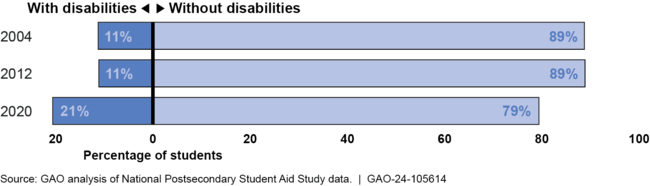
    The percentage of college students with disabilities has increased since 2004 according to GAO's analysis of Department of Education data (see figure). The increase is largely driven by more students reporting mental health conditions or attention deficit disorder. Students with disabilities graduated from college at lower rates than those without disabilities. Further, those with disabilities who did graduate were less likely to be employed full-time than peers without disabilities.

    Estimated Percentage of College Students by Disability Status, 2004–2020


    Note: “College students” includes undergraduates from postsecondary institutions of all types. Estimates are within a 1 percent margin of error.

    Students with disabilities face several challenges while transitioning to and attending college, according to college disability services staff and students GAO spoke with. For example, some students are unaware of or unprepared for the self-advocacy necessary to request accommodations without help from their parents, who can play a pivotal role in obtaining academic supports in high school. In addition, some students experience reluctance from faculty to provide accommodations. To help mitigate these challenges, college staff reported holding orientation sessions for students on how to request accommodations and training faculty on how to make their courses accessible, among other steps.

    Education has also taken steps to help address challenges faced by college students with disabilities. Education provides a range of supports including guidance, technical assistance, grants, and other resources. Education's priorities and federal standards highlight the need for prompt communication of guidance and other information affecting college students with disabilities. However, college staff GAO spoke with identified information gaps. For example:

  • Education has issued guidance materials on the importance of self-advocacy for students with disabilities in college, but this information may not reach students transitioning from high school. By encouraging state and local educational agencies to disseminate resources about the need for self-advocacy to assist students who wish to attend college, Education could help ensure that college students with disabilities are prepared to obtain needed accommodations.
  • Education does not provide notifications to college staff of newly issued guidance and other information about accommodations for students with disabilities, despite notifications on other topics. As a result, college staff report difficulties staying current on information that could help them support students with disabilities
  • .
  • ...
  • GAO is making two recommendations to Education to (1) encourage state and local educational agencies to disseminate resources about the importance of self-advocacy to obtain accommodations in college, and (2) enable college staff to receive notifications of newly issued guidance and other information about accommodations for postsecondary students with disabilities. Education generally agreed with GAO's recommendations.

Tuesday, April 30, 2024

Autistic Youths, Healthcare Providers, and Driving


Myers, R.K., Labows, C., McDonald, C.C. et al. Preparing to “Live a Life of Possibilities”: Experiences of Healthcare Providers Readying Autistic Adolescents and Their Families for Independent Driving. J Autism Dev Disord (2024). https://doi.org/10.1007/s10803-024-06335-0
Autistic adolescents and their families may experience barriers to transportation, including independent driving, which is critical to supporting quality of life and engagement in social, educational, and employment opportunities. Healthcare providers may feel unprepared to provide guidance to autistic adolescents, although they are among the professionals families turn to for guidance. This study describes providers’ experiences supporting autistic adolescents and families in the decision to pursue licensure and identifies barriers experienced in providing support. We conducted interviews with 15 healthcare providers focused on how they support autistic adolescents and their families in navigating topics related to independence, driving, and transportation. Key themes identified included: importance of understanding adolescents’ perspectives and motivations, approaches to readying caregivers for children to pursue driving, and role of providers in fostering agreement between adolescents and caregivers. Results reflect healthcare providers as intermediaries between autistic adolescents and caregivers making the decision to pursue licensure and bring families to consensus. Our findings emphasize the importance of healthcare providers, in collaboration with community-based providers, in supporting autistic adolescents and their families considering licensure. Improving conversations between providers and families provides opportunity to better support quality of life among autistic adolescents and their caregivers navigating the transition to independence.

Saturday, March 2, 2024

College and Autism

 In The Politics of Autism, I discuss the growing number of college students on the autism spectrum

Colleen Schrappen at the St. Louis Post-Dispatch:

After high school, the legal framework around disability changes. Adult students are covered by the Americans With Disabilities Act, which prohibits discrimination but has no metrics for individual progress. The onus to articulate needs and ask for assistance shifts from the school to the student.

Higher education has been inching toward inclusion, advocates say, but there is a long way to go. And the measures taken — like classroom modifications or informational campaigns — are mostly voluntary.

“Colleges have been slow to catch on,” said Lee Burnette Williams of the College Autism Network, a national advocacy and research nonprofit.

“It feels like those students have just fallen off a cliff of support,” said Burnette Williams. “What inevitably happens is they don’t succeed.”

Almost all campuses have an office that provides resources to students with documented disabilities, but comprehensive support programs for autism are rare. The first one, at Marshall University in West Virginia, opened in 2002.

 Today, there are about 100 such programs, according to the College Autism Network.

 The transition to college is a jolt for almost any 18-year-old. No one checks to make sure you are studying, or even attending class. Sleeping and eating habits fluctuate. The guardrails of childhood are gone.

Autistic students often also struggle with isolation, unpredictable schedules and an increased emphasis on grades, experts say.

Failure is not inevitable.  Here is an example of a video in which an autistic person (my son) describes his experiences. 

Monday, February 5, 2024

Transition Planning and College

 In The Politics of Autism, I discuss the growing number of college students on the autism spectrum

Wei, Xin & Wagner, Mary & Hudson, Laura & Yu, Jennifer & Javitz, Harold. (2015). The Effect of Transition Planning Participation and Goal-Setting on College Enrollment Among Youth With Autism Spectrum Disorders. Remedial and Special Education. 37. 10.1177/0741932515581495. 

This study used propensity score techniques to assess the relationship between transition planning participation and goal-setting and college enrollment among youth with Autism Spectrum Disorders. Using data from Waves 1 through 5 of the National Longitudinal Transition Study-2, this study found that 2- or 4-year college enrollment rates were significantly higher among youth with ASDs who participated in transition planning and those who had a primary transition goal of college enrollment. Educational implications are discussed.

From the article:

Transition planning begun early in high school provides the context within which students with disabilities can articulate their post–high school goals and work with parents, school staff, and others to chart a course toward them. The transition plan itself is required by law to specify the transition services needed to assist students in achieving their goals (IDEA Partnership, 2004). This study suggests that participation in transition planning is a valuable opportunity to intervene to improve postsecondary education outcomes for secondary school students with ASDs. However, there is a marked contrast between the large percentage of youth with ASDs who expect to attend a postsecondary institution (84.40%) and the low percentage who have postsecondary education goals included in the transition plan (24.20%; Bhandari & Wagner, 2006; Wagner et al., 2007). This emphasizes the urgent need to effectively engage youth in the transition planning process so that their interests and desires are reflected in their plans. This study finds that specifying a primary goal related to college attendance in transition plans also can effectively boost the odds of attending college by 564% (OR = 6.64, 95% confidence interval [CI] = [1.89, 29.16]) for youth with ASDs in the population as shown in Table 3.
Postsecondary education benefits youth with disabilities by increasing their potential to become self-reliant, tax-paying, and civically engaged citizens. Over the last decade, there has been an expansion of opportunities in higher education for individuals with disabilities and of their full inclusion in the college classroom. There are reports that as many as 200 college and university programs across the country actively support students with disabilities in their academic programs, career development, and campus life (Blalock, 2014; Grigal & Hart, 2010). One of the founding concepts of “inclusive postsecondary education” is to embed individuals with disabilities, particularly those with intellectual disabilities, within normative pathways to the maximum extent possible (Uditsky & Hughson, 2012). Similar to students without disabilities, educators should explore college as a viable option with youth and parents and begin to prepare students with ASDs for college at the start of the transition planning process. Based on a partnership between educators and a youth’s family, studentfocused planning should enable student participation in decision making and goal-setting, particularly if the student expresses goals related to postsecondary education. The process should support high school coursework based on students’ goals and interests, self-evaluation of their progress in meeting their goals, and development of selfdetermination and other skills to achieve goals (Kohler, 1993, 1996, 1998; Kohler & Field, 2003)


Thursday, January 25, 2024

Parental Autism Advocacy and Empowerment

In The Politics of Autism, I discuss the policy advocacy by autistic peoplefamily members, and allies.

 Li, C., Cheung, W. C., Burke, M. M., Taylor, J. L., & DaWalt, L. S. (2024). Examining the associations among knowledge, empowerment, and advocacy among parents of transition-aged youth with autism. Autism, 0(0). https://doi.org/10.1177/13623613231221126   Lay abstract:

Parents of individuals with autism face many challenges in finding appropriate services and support for their children, and they also play an important role in advocating for their children’s rights and needs. Despite the increasing availability of advocacy programs, it is still uncertain how to best encourage parents to advocate for their children. This study explored the connection between parents’ knowledge and sense of empowerment, and how these factors relate to three types of advocacy activities (i.e. individual, peer, and systemic). The findings reveal that feeling empowered has a greater impact on advocacy than simply having knowledge. In addition, the study found that individual advocacy correlates to more peer advocacy, which also correlates to more systemic advocacy. These results can help researchers and professionals to better develop programs to increase parent advocacy and, in turn, help improve the lives of individuals with autism.

From the article:

Given this study’s findings, peer advocacy is an important intermediary step in bridging the gap between individual and systemic advocacy. Thus, more research about peer advocacy as a distinct construct and its relationship with individual and systemic advocacy is needed.

To that end, it is important to explore the nature of peer advocacy. In the United States, there has been an increasing emphasis on family navigator programs (e.g. Broder-Fingert et al., 2020; Burke et al., 2016; Feinberg et al., 2016; MagaƱa et al., 2017). Ultimately, the goal of these programs is to help access services. While family navigator programs are also becoming increasingly common, little is known about the attributes of the navigator that makes navigation effective. For example, some navigators are trained social workers in hospital settings (Feinberg et al., 2016) while other navigators are parents of children with disabilities (MagaƱa et al., 2017). Our study’s findings suggest that parents who are more empowered are likely to advocate for their peers (i.e. other families of individuals with disabilities). Thus, while not directly examining differences between navigators who are (and are not) family members of individuals with disabilities, our study suggests that peer advocacy may come more naturally to navigators with lived experiences as parents of individuals with disabilities. Furthermore, our study signals the importance of peer advocates especially when considering the need for systemic reform.

Sunday, December 24, 2023

Caregivers of Autistic Adults Face Red Tape

 In The Politics of Autism, I write:

When disabled people reach their 22d birthday, they no longer qualify for services under IDEA. ... People in the disability community refer to this point in life as “the cliff.” Once autistic people go over the cliff, they have a hard time getting services such as job placement, vocational training, and assistive technology. IDEA entitles students to transition planning services during high school, but afterwards, they have to apply as adults and establish eligibility for state and federal help. One study found that 39 percent of young autistic adults received no service at all, and most of the rest got severely limited services.
Samara M. Wolpe, Amanda R. Johnson, Sunny Kim have an article at The Journal of Autism and Developmental Disorders titled "Navigating the Transition to Adulthood: Insights from Caregivers of Autistic Individuals." They conducted ten semi-structured interviews with caregivers of autistic young adults focused on transition to adulthood.
The difficulty of locating appropriate services for their child was a frequently expressed sentiment among participants. Many participants expressed the sentiment that, even when they found a seemingly suitable service that they thought would benefit their child, there was so much bureaucratic red tape that they were unable to obtain the service in time to use it and spent much of their free time fighting with service coordinators or attempting to get through to service professionals. One parent best summarized the experiences of wading through the restrictions put in place to limit access to services:
It's a constant battle with Regional Center to get anything that you know benefits your kid. It’s so hard because they control everything, so you have to be polite… it's this constant churning of emotion because you want more for your kid and then you also understand why it's hard to get it, so there's this constant feeling like you're always in battle.” (Natalie)
Additionally, parents expressed frustration with navigating the Regional Center’s vendoring system. One participant stated:
“It’s so exhausting for the families, and then there's so much red tape… For example, they publish their list of vendors, but it's alphabetized, and for consumers of all age ranges for example, birth to 60 … well that's not helpful! I don’t need to know the name of the vendor. I need to know which vendors offer Adult Services, and what services they offer.” (Natalie)
Even those parents and caregivers who are able to get in touch with Regional Center coordinators and add themselves to the waitlist reported difficulty actually obtaining services. One parent (Liza) explained, “He's still living at home and we're in the process of trying to get him into supportive living, you know, we have an agency that agreed to work with us, but everybody's having a really hard time finding staff now so they're long waiting lists.” Even when services have been identified and the organization has agreed to provide the service, families still recalled waiting inordinate amounts of time to have the promised service come to fruition.

Tuesday, June 27, 2023

IEPs and Transition Planning

 Uncertainty is a major theme of The Politics of Autism.  In the concluding section, I write:

A key question in autism policy evaluation is simple to pose, hard to answer: How do autistic people benefit? How much better off are they as a result of government action? While there are studies of the short-term impact of various therapies, there is surprisingly little research about the long term, which is really what autistic people and their families care about. As we saw in chapter 4, few studies have focused on the educational attainment of autistic youths. For instance, we do not know much about what happens to them in high school, apart from the kinds of classes that they take. One study searched the autism literature from 1950 through 2011 and found just 13 rigorous peer reviewed studies evaluating psychosocial interventions for autistic adults. The effects of were largely positive, though the main finding of the review is that there is a need for further development and evaluation of treatments for adults.

Pediatrics 
JUNE 22 2023
Individualized Education Programs and Transition Planning for Adolescents With Autism 
Michelle M. Hughes, PhD; Anne V. Kirby, PhD; John Davis, PhD; Deborah A. Bilder, MD; Mary Patrick, MPH; Maya Lopez, MD; Leann S. DaWalt, PhD; Elise T. Pas, PhD; Amanda V. Bakian, PhD; Kelly A. Shaw, PhD; Monica DiRienzo, MA; Allison Hudson, BS; Yvette D. Schwenk, MS; Thaer M. Baroud, MHSA; Anita Washington, MPH; Matthew J. Maenner, PhD

OBJECTIVES:

The study objectives were to examine the contents of individualized education programs (IEPs) of adolescents with autism spectrum disorder (ASD), including postsecondary transition goals, services, and changes in special education classification over time.
METHODS:

This study involved a longitudinal population-based surveillance cohort from the Autism Developmental Disabilities Monitoring Network from 2002 to 2018 in 3 catchment areas in the United States. The sample included 322 adolescents who were born in 2002, identified with ASD, and had an IEP available for review at ages 15–16 years. 
RESULTS:

We found that 297 (92%) adolescents with ASD had an IEP including a transition plan. Those without intellectual disability (ID) were more likely to have postsecondary education and employment goals and have those goals be to pursue higher education or competitive employment compared with those with ID. Forty-one percent of adolescents with ASD had a postsecondary living arrangement goal. Although 28% of adolescents with ASD received school-based mental health services, none of these adolescents were Black; additionally, 15% of those with ID received mental health services compared with 34% without ID. The percentage of adolescents with ASD served under an autism classification increased from 44% at age 8 years to 62% by age 16.
CONCLUSIONS:

We identified gaps and disparities in school-based postsecondary transition planning. Working with education partners, families, and adolescents will be important to identify what challenges contribute to these findings and what supports are needed to improve the equity and quality of the transition planning process for adolescents with ASD so they are prepared for adulthood.

Saturday, June 17, 2023

Autism by the Numbers: Transition

 Uncertainty is a major theme of The Politics of Autism.  In the concluding section, I write:

A key question in autism policy evaluation is simple to pose, hard to answer: How do autistic people benefit? How much better off are they as a result of government action? While there are studies of the short-term impact of various therapies, there is surprisingly little research about the long term, which is really what autistic people and their families care about. As we saw in chapter 4, few studies have focused on the educational attainment of autistic youths. For instance, we do not know much about what happens to them in high school, apart from the kinds of classes that they take. One study searched the autism literature from 1950 through 2011 and found just 13 rigorous peer reviewed studies evaluating psychosocial interventions for autistic adults. The effects of were largely positive, though the main finding of the review is that there is a need for further development and evaluation of treatments for adults.

Many people with autism receive services through their school systems but lose access to those services and vital supports upon leaving high school. Without continuity of services, it can be more difficult for autistic adults to obtain employment, continue their education or live independently, which could potentially impact their future.

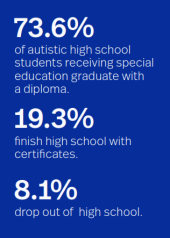
Infographic showing high school graduation rates among autistic students in special education

Autism by the Numbers data shows the outcomes for autistic students
who receive special education services.

  • Nationally, 10% of students in special education programs receive special education services for autism. Not all autistic students qualify for special education, so there may be students who lack necessary support in school. 
  • 73.6% of autistic students receiving special education graduate with a high school diploma and another 19.3% finish with certificates. 
  • 8.1% drop out of high school, though we don’t know why.

Vocational Rehabilitation (VR) training and services provide an effective pathway to preparing autistic adolescents and teens for employment. 

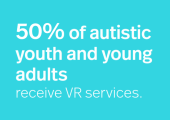
Infographic saying that 50% of autistic youth and young adults receive VR services
  • Autistic students receive VR services at a lower rate than students with other disabilities, and transition-age autistic adults have lower rates of employment than those with other disabilities.
  • On average, 50% of autistic youth and young adults receive VR services. This ranges from 10% in New Jersey to 77% in Oklahoma.
  • Among those who received VR services in high school, 60% had a job when they left school. This range was from a low of 32% in Washington, D.C. to a high of 76% in Nebraska.

There is still work to be done to increase the number of autistic students who graduate high school and go on to find employment. We need research to further explore these questions:

  • Infographic saying that 40% of young adults with autism who receive VR do not find employment after high school
    What are the longitudinal employment trends for autistic individuals?
  • Why is the dropout rate so high, and how can we better support autistic students to have a positive experience in school?

Wednesday, May 31, 2023

Transition in Norway

  In The Politics of Autism, I discuss international perspectives.

From Eric Benninghoff:

For the past year I have traveled throughout Norway, exploring the transition to adulthood for a variety of often-marginalized groups, including people with intellectual disabilities or learning challenges. Along the way, I have met several organizations aiming to improve the situation for this population, including a largely government-funded but privately run group called Helt Med.

Helt Med has developed a work inclusion model across Norway to help employ individuals with intellectual disabilities in the mainstream workforce. More recently, they have also been trying to expand a smaller pilot program called Ung Jobb, which aims to create a smooth school-to-career pipeline for some of these students.

As of spring 2023, only about 40 high school students have gone through the Ung Jobb program, which is primarily in Agder County in southern Norway. But Agder government announced it will be tripling its current investment in the program starting in the 2023-2024 school year. This comes as Helt Med aims to expand the Ung Jobb project to other parts of the country.

This video report takes an in-depth look at Helt Med’s school-to-career program in Agder County, exploring its potential as one solution to better support students with intellectual disabilities in their transition from school to working life in Norway.


Monday, May 1, 2023

Adding ADDM Sites

In The Politics of Autism, I discuss evaluationdiagnosis, and the uncertainty of prevalence estimates.

 An April 25 release from Autism Speaks:

This week, we proudly celebrate a historic expansion of the Autism and Developmental Disabilities Monitoring (ADDM) Network, from 11 to 16 sites across the country. The ADDM Network is the only collaborative network to track the number and characteristics of children with autism spectrum disorder (ASD) and other developmental disabilities in multiple communities throughout the United States. This is the first time since 2010 that the ADDM Network has added sites to its prevalence and surveillance work. The data and knowledge provided by the ADDM Network continues to inform and drive us forward in identifying gaps in diagnosis, improving screening tools and developing programs to reach underserved communities.

Autism Speaks has advocated in support of the CDC's autism activities for decades, through our advocacy for the Autism CARES Act, as well as supporting annual appropriations requests that have sustained and grown the level of funding for federal autism programs. It is thanks to our champions in Congress, the advocacy of Autism Speaks, partner organizations and countless advocates that spent years fighting for additional funding and successfully saw that the Consolidated Appropriations Act of 2023, enacted earlier this year, provided the Centers for Disease Control and Prevention (CDC) with support for the expansion of their work. As a result, the ADDM Network is now in its sixth phase of funding and includes fifteen funded sites and one CDC-managed site in Georgia (MADDSP).

The newly awarded sites include locations in Indiana, Pennsylvania, Texas (Austin) and Texas (Laredo) as well as Puerto Rico, marking the first time a US territory will be included in this research. Each ADDM site’s surveillance activities are different so that they collectively contribute to a fuller picture of what we know about autism. While every ADDM Network location will track ASD among 4- and 8-year-old children, nine sites will now also track transition planning and co-occurring conditions among 16-year-old children with ASD. This is almost a two-fold increase from five sites in previous years.

Thursday, April 13, 2023

Autistic Adolescents

In The Politics of Autism, I write:

Many analyses of autism speak as if it were only a childhood ailment and assume that parents are the main stakeholders. But most children with autism grow up to be adults with autism, and they suffer uniquely high levels of social isolation. Almost 40 percent of youth with an autism spectrum disorder never get together with friends, and 50 percent of never receive phone calls from friends. These figures are higher than for peers with intellectual disability, emotional disturbance, or learning disability. When school ends, many adults with autism have grim prospects. Though evidence is sparse, it seems that most do not find full-time jobs. Compared with other people their age, they have higher rates of depression, anxiety, bipolar disorder, and suicide attempts.
At The Journal of Adolescent Health, Michelle M. Hughes and colleague have an article titled "
Adolescents With Autism Spectrum Disorder: Diagnostic Patterns, Co-occurring Conditions, and Transition Planning
  Abstract:
Purpose

The objectives of this study were to describe child characteristics associated with later autism spectrum disorder (ASD) identification and the health status and educational transition plans of adolescents with ASD.

Methods

Longitudinal population-based surveillance cohort from the Autism Developmental Disabilities Monitoring Network during 2002–2018 in five catchment areas in the United States. Participants included 3,148 children born in 2002 whose records were first reviewed for ASD surveillance in 2010.

Results

Of the 1,846 children identified in the community as an ASD case, 11.6% were first identified after age 8 years. Children who were more likely to have ASD identified at older ages were Hispanic; were born with low birth weight; were verbal; had high intelligence quotient or adaptive scores; or had certain co-occurring neuropsychological conditions by age 8 years. By age 16 years, neuropsychological conditions were common with more than half of the adolescents with ASD having a diagnosis of attention-deficit/hyperactivity disorder or anxiety. Intellectual disability (ID) status was unchanged for the majority (>80%) of children from ages 8–16 years. A transition plan was completed for over 94% of adolescents, but disparities were observed in planning by ID status.

Discussion

A high percentage of adolescents with ASD have co-occurring neuropsychological conditions, markedly higher than at age 8. While most adolescents had transition planning, this occurred less often for those with ID. Ensuring access to services for all people with ASD during adolescence and transition to adulthood may help to promote overall health and quality of life.

Tuesday, October 4, 2022

Evaluating Transition Research

Uncertainty is a major theme of The Politics of Autism.  In the concluding section, I write:
A key question in autism policy evaluation is simple to pose, hard to answer: How do autistic people benefit? How much better off are they as a result of government action? While there are studies of the short-term impact of various therapies, there is surprisingly little research about the long term, which is really what autistic people and their families care about. As we saw in chapter 4, few studies have focused on the educational attainment of autistic youths. For instance, we do not know much about what happens to them in high school, apart from the kinds of classes that they take. One study searched the autism literature from 1950 through 2011 and found just 13 rigorous peer reviewed studies evaluating psychosocial interventions for autistic adults. The effects of were largely positive, though the main finding of the review is that there is a need for further development and evaluation of treatments for adults.

Kristen Bottema-Beutel and colleagues have an article at Autism titled  "An evaluation of intervention research for transition-age autistic youth."  The lay abstract:

In this study, we assess the quality of intervention research that focuses on autistic youth who are 14–22 years old. We found 193 different studies on this topic, and carefully reviewed them. Most of these studies tested strategies that were behavioral. This means that they used procedures like prompting and rewards to change participants’ behavior. We found that the majority of studies had problems that make it hard to determine whether or not the intervention worked. The problems related to how researchers designed their studies, and how they measured the study outcomes. We also found that researchers rarely tried to find out if the strategies they studied had unintended negative effects for participants. Because of these issues, we make suggestions for how researchers might design better studies that will let people know how well the strategies worked.

Thursday, June 23, 2022

Military-Base Internship

In The Politics of Autism, I discuss the employment of adults with autism and other developmental disabilities. Many posts have discussed programs to provide them with training and experience.

At the Journal of Autism and Developmental Disorders, Paul Wehman and colleagues have an article titled "Effects of a 9-Month Military-Base Internship on the Competitive Integrated Employment of Military Dependent and Connected Youth with ASD."  The abstract:

This waitlist-controlled cluster randomized clinical trial presents the results of PS + ASD [Project SEARCH Plus ASD Supports] for military dependent and connected youth with ASD. Following earlier findings regarding PS + ASD, this study expands upon that previous work by including a new population, military dependent and connected transition aged youth with ASD. Findings indicate that military dependent and connected youth who participated in PS + ASD gained competitive integrated employment at 60% despite the impact of the COVID-19 pandemic and economic downturn. In addition, these youth worked a mean of 24.42 h weekly and earned an average hourly wage of $9.38 at one year post baseline while the waitlist control group participants did not gain CIE. In addition, by 18 months, 58.3% of participants gained positions in federal employment. Implications of the study are discussed.


Tuesday, June 21, 2022

The Rock Sends a Message

In The Politics of Autism, I discuss depictions of ASD in popular culture.   

The PACTS Program at Parma Senior High School in Ohio hosts an annual spring luau dance for nearly 400 special needs students in the surrounding area. The Parma High students posted a video invitation to social media to invite Dwayne ‘The Rock’ Johnson to their luau. When Johnson got wind of their request, he made sure that the students had a couple special surprises in store for them as they celebrated their big night…


Thursday, May 26, 2022

Autistic College Students


 In The Politics of Autism, I discuss the growing number of college students on the spectrum

Liann Herder at Diverse: Issues In Higher Education:

Dr. Lee Burdette Williams, executive director of the College Autism Network (CAN) that connects institutional stakeholders to improve the access, experiences and outcomes of college students with autism, said that students like Bonker are constantly fighting against the misconceptions of the world and higher education, including the surprise some feel that a nonspeaking or autistic student could graduate at the top of their class.

“The most common misconception about autism is that the label of autism is synonymous with developmental or intellectual delays,” said Williams. “The truth is, some with autism have intellectual or developmental delays, but lots do not. The diagnosis is problematic, because it does put a lot of very different people in one bucket.”

Academic acceptance of autistic students has come a long way in the last few decades. Dr. Jane Thierfeld Brown, an assistant clinical professor at Yale University’s Child Study Center and director of the College Autism Spectrum (CAS), an organization that helps students with autism and their families navigate the shift from high school to college, said this growth is perhaps a reflection of the increasing number of individuals born with or diagnosed with autism.
...
At Adelphi University in New York, the Bridges to Adelphi program has been working to support students with autism since 2008, when it began as a pilot program with the Jewish Child Care Association. By 2014, the program had become embedded into Adelphi, and it is now one of the roughly 75 institutions in the U.S. working to serve those with autism.

Tuesday, March 22, 2022

Medicaid Coverage

 The Politics of Autism includes an extensive discussion of insurance and  Medicaid services for adults with intellectual and developmental disabilities.

Lindsay Shea & Robert I. Field have an article at Drexel Law Review titled "Medicaid Coverage for Autistic Individuals: Coverage, Gaps, and Research Needs." Abstract
The Medicaid program, a federal-state partnership administered by each state with oversight and funding contributions by the federal government, covers more people—including almost 40% of all children—than any other health insurance program in the United States. It is the primary means of coverage for specialized services needed by children with autism spectrum disorder, a range of developmental impairments including autism. This coverage is accomplished through legislation that permits the federal government to waive various statutory limits on state flexibility in benefit design. Research focusing primarily on children has found that Medicaid programs play an important role in supporting individuals on the autism spectrum in gaining and maintaining needed services and supporting their families and caregivers. However, there are important differences in the way states structure and implement their Medicaid programs that have not yet been fully cataloged. Moreover, research on enrollment and service use within the Medicaid program as these children age into adulthood is limited. Studies in this area are needed to ensure adequacy and equity in service availability and to guide states on policy and practice to meet the needs of these patients.

Sunday, March 20, 2022

Evidence-Based Practices and Employment


In The Politics of Autism, I discuss the employment of adults with autism and other developmental disabilities. Many posts have discussed programs to provide them with training and experience.

At Current Psychiatry Reports, Mary J. Baker‑EriczĆ©n, Roxanne ElShamy, and Rebecca R. Kammes have an article titled "Current Status of Evidence‑Based Practices to Enhance Employment Outcomes for Transition Age Youth and Adults on the Autism Spectrum."  Abstract:

Purpose of Review This review provides a highlight of existing evidence-based practices and community support systems that exist to enhance employment outcomes for autistic transition-age youth (TAY) and adults. An update is provided on the current status of these programs and the impact they are having on employment outcomes for this population.

Recent Findings Many programs exist that prove to be efficacious in improving employment outcomes. These programs can be categorized as vocational rehabilitation service system level interventions, provider and consumer level interventions targeting skills related to employment, and consumer level interventions delivered within community vocational rehabilitation or education settings. A more recent increase in programs is consistent with multiple research and policy calls for amplifed programming in this area.

Summary Despite these recent increases, there is still a need to further develop efective programming to support employment outcomes as the growing autistic population age into adulthood. Community-based research and practice should continue to be developed and tested.

From the article:

Although a number of EBPs exist and have been highlighted here, there continues to be a need for new program development for AS adults so that curriculums and programming are in place when the growing AS population age into adulthood and are prepared to ofer longer-term or more comprehensive services. This is consistent with multiple policy and research calls for (1) increased evidence-based interventions; (2) the development of treatment manuals to encourage replication of promising vocational support programs; (3) models for professional development to work with autistic adults in VR; and (4) recommendations to apply efcacious interventions with other populations to inform the advancement of employment approaches for autistic individuals [83•, 84, 85]. Additionally, recent government reports identifed supporting professional development for vocational service providers as a policy priority to improve competitive employment [48–87]. According to the 2020 Federal Youth Transition Plan, two main priorities for adult services research are (1) promoting work-based learning and (2) supporting professional development of service providers [88].

However, for an EBP to be disseminated successfully, the program must be feasible, cost-efective, and acceptable to the end-users, such as VR services, high schools, and vocational training centers [89]. Many of the EBPs described in this review had small sample sizes and often were not delivered within vocational service or pre-employment transition service educational settings. Additionally, many of the skills-based interventions limited their populations to AS individuals without a co-occurring intellectual disability and minimal racial/ethnic diversity, impacting the efectiveness of broad use. To this end, it is critical that future interventions be developed and tested in a way that attends to the needs of the population and service system from the onset, such as using CBPR methods, diverse populations, and testing directly in community settings. Few of the highlighted interventions used such methods. It is also important to be mindful of resources. The interventions that demonstrated positive outcomes with large samples all required signifcant resources such as intensive staf training, large amounts of service hours, and services extending beyond typical service system length which many VR systems are not in a position to ofer with budget and policy constraints. Future studies need to engage a more holistic and systemic approach to services research that includes utilizing dissemination and implementation frameworks, hybrid research designs, and an equity focus to ensure feasibility, accessibility, and scaling up for broad community use. In sum, there is a strong call for further research and funding of community-based, community-involved, EBP development and testing particularly to address autistic individual’s employment and life outcomes.


Thursday, February 3, 2022

Chicago Takes on the Cliff

In The Politics of Autism, I write:

When disabled people reach their 22d birthday, they no longer qualify for services under IDEA. ... People in the disability community refer to this point in life as “the cliff.” Once autistic people go over the cliff, they have a hard time getting services such as job placement, vocational training, and assistive technology. IDEA entitles students to transition planning services during high school, but afterwards, they have to apply as adults and establish eligibility for state and federal help. One study found that 39 percent of young autistic adults received no service at all, and most of the rest got severely limited services.
A release from the City Colleges of Chicago:
Recently, Mayor Lori E. Lightfoot, 19th Ward Alderman Matt O’Shea, City Colleges of Chicago, the Lester and Rosalie Anixter Center, and Special Olympics Chicago/Special Children’s Charities are joining forces to ensure young people with different developmental abilities can continue to pursue education, employment and enrichment after they have maxed out their eligibility for special education transition services at the age of 22.

The After 22 Project will be recognized as a Comprehensive Transition Program (CTP) that will help transition participants into meaningful postsecondary activities by providing flexible learning opportunities, leadership, and job skills training. In addition, students will be able to access and participate in special recreation opportunities, and internship and job placement opportunities. The Occupational, Life and Academic Skills (OLAS) Program at Daley College will provide a support system to students, in addition to access to the educational experiences they need to continue their life-long learning journey.

The OLAS program is an innovative inclusive pathway to engage students who otherwise will have to wait an average of seven years to access funding for these services after they reach age 22, leaving a gap in their progress to meaningful engagement, employment and further education. The project will flexibly and deliberately map out a plan for participants based on interest and skill level.

“Far too often, people with disabilities fall through the cracks in our system and are left without access to opportunities to achieve upward mobility,” said Mayor Lightfoot. “With the After 22 Project, we will be able to create the social safety net they deserve, as well as move Chicago one step closer to becoming the most accessible city in the country. I commend Alderman O’Shea, City Colleges of Chicago and the rest of our community partners for launching this new continuum of support for our residents with disabilities to ensure they are able to thrive both before and well after they turn 22.”

“The idea of the After 22 program was presented to me when I was president of the Board of Directors of Special Olympics Chicago/Special Children’s Charities, and we immediately embraced the idea of providing for our athletes in a meaningful way that includes continuing education and job training skills,” said Matt O’Shea, past president of SOC/SCC. “Through the support of our Board of Directors, Mayor Lori Lightfoot, the Anixter Center, Chancellor Salgado, and President Janosky, our athletes now have the unprecedented opportunity to continue to advance their skills and education after the age of 22. Our athletes are passionate, hard-working and fully embrace any opportunity they are given. This program is a win-win for everyone involved.”

“After 22 is the missing piece that equalizes the pathway for young adults with developmental disabilities to access college and thrive,” said Rebecca Clark, President and CEO at Anixter Center. “This historic step bridges the gap, creating opportunities for students to secure meaningful work, and positively engage in, and contribute to their communities. I believe After 22 will change the lives of the people we serve and our Chicago neighbors for years to come.”

“As Chicago’s community college system, City Colleges is responsive to the needs of our community,” said City Colleges of Chicago Chancellor Juan Salgado. “After 22 is a unique opportunity that will allow us to prepare developmentally disabled Chicagoans to contribute their abundant talents to our neighborhoods and economy.”

Chancellor Salgado added that Daley College President Janine Janosky will lead the After 22 program at City Colleges of Chicago. “One of the greatest strengths of Daley College is our students’ diversity,” said President Janosky. “We welcome all students and look forward to the vibrancy these new students will bring to our campus life.”

The first year of the program will serve up to 20 students through non-credit job skill development courses at Daley College. Daley College and Anixter Center team members will collaborate to implement customized educational plans to include competency-based, student-centered curricula to introduce and reinforce workplace soft skills, such as communication strategies, self-advocacy skills, professionalism, and navigating institutions. Additionally, students will practice occupational skills through an internship on campus, such as at the Daley food pantry and professional clothing closet, and other service areas, and will offer them the chance to participate in campus activities. Daley College and the Anixter Center will assemble an advisory council composed of business leaders, students, parents, faculty, and special education experts and advocates to provide guidance and advice on program development, additional partnership connections, and possible funding sources.

The Anixter Center will match 10 participants to jobs or internships at a community employer partner, ensuring students have integrated, competitive job opportunities. In conjunction, employers will get the support they need to ensure success and retention for these employees.

Longer-term, Daley College will develop a certificate program for students with disabilities as part of a larger City Colleges goal of creating greater access to education for community members. The Anixter Center will work with broad-scale commitment from Chicago businesses to hire and retain this untapped talent pool.

The program aims to build an integrated system of opportunities, weaving together public and private partners to support adults with disabilities as they get access to meaningful opportunities throughout Chicago.

“The After 22 program opens new doors of opportunity for our athletes by empowering them with continuing education, important life and job skills, and a readiness for the future,” said Carolyn Daley, president of the Board of Directors of Special Olympics Chicago/Special Children’s Charities. “Our organization has a mission of inclusiveness for all, and the After 22 program provides just that. We look forward to continuing our partnership with Anixter and City Colleges of Chicago on this amazing program. It is my hope that the After 22 program is an incredible success, and continues to grow through the years to come.”