Search This Blog

Showing posts with label United Kingdom. Show all posts

Sunday, June 28, 2026

Undiagnosed and Older

In The Politics of Autism, I write about the everyday struggles facing autistic people and their families.

Rhiannon Evans at The Guardian:

There has been a huge shift in awareness around neurodiversity recently, with improved provision for children in schools and increased middle-age diagnosis and detection in women. Still, one group has remained underserved when it comes to support; adults over 60. A recent study estimated that 89-97% of autistic people over 60 are undiagnosed, leading experts in the field, such as Dr Louise Rutter (who last year co-authored a report on the subject for the British Psychological Society) to brand them a “neglected generation”.

The figures are for the UK, but it is likely that the American figures are similar.

First posted here in September: 

Gavin R. Stewart1 and Francesca HappĂ©, "Aging Across the Autism Spectrum," Annual Review of Developmental Psychology  Vol. 7:461-484 (Volume publication date December 2025) https://doi.org/10.1146/annurev-devpsych-111323-090813.

Abstract:

Aging in autistic populations is a historically neglected but now rapidly advancing area of research. This narrative review provides a broad overview of the current state of the field of aging on the autism spectrum by synthesizing and critically appraising findings from across a range of research priorities identified by autistic people and other stakeholder groups. These include (a) the trajectory of core autistic features; (b) health profiles, biological aging, and mortality; (c) influential life experiences and life outcomes (including transition periods such as retirement and menopause and events such as trauma and periods of crisis); (d) cognitive function, aging, and dementia; and (e) quality of life and social support. Where possible, empirical research focusing on diagnosed autistic people is presented, but due to very high rates of underdiagnosis of autism in this demographic, trait-based research is also considered. Research specifically focusing on midlife (i.e., 40–64 years) and older age (i.e., 65 years and older) is presented where available, but due to a dearth of such research, lifespan studies (i.e., samples including middle-aged and older people, but not differentiating them) are also discussed. This review concludes by identifying future research priorities, as well as key conceptual issues that researchers interested in the intersection of aging and autism should consider for this emerging and rapidly advancing area of research.


Saturday, February 28, 2026

RFK Jr's Global Disinformation Virus

 In The Politics of Autism, I analyze the myth that vaccines cause autism. This bogus idea can hurt people by allowing diseases to spread.   

 Examples include measles, COVID, flu, and polio.  A top antivaxxer is HHS Secretary RFK Jr. He is part of the "Disinformation Dozen." He helped cause a deadly 2019 measles outbreak in Samoa.

Measles vaccination in the UK has fallen especially dramatically, with only 84% of five-year-olds receiving both recommended doses of the measles, mumps and rubella (MMR) vaccine as of 2024. The UK is also “ground zero”, for vaccine hesitancy, according to Jennifer Nuzzo, director of the Pandemic Center at Brown University. Andrew Wakefield, a former physician, was based in the UK when he linked the MMR vaccine to autism in a 1998 Lancet study that has since been retracted. He subsequently lost his medical credentials. This is the second time the UK has lost its measles elimination status in less than a decade.

Even though it’s been more than 15 years since Wakefield’s study was retracted, the idea that vaccines and autism are linked is gaining new traction around the world, with the help of Robert F Kennedy Jr, the US health secretary.

“The rhetoric that happens in the United States spills over across borders to other countries,” Nuzzo said, “We live in a global ecosystem, so when they hear, well, [the vaccine is] not good enough for the Americans, maybe it’s not good for us either.”

Kennedy is known for his work with the anti-vaccine group Children’s Health Defense, which continues to promote Wakefield’s debunked talking points about vaccines and autism.

Organizations like Children’s Health Defense and influencers who promote their rhetoric often bill themselves as activists, but Nuzzo is quick to point out that there is an industry with a profit motive behind their work. A report from the Center for Countering Digital Hate found that the “Anti-Vaxx industry” brings in at least $36m a year. Before becoming health secretary, in 2024, Kennedy himself received millions of dollars in combined income from Children’s Health Defense and various law firms that go after vaccine manufacturers.

Under Kennedy’s leadership, the US is now also on the brink of losing its measles elimination status. Measles often spreads through international transmission, and the two nations that border the US, Canada and Mexico, have also seen a rise in measles outbreaks. Canada lost its elimination.

Saturday, March 9, 2024

Autism Research: British Perspectives

 In The Politics of Autism, I write:

As long as government funds so much research, politics will shape the questions that scientists ask and determine the kinds of research that receive funding.  Politics will even influence which scientists the policymakers will believe and which findings will guide public policy. In the end, science cannot tell us what kinds of outcomes we should want.  ABA “works” in the sense that it helps some autistic people become more like their typically developing peers.  Most parents regard such an outcome as desirable, but not all people on the spectrum agree.  

 Amelia Hill at The Guardian:

Dr Grainne McAlonan, a clinical professor of translational neuroscience at the department of forensic and neurodevelopmental sciences and Institute of Psychiatry, Psychology and Neuroscience at King’s College London, has just started investigating a psychedelic compound – psilocybin – found in magic mushrooms.

She is looking at the serotonin pathway, which plays a key role in a range of essential functions such as sensory processing, cognition, mood and sleep. One of the most consistent findings in autism research are differences in the serotonin pathway: more than 25% of autistic people have high blood serotonin levels.

If McAlonan identifies individual differences in the brain serotonin system targeted by psilocybin, the next step will be to ask whether they can establish if there is a biological response to the drug that might be clinically useful. “Ultimately, this research may allow us to provide more personalised choices for those autistic people who want the option of a medication for their difficulties,” she said.

This was an exciting time for autism research, said Matthew Swindells, an evidence, research and evaluation manager at the National Autistic Society.

He points to other research that addresses real-life issues, including the Bridging Project led by the University of Plymouth, which uses virtual reality to reduce the autism employment gap; autism in affinity spaces, led by Queen Mary University London, which explores how young autistic people use social media platforms to engage in their interests; and Audit 50, led by University College London, which focuses on the experiences of older autistic people, an often overlooked population.

Swindells said: “Perhaps, most importantly, researchers have moved away from stigmatising, deficit-based language and approaches. Instead, it has started to focus on the topics that really matter to autistic people. This can be seen with the emergence of more autistic lead researchers, as well as some brilliant examples of participatory approaches within research practice.”

Monday, August 21, 2023

Prevalence in England

In The Politics of Autism, I discuss evaluation, diagnosis, and the uncertainty of prevalence estimates.

Elizabeth O'Nions and colleagues have an article in Lancet Regional Health Europe titled "Autism in England: assessing underdiagnosis in a population-based cohort study of prospectively collected primary care data."

Summary

Background

Autism has long been viewed as a paediatric condition, meaning that many autistic adults missed out on a diagnosis as children when autism was little known. We estimated numbers of diagnosed and undiagnosed autistic people in England, and examined how diagnostic rates differed by socio-demographic factors.

Methods

This population-based cohort study of prospectively collected primary care data from IQVIA Medical Research Data (IMRD) compared the prevalence of diagnosed autism to community prevalence to estimate underdiagnosis. 602,433 individuals registered at an English primary care practice in 2018 and 5,586,100 individuals registered between 2000 and 2018 were included.

Findings

Rates of diagnosed autism in children/young people were much higher than in adults/older adults. As of 2018, 2.94% of 10- to 14-year-olds had a diagnosis (1 in 34), vs. 0.02% aged 70+ (1 in 6000). Exploratory projections based on these data suggest that, as of 2018, 463,500 people (0.82% of the English population) may have been diagnosed autistic, and between 435,700 and 1,197,300 may be autistic and undiagnosed (59–72% of autistic people, 0.77%–2.12% of the English population). Age-related inequalities were also evident in new diagnoses (incidence): c.1 in 250 5- to 9-year-olds had a newly-recorded autism diagnosis in 2018, vs. c.1 in 4000 20- to 49-year-olds, and c.1 in 18,000 people aged 50+.

Interpretation

Substantial age-related differences in the proportions of people diagnosed suggest an urgent need to improve access to adult autism diagnostic services.

 Evidence before this study

We searched PubMed from database inception to October 17th, 2022 using the search terms: (1) ‘autism’, and (2) ‘incidence’ or ‘prevalence’ or ‘underdiagnosis’ or ‘under-diagnosis’, without language restrictions. This identified articles describing the global incidence and prevalence of autism. Some studies identified rates of diagnosed autism, and others used active sampling approaches (community case-finding) to identify the numbers of autistic individuals both diagnosed and undiagnosed in a population. The vast majority of studies focused on rates of autism in children. There was a high degree of variability in estimated autism prevalence by year, by region, and by method of case ascertainment. Most studies investigating time-trends reported increasing rates of diagnosed autism over the past 20 years. No studies estimated the extent to which autism was underdiagnosed at a national level or inequalities in diagnosis by comparing diagnosed autism prevalence for a nationally-representative population of children and adults with estimates of true autism prevalence.

Added value of this study

This study is the first to estimate underdiagnosis of autism using data from English primary care for more than 5 million individuals, a critical question given the key role of diagnosis in providing health and social services to autistic people. We are the first to provide upper and lower bound projected estimates of autism underdiagnosis in England, and to establish how these vary according to key demographic and clinical indices. Applying estimates of true prevalence derived from community case-finding studies and the highest rate of diagnosed autism in any age-band in this dataset, we found evidence suggesting high levels of underdiagnosis, particularly in older age groups. We estimate that between 150,000 and 500,000 people aged 20–49 years, and between 250,000 and 600,000 people aged 50+ in England may be autistic but undiagnosed.

Implications of all the available evidence

Community case-finding studies indicate that the true prevalence of autism has been stable over the last 70–80 years. Therefore, these findings highlight continuing inequalities in access to autism diagnostic assessments for adults in England, and suggest that policy initiatives designed to address underdiagnosis in adults have not yet been effective.

Monday, June 19, 2023

Autism and the Army


Courtney Weinbaum at the Modern War Institute:
Autistic soldiers, and soldiers with other neurodivergent diagnoses, are already serving on active duty, in many cases in secret—hiding their diagnoses from the Army—and I know this because they called to tell me. My team at the RAND Corporation published the first study ever conducted in the United States about neurodiversity and national security, and as word spread that we were conducting this research, my phone started ringing. Based on my conversations, this is what I think the autistic and neurodivergent soldiers in your unit want you to know.

They are intelligence officers, cyber operations officers, company commanders, and in other jobs. They likely entered the military before they were diagnosed, and they went outside the military health system—and dug into their own pockets—to get assessed during adulthood. Or they are waiting until after retirement to seek official diagnoses, though they already have a deep sense of what the results will be. They fear losing the careers they love if their diagnoses were to become known, they described being bullied in the past by classmates or coworkers because of their conditions, and they described the mental cost and exhaustion of hiding their symptoms to pass as “normal” at work.

While neurodivergent diagnoses are not automatically disqualifying from Army service, any new recruit who reveals a diagnosis jumps through hoops to serve. Some described having to prove that their diagnoses do not impede their ability to serve, which puts the burden on an eighteen-year-old to prove a negative for which the Army has no assessment criteria.

...

Our research found peer-reviewed studies reporting that neurodivergent people outperform neurotypical people at recognizing patterns in a distracted environment, on intelligence tests using nonverbal testing methods, and at achieving states of hyperfocus. The one study we found about ethics and neurodivergence found that autistic research subjects were more likely to behave ethically even when it was at a personal cost than neurotypical subjects. If this research holds true, then the implications for people with security clearances is enormous.

Israel, the UK, and Australia already have autism programs in their national security organizations. Multibillion-dollar companies EY and Google proactively recruit neurodivergent candidates, because of the value both companies have reaped from these cadres of employees.

Sunday, April 16, 2023

Asperger and Other Labels Are Controversial

From the preface to The Politics of Autism.
A major theme of this book is that just about everything concerning autism is subject to argument. There is not even any consensus on what one should call people who have autism and other disabilities. “In the autism community, many self-advocates and their allies prefer terms such as `Autistic,’ `Autistic person,’ or `Autistic individual’ because we understand autism as an inherent part of an individual’s identity,” writes blogger Lydia Brown.[i] Other writers prefer “people-first” language (e.g., “persons with autism”) since it puts the persons ahead of the disability and describes what they have, not who they are.[ii] For the sake of stylistic variety, this book uses both kinds of language, even though this approach will satisfy neither side. I can only say that I mean no offense.

The term "Asperger Syndrome" is falling into disuse because of changes in the DSM and revelations that Hans Asperger was a Nazi collaborator.

 ZoĂ« Corbyn at The Guardian:

Autistic Not Weird’s [Chris] Bonnello periodically surveys the autistic community on a range of autism-related issues (his 2022 survey had more than 11,000 respondents, mostly from the UK and US, about two-thirds of whom were autistic). While in 2018 about 51% said they used Asperger’s syndrome in relation to their own personal situation or when discussing autism, in 2022 it had plummeted to under 19%. The Hans Asperger revelations occurred between the surveys, notes Bonnello, and while it isn’t personally why he moved away from Asperger’s, it was likely a big driver.

...

Yet while many self-advocates now embrace life on the spectrum, there are different views among experts about whether things are working quite as they should, and how to fix them. One issue is whether people who would have been diagnosed with Asperger’s previously are falling through the cracks under the new system. Fred Volkmar, a professor of child psychiatry at Yale University, led the group that first introduced Asperger’s under DSM-IV. (He was originally on the DSM-5 group but resigned over process issues.) A specific problem Volkmar still sees a decade on is that the definition of ASD was effectively made more stringent under DSM-5 – and people at the margins, who might have qualified for Asperger’s or atypical autism, are missing out on a diagnosis as a result. Those people need identifying too so they can get support. The reduction rate in diagnosis under DSM-5 for those with Asperger profiles was recently estimated, based on a meta-analysis of studies, to amount to about 23% – though Volkmar thinks the number is likely to be higher.

Yet Catherine Lord, a professor of psychiatry at UCLA, who was on the DSM-5 group, disputes that a significant minority of people are getting lost. The reality of DSM-5, she says, is that it simply just isn’t very specific. Symptoms, for example, don’t even have to be current (they can be historic). “Almost all of us, by history, would meet some of the criteria for autism,” she says.

“If people are slipping through the cracks, then other people are slipping in,” says Francesca HappĂ©. Diagnosis rates have increased exponentially over the past 20 years in the UK, she says, with the biggest increases in women and people over the age of 19. And the best interpretation isn’t that DSM-5 has necessarily changed much but that diagnosis is being more widely applied and there’s a historical backlog (in the past, adult diagnosis was uncommon and it was seldom considered that women could have Asperger’s or autism)


Friday, June 24, 2022

Polio

 In The Politics of Autism, I analyze the discredited notion that vaccines cause autism. This bogus idea can hurt people by allowing diseases to spread.    Examples include measles, COVID, flu ... and polio.

 Michaeleen Doucleff at NPR:

For the first time in nearly 40 years, health officials in the U.K. have identified a likely outbreak of polio in London.

So far, there have been no cases of polio detected directly in the U.K. But instead, scientists have discovered the outbreak through an indirect route. They've found multiple versions of the virus in sewage water, the U.K. Health Security Agency said Wednesday in a press release.

The risk to the general public is extremely low, the agency said, because the vast majority of people in Britain are vaccinated against polio during childhood – and therefore protected against infection.

But the agency encourages anyone not fully immunized to schedule an appointment right away.


Wednesday, March 23, 2022

Women Testing for Autism

In The Politics of Autism, I discuss gender differences in autism identification.

 Maya Oppenheim at The Independent:

Tens of thousands more women tested themselves for autism last year with numbers seeking tests now far outstripping men, new data shows.

Statistics seen by The Independent show around 150,000 women took an online test verified by health professionals to see if they have autism last year, up from about 49,000 in 2020.


Health professionals said the increase was a consequence of women not being diagnosed with the neurodevelopmental disorder as children and teens due to autism wrongly being viewed as a male disorder.


Experts told The Independent autistic women and girls are routinely overlooked and neglected by health services due to them being more likely to conceal or internalise symptoms.

Data from Clinical Partners, one of the UK’s leading mental health care providers which works closely with the NHS, shows women made up 56 per cent of those using their autism tests last year. This is substantially higher than the 46 per cent of women testing themselves for autism in 2020.

Tuesday, September 28, 2021

Pausing a Study of Autism Genetics

In The Politics of Autism, I explain:

When a pregnancy is under way, doctors can detect certain kinds of disorders, but neither amniocentesis nor any other prenatal test can currently tell us whether a fetus will become autistic. Suppose that such a test did exist. “The best case use of a prenatal test at the moment would be if you could say to a parent, your child has got an 80 percent likelihood of autism and so once the baby's born, we would like to keep a close eye on that child in case they need extra support like speech therapy or social skills training or some sort of behavioral approach,” says leading autism scientist Simon Baron-Cohen. But would the “best case use” be the most common? When amniocentesis indicates Down Syndrome, most mothers choose abortion. A study of autism parents in Taiwan found that just over half would abort if a prenatal test indicated that their next child would be autistic. We cannot be sure what the figures would be if such tests were available in the United States, but it seems likely that a large share of autism pregnancies would end in abortion.

Katherine Sanderson at Nature:

A large, UK-based study of genetics and autism spectrum disorder (ASD) has been suspended, following criticism that it failed to properly consult the autism community about the goals of the research. Concerns about the study include fears that its data could potentially be misused by other researchers seeking to ‘cure’ or eradicate ASD.

The Spectrum 10K study is led by Simon Baron-Cohen, director of the Autism Research Centre (ARC) at the University of Cambridge, UK. The £3-million (US$4-million) project, which is funded by the London-based biomedical funding charity Wellcome, is the largest genetic study of ASD in the United Kingdom. It aims to collect DNA samples, together with information on participants’ mental and physical health, from 10,000 people with autism and their families. This will be used to study the genetic and environmental contributions to ASD, and to co-occurring conditions such as epilepsy and gut-health problems. “If we can understand why these co-occurring conditions are more frequent in autistic people, that could open the door to treatment or management of very distressing symptoms,” says Baron-Cohen.

But soon after the study’s high-profile launch on 24 August, people with autism and some ASD researchers expressed concern that it had gone ahead without meaningfully consulting the autism community. Fears about the sharing of genetic data and an alleged failure to properly explain the benefits of the research have been raised by a group called Boycott Spectrum 10K, which is led by people with autism. The group plans to protest outside the ARC premises in Cambridge in October. A separate petition against the study gathered more than 5,000 signatures.

Damian Milton, a researcher in intellectual and developmental disabilities at the University of Kent in Canterbury, UK, is one of those who signed the Boycott Spectrum 10K petition. Milton has been diagnosed with Asperger’s syndrome, a form of ASD. He says it is not clear how the study will improve participants’ well-being, and its “aim seems to be more about collecting DNA samples and data sharing”.

As a result of the backlash, the Spectrum 10K team paused the study on 10 September, apologized for causing distress, and promised a deeper consultation with people with autism and their families.

Sunday, September 5, 2021

Controversy Over a DNA Study

In The Politics of Autism, I explain:
When a pregnancy is under way, doctors can detect certain kinds of disorders, but neither amniocentesis nor any other prenatal test can currently tell us whether a fetus will become autistic. Suppose that such a test did exist. “The best case use of a prenatal test at the moment would be if you could say to a parent, your child has got an 80 percent likelihood of autism and so once the baby's born, we would like to keep a close eye on that child in case they need extra support like speech therapy or social skills training or some sort of behavioral approach,” says leading autism scientist Simon Baron-Cohen. But would the “best case use” be the most common? When amniocentesis indicates Down Syndrome, most mothers choose abortion. A study of autism parents in Taiwan found that just over half would abort if a prenatal test indicated that their next child would be autistic. We cannot be sure what the figures would be if such tests were available in the United States, but it seems likely that a large share of autism pregnancies would end in abortion.

Liam O'Dell at The Independent:
Autistic advocates have expressed concerns over a University of Cambridge study, over fears that the research into “genetic and environmental factors that contribute to the wellbeing of autistic individuals and their families” amounts to “eugenics”.

Branded “the largest study of autism in the UK”, Spectrum 10K – which also involves researchers from the Wellcome Sanger Institute and the University of California Los Angeles (UCLA) – looks to collect questionnaire responses and DNA samples from 10,000 autistic people.

Professor Simon Baron-Cohen, director of Cambridge’s Autism Research Centre and project leader, said there is an “urgent need” to “better understand” the needs of autistic people.

...

However, while the team behind Spectrum 10K repeatedly insist that they are “not searching for a cure” for the condition and that they are “ethically opposed to any form of eugenics”, concerns have been raised over the security of genetic information and the views of those involved.

Speaking in April 2019, Baron-Cohen told Spectrum News that “there’s no way we can ever say that a future political leader or a scientist won’t use the research for eugenics”.

The "eugenics" fear is that if DNA testing shows that a couple with a high probability of having an autistic child, they will decide not to have children at all.  And more specifically, there is concern that it could lead to selective abortion

Sunday, June 6, 2021

YouTube, Conspiracy Theory, and Vaccine Hesitancy

In The Politics of Autism, I analyze the discredited notion that vaccines cause autism. This bogus idea can hurt people by allowing diseases to spread.   And among those diseases could be COVID-19.

Antivaxxers are sometimes violent, often abusive, and always wrong. 

At Vaccines, Will Jennings and colleagues have an article titled  "Lack of Trust, Conspiracy Beliefs, and Social Media Use Predict COVID-19 Vaccine Hesitancy." The abstract:

As COVID-19 vaccines are rolled out across the world, there are growing concerns about the roles that trust, belief in conspiracy theories, and spread of misinformation through social media play in impacting vaccine hesitancy. We use a nationally representative survey of 1476 adults in the UK between 12 and 18 December 2020, along with 5 focus groups conducted during the same period. Trust is a core predictor, with distrust in vaccines in general and mistrust in government raising vaccine hesitancy. Trust in health institutions and experts and perceived personal threat are vital, with focus groups revealing that COVID-19 vaccine hesitancy is driven by a misunderstanding of herd immunity as providing protection, fear of rapid vaccine development and side effects, and beliefs that the virus is man-made and used for population control. In particular, those who obtain information from relatively unregulated social media sources—such as YouTube—that have recommendations tailored by watch history, and who hold general conspiratorial beliefs, are less willing to be vaccinated. Since an increasing number of individuals use social media for gathering health information, interventions require action from governments, health officials, and social media companies. More attention needs to be devoted to helping people understand their own risks, unpacking complex concepts, and filling knowledge voids.

From the article:

Our findings linking YouTube users to COVID-19 vaccine hesitancy are novel, but in line with existing research on other vaccines. A study of YouTube vaccine content found that 65.5% of videos discouraged vaccine use, focussing on autism, undisclosed risks, adverse reactions, and alleged mercury content [29]. A 2017 analysis of 560 YouTube vaccine videos in Italy found that the majority of videos were negative, linking vaccines with autism and serious side effects [30]. Those who refused vaccines in the focus groups had low levels of trust in the government, and believed that the virus was man-made or a type of population control for certain groups. Individuals who were younger and had lower levels of education were also vaccine-hesitant.
29. Basch, C.H.; Zybert, P.; Reeves, R.; Basch, C.E. What do popular YouTube videos say about vaccines? Child. Care. Health Dev. 2017, 43, 499–503. [Google Scholar] [CrossRef]
30. Donzelli, G.; Palomba, G.; Federigi, I.; Aquino, F.; Cioni, L.; Verani, M.; Carducci, A.; Lopalco, P. Misinformation on vaccination: A quantitative analysis of YouTube videos. Hum. Vaccin. Immunother. 2018, 14, 1654–1659. [Google Scholar] [CrossRef]

Monday, December 28, 2020

A Song for Anti-Vaxxers

 In The Politics of Autism, I analyze the discredited notion that vaccines cause autism. This bogus idea can hurt people by allowing disease to spread.

The British sister act Flo and Joan have a song for anti-vaxxers:
Hush, little baby, don’t say a word 
Daddy’s going to cure you with good wishes and herbs 
And if those good wishes do you wrong 
You won’t have to worry 
‘Cause you won’t last long 

 I will not have my angel injected with autism 
From these cocktails you concoct 
From witches’ tits and horses’ jizzum 
The facts might say otherwise 
But doctors screw up all the time
 
I haven’t trusted science since I saw the film Flubber


Sunday, December 27, 2020

"Avoid Chelating Products"


Amy Sharpe at The Daily Mirror:
Parents are using a US-made “detox spray” with side effects of “sickness, sweats and rashes” to treat autistic children.

Advanced TRS - which stands for Toxic Removal System - can be bought online in the UK for £57.50 a bottle.

Its UK website claims it removes toxins and heavy metals that contribute to “health problems, such as asthma, stroke, heart disease and developmental deficiencies”. It does not mention autism.

But dozens of parents told how they use it as an autism treatment - and claimed alleged side-effects show the detox works.

The theory that chelation - removal of heavy metals - alleviates autism has been discredited. Chelation itself has been linked to increased risks of organ damage.
Prof Richard Mills, of non-profit At-Autism, warned: “Parents should avoid chelating products.”

TRS is not advertised to treat autism on its UK website, but a US-based social media group for the product claims it can help “neurological, speech, sensory, gut, immune and behavioural issues” – traits in autistic people.

Friday, November 27, 2020

Antivaxxers, November 2020

 In The Politics of Autism, I analyze the discredited notion that vaccines cause autism. This bogus idea can hurt people by allowing diseases to spread.   And among those diseases could be COVID-19.

 From The Week:

Much of the blame for the surge in anti-vax sentiments in recent years has been attributed to the work of discredited ex-physician Andrew Wakefield, who in the late 1990s wrongly claimed that the measles, mumps, and rubella (MMR) vaccine had the potential to cause autism in children.

Wakefield’s work “has caused multiple measles outbreaks in Western countries where the measles virus was previously considered eliminated”, according to the authors of a 2018 paper titled “The Anti-vaccination Movement: a Regression in Modern Medicine”.

The paper, published in the US National Library of Medicine National Institutes of Health, also points the finger at “social media” and even TV talk show hosts for playing a “big role in miseducation” by giving a platform to anti-vax theories.

And with many people using social media sources to stay updated about the coronavirus pandemic, the “stakes are now higher than ever”, Politico says. A Cabinet Office official told the site that Downing Street is currently “monitoring false claims” about Covid vaccinations online.

These claims include baseless suggestions that children will be vaccinated without parental consent; that the Army will coerce people to receive the vaccine; and that people have died as a result of taking part in a vaccine trial. Russian propagandists have also spread reports that the Oxford University-developed vaccine could turn people into chimpanzees.


Saturday, September 26, 2020

Autism, Empowerment, and Western Europe

In The Politics of Autism, I discuss international perspectives. Comparative public policy on autism services and research needs far more study.

Governments which design policies to empower marginalized groups contribute to reducing the democratic deficit in public policy and improve their efficacy, efficiency, and democratic credentials. This article uses fuzzy set ideal type analysis to propose three ideal types of policy design for political empowerment, according to whether the government views the target group as capable only of being Informed by experts, or of being Involved in policy, or even Empowered to co‐govern. An analysis of Western European autism policy illustrates and confirms the usefulness of the ideal types. England, Wales, and Denmark emerge as countries where governments have the highest expectations for political empowerment. Surprisingly, traditional disability policy groupings seem not to apply, with the UK split across Empowered and Involved, while Spain leaves its Informed Southern European counterparts to join the Involved cohort. This paper is a timely reminder of the importance of lived experience as a policy resource lived experience as a policy resource. 

From the article:

Autism policy has evolved as a discrete subset of disability policy in Western Europe over the past twenty years, with fifteen new autism policies arriving on the policy scene in response to concerns that autistic people were “falling through the gaps” of disability policy (Ravet, 2015). The neurodiversity movement argues that autistic people have untapped potential which remains unrealized due to a hostile environment (Arnold, 2017; Donaldson, Krejcha et al., 2017; Kapp, 2020; Kapp, 2013). If this is true, the autistic community has much to gain from empowerment, and their statistical over‐representation among the under‐employed, unemployed (Mavranezouli, Megnin‐Viggars et al., 2014), and those involved with the mental health (Maddox & Gaus, 2019) and criminal justice systems (King & Murphy, 2014) is all the more concerning.

Tuesday, July 7, 2020

Antivaxxers Go Global

In The Politics of Autism, I analyze the discredited notion that vaccines cause autism. This bogus idea can hurt people by allowing diseases to spread.   And among those diseases could be COVID-19.

Rebecca Speare-Cole at The Evening Standard:
Nearly one in six Britons will refuse a coronavirus vaccine if and when one becomes available in the UK, according to a recent survey.
The findings come amid a significant rise in anti-vaccination sentiment on social media.
In a survey conducted by YouGov on behalf of research group Centre for Countering Digital Hate (CCDH), only 6 per cent of people polled said they would definitely not get vaccinated.

A further 10 per cent also said they would “probably not”, meaning at least 16 per cent are not open to getting inoculated against Covid-19.
Loveday Morris and William Glucroft at WP:
Germany already had a fervent anti-vaxx movement, reflecting a historic skepticism of government control and an affinity for alternative medicine. [You-know-who was big on alternative medicine. -- ed.] Now, health experts have warned that even if a coronavirus vaccine gets approval, refusals could open the way to a resurgence while threatening efforts to keep other preventable diseases in check.

“With such a bad pandemic, there were people that said it would make anti-vaxxers wake up and see that vaccines are important,” said Heidi Larson, director of the London-based Vaccine Confidence Project. “But it’s actually done the opposite.”

Anti-vaxx groups have become highly “active and aggressive,” she said. “I think we are in a vulnerable spot right now.”

In Germany, conspiracy theories over a vaccine abound. Attila Hildmann, a vegan chef, has become one of the leading voices of the resistance, accusing the health minister of promoting a surveillance state and forced-vaccination program at the behest of Bill Gates.
...
Surveys of Germany conducted by the University of Erfurt found that in late June, 64 percent of respondents said they would be willing to get a hypothetical coronavirus vaccine — down from 79 percent in mid-April. The notion of mandatory vaccination was rejected by 38 percent of respondents.
The Australian Broadcasting Corporation:
With some Victorians refusing COVID-19 testing, it has become more important than ever to counter online misinformation, which may be influencing communities in virus hot spots.
In one Facebook post spotted by Fact Check this week, a slick, shareable infographic posted by a newly-created Facebook page claims there is "no evidence" that COVID-19 tests used in Australia are accurate. The post, shared by Friends of Truth, also states they have not been safety tested and are "unapproved".
Reuters:
Anti-vaccine protesters took to the streets in Johannesburg on Wednesday to voice their concern over Africa’s first human trials for a potential coronavirus vaccine.
Last Wednesday, the University of the Witwatersrand in partnership with Oxford University rolled out South Africa’s first clinical trial, which will consist of 2,000 volunteers.
The involvement of South Africa in vaccine trials is intended to ensure the continent will have access to an affordable vaccine and not be left at the back of the queue.
About 50 people held protests at the University of the Witwatersrand in Johannesburg, saying they did not want Africans to be used as guinea pigs, reflecting concerns among some on the continent over testing drugs on people who do not understand the risks.
At The Washington Post, Adam Taylor reports on the earlier measles outbreak in Samoa.

Wednesday, October 16, 2019

International Data on Autism Research


From the Interagency Autism Coordinating Committee (IACC):
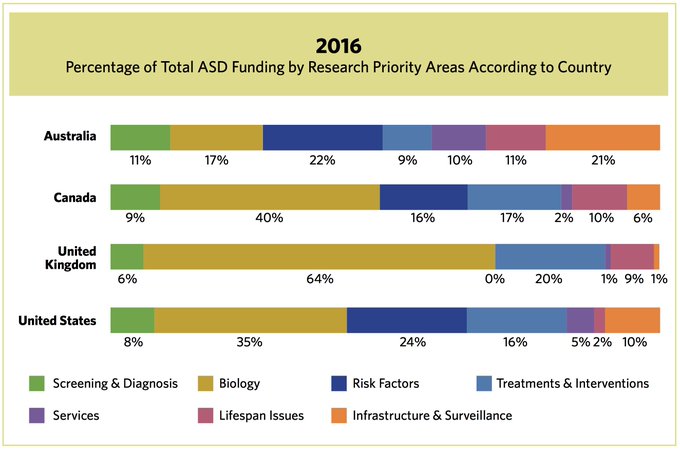
Over the past nine years in the United States (U.S.), the Office of Autism Research Coordination (OARC) at the National Institutes of Health (NIH) has published an annual report describing and analyzing the autism spectrum disorder (ASD) research portfolio across multiple government and non-government funders in the U.S. The report provides comprehensive information about autism research funding to the Interagency Autism Coordinating Committee (IACC), a U.S. federal advisory body, to help in its efforts to monitor ASD research efforts and trends. For the first time, a similar approach has been used to analyze ASD research across four countries – the United States, the United Kingdom, Canada, and Australia – to better understand the global ASD research funding landscape.
From the 
  • Screening and Diagnosis: Each of the four countries has similar proportions in funding in screening and diagnosis, with nearly a tenth of each country’s funding going towards this research area.
  • Biology of ASD: For the U.K., U.S., and Canada, biology was the greatest area of investment. For Australia, biology received a significant investment, although it was not its most well-funded research area.
  • Risk Factors: Research into identifying risk factors was the largest funded area in Australia, the second largest funded area in the U.S. and the third largest funded area in Canada. The U.K. did not fund research for risk factors in 2016.
  • Treatments and Interventions: Across all four countries, treatments and interventions saw considerable portions of funding.
  • Services: Services research had varying degrees of investment. Australia had the largest proportion of investment in services research among the four countries. For the U.K. and Canada, it was the least funded area of research.
  • Lifespan Issues: Research on lifespan issues received a similar proportion of funding in Australia, Canada, and the U.K., whereas it was the least funded area of research in the U.S.
  • Infrastructure and Surveillance: There were also differences in infrastructure and surveillance investment among the four countries. It was the second largest funded area in Australia and had a significant portion of funding in the U.S., however it was a small portion of funding for Canada and the U.K. in 2016.

Image

Thursday, January 3, 2019

Cross-Cultural Study of Screening Instruments

In The Politics of Autism, I explain that professionals cannot yet reliably diagnose autism through blood tests or brain scans, so they have to rely on observation of behavior.  There are multiple problems with this approach, including cultural differences.
Moreover, the definition of behavioral symptoms rests on Western – and specifically American – expectations about the behavior of children and adults. But what is “autistic” in this context may be “normal” in another. In rural South Africa, for instance, young children avoid direct eye contact with adults because their culture considers it disrespectful.
Sophie Carruthers and colleagues have an article at Molecular Autism titled  "A Cross-Cultural Study of Autistic Traits Across India, Japan and the UK."  The abstract:
Background: There is a global need for brief screening instruments that can identify key indicators for autism to support frontline professionals in their referral decision-making. Although a universal set of conditions, there may be subtle differences in expression, identification and reporting of autistic traits across cultures. In order to assess the potential for any measure for cross-cultural screening use, it is important to understand the relative performance of such measures in different cultures. Our study aimed to identify the items on the Autism Spectrum Quotient (AQ)-Child that are most predictive of an autism diagnosis among children aged 4–9 years across samples from India, Japan and the UK. 
Methods: We analysed parent-reported AQ-Child data from India (73 children with an autism diagnosis and 81 neurotypical children), Japan (116 children with autism and 190 neurotypical children) and the UK (488 children with autism and 532 neurotypical children). None of the children had a reported existing diagnosis of intellectual disability. Discrimination indices (DI) and positive predictive values (PPV) were used to identify the most predictive items in each country.
Results: Sixteen items in the Indian sample, 15 items in the Japanese sample and 28 items in the UK sample demonstrated excellent discriminatory power (DI ≥ 0.5 and PPV ≥ 0.7), suggesting these items represent the strongest indicators for predicting an autism diagnosis within these countries. Across cultures, good performing items were largely overlapping, with five key indicator items appearing across all three countries (can easily keep track of several different people’s conversations, enjoys social chit-chat, knows how to tell if someone listening to him/her is getting bored, good at social chit-chat, finds it difficult to work out people’s intentions). Four items indicated potential cultural differences. One item was highly discriminative in Japan but poorly discriminative (DI < 0.3) in the UK and India, and a further item had excellent discrimination properties in the UK but poorly discriminated in the Indian and Japanese samples. Two additional items were highly discriminative in two cultures but poor in the third.
Conclusions: Cross-cultural overlap in the items most predictive of an autism diagnosis supports the general notion of universality in autistic traits whilst also highlighting that there can be cultural differences associated with certain autistic traits. These findings have the potential to inform the development of a brief global screening tool for autism. Further development and evaluation work is needed.