Search This Blog

Showing posts with label inequality. Show all posts

Tuesday, May 12, 2026

Inequality and Section 504 Accommodations

 In The Politics of Autism, I discuss the legal rights of people with autism and other disabilities.   Inequality is a big part of the story

Kevin Mahnken at the 74:
While intended as a universal benefit, educational support for disabled children is significantly segregated by class, according to a paper released in January. The decade-spanning analysis of state and federal data found that wealthy families were twice as likely as poorer ones to be granted accommodations under the federal law Section 504.

A similar split was present in the vast architecture of special education offered through Individualized Education Programs — though in that case, the dynamic was reversed, with IEP recipients much more likely to come from low-income families than well-off ones.

...

In 2019, a pair of investigations by Wall Street Journal and New York Times revealed that school districts with higher average incomes enrolled conspicuously larger numbers of students with 504 plans. Eligible pupils are typically given extra time to complete assignments and tests, raising concerns that some parents exploited the program to gain unneeded academic perks for their kids.

...

[UCI doctoral student Nick] Ainsworth and his colleagues created the study by gathering academic records for millions of Oregon students between the 2008–09 and 2018–19 school years, then linking them to IRS tax files over the same period. The combined data allowed them to see not only which students were classified as needing IEP vs. 504 services, but which specific disability they reported.

In all, one-quarter of the most disadvantaged students had an IEP, a portion more than three times greater than that of the very wealthiest students. Meanwhile, nearly twice as many students from families near the top of the income scale were assigned a 504 plan than those near the bottom (2.9 percent vs. 1.5 percent).

Paul Morgan, a professor at the University of Albany whose work focuses on disability classification, said those patterns reflected important distinctions in how the two offerings are used.

IEPs provide specialized instruction geared toward each student’s learning goals, sometimes including placement outside general education classrooms. By contrast, 504 plans only require schools to make the requisite modification to give students equal access to learning opportunities. Their looser eligibility standards may allow parents with the resources and wherewithal to access support on behalf of children who aren’t obvious candidates for IEPs, Morgan remarked.

“These are benefits that don’t come with a lot of costs. Your child is typically not leaving the classroom,” he said. “They might be seen as beneficial without much downside in terms of tradeoffs.”

Sunday, April 26, 2026

Variation in Autism Diagnosis of Medicaid-Enrolled Children


A release from the Pediatric Academic Societies:
 A new study examined geographic patterns in autism diagnosis by primary care providers among Medicaid-enrolled children in 29 states. The study found that Nevada, South Carolina and Connecticut had the highest rates of autism diagnosis by primary care providers. Findings from the study will be presented at the Pediatric Academic Societies (PAS) 2026 Meeting, taking place April 24-27 in Boston. This study is part of a larger research project, Addressing Structural Disparities in Autism Spectrum Disorder through Analysis of Secondary Data (ASD3), which is funded by the National Institutes of Health.

An autism spectrum disorder (ASD) diagnosis by a medical provider is often required for disability and therapy services access. Given long wait times and limited access to specialty care providers who typically diagnose ASD, some states have expanded primary care provider ASD diagnostic training. Yet little research has examined geographic patterns in primary care providers ASD diagnosis.

"Autism is typically diagnosed by specialists, but various factors such as long wait times can delay this process,” said the ASD3 investigative team. “Primary care providers can offer an additional pathway to early diagnosis, which is important for improving access to needed autism services and supports. Our study looked at Medicaid-enrolled children ages 1-5 in 29 states between 2017-2019, and found that 29% were diagnosed by primary care providers rather than specialists. Rates of autism diagnosis by primary care providers varied significantly between counties, states and regions. We believe that local practice patterns and specialist availability may contribute to this geographic variation."

The sample included 36,263 children across 933 county-sets in 29 states. Overall, 29% of children were diagnosed with ASD by a primary care provider. Regional percentages varied from a median of 20.0% among county-sets in the Midwest to 36.4% in the West. Within-region variation was also high, with interquartile ranges (IQRs) varying from 23.8% in the Midwest to 27.5% in the West. Within-region variation was also high when grouping county-sets by state. For example, the Northeast had both the third highest state (Connecticut, 53.1%) and the third lowest state (New Hampshire, 14.3%) as measured by their median county-set. The neighboring states of South Carolina (60.4%) and Georgia (17.9%), both in the South region, ranked second highest and fifth lowest, respectively. Within-state heterogeneity (IQR) was as low as 6.2% (Connecticut), 9.6% (New Hampshire), and 12.7% (Georgia) and as high as 35.7% (Colorado), 37.6% (Illinois), and 42.3% (Wyoming). Population density showed a slight trend with the densest quartile of county-sets having a median primary care provider diagnosis rate of 24.2%, and 28.6% for the least dense quartile.


Sunday, November 23, 2025

Rural Youths on Medicaid Get Fewer ABA Hours

 The Politics of Autism includes an extensive discussion of insurance and Medicaid services for adults with intellectual and developmental disabilities.

Straiton-Webster, D., & Ingersoll, B. (2025). Short report: Disparities in hours of applied behavior analysis services for Medicaid-enrolled autistic youth. Autism, 0(0). https://doi.org/10.1177/13623613251392495

Abstract

To date, no studies have investigated whether disparities in hours of applied behavior analysis (ABA) exist in the Medicaid system. We used multilevel modeling to analyze Medicaid billing claims for 1,028 autistic youth under the age of 21 years to examine the extent to which there were disparities in hours of ABA services for Medicaid-enrolled youth based on race/ethnicity and rurality. Although younger children received more hours of ABA, F(1, 964.63) = 118.28, p < .001, there were no statistically significant differences in hours of ABA based on minoritized race/ethnicity status or sex. On average, youth served in rural areas received significantly less hours of ABA per month than those in non-rural areas, F(1, 122.13) = 7.89, p = .006; youth in rural areas received 10.86 less hours per month than those in non-rural areas. Results suggest that publicly funded service systems like Medicaid may reduce ABA service disparities by race/ethnicity. Policymakers should focus on improving service provision for youth in rural areas.

From the article:

We found robust evidence of treatment disparities based on rurality; youth served in rural areas received 10.86 hr less of ABA per month compared to those in non-rural areas. Rural areas experience greater geographic barriers, which affect access to both center-based services (e.g., family’s ability to commute to an agency) and home-based services (e.g., provider’s ability to commute to a family's home). Indeed, a recent study found that providers in this system reported difficulty accessing families in rural areas as a significant barrier to the delivery of ABA services (Straiton et al., 2021). These geographic barriers could lead to a higher number of unscheduled or canceled sessions. Furthermore, based on the uneven geographic distribution of autism services, providers in rural areas may need to serve more youth than those in urban and suburban areas (Drahota et al., 2020; Yingling et al., 2022), which limits the number of treatment hours that can be scheduled per child. To improve access to services in rural areas, policymakers and agency leaders should consider targeted recruitment methods and incentive structures for recent graduates to practice in rural locations, provision of flexible supervision models for new graduates, increased use of telehealth service models, and remote consultation services for complex cases (Albright & Williams, 2021; Dew et al., 2013; Mazurek et al., 2017).


Thursday, August 14, 2025

IEP Settlements and Inequality


Maddie Hanna at The Philadelphia Inquirer reports that Pennsylvania schools districts have spent millions to settle special education disputes.
To get a settlement with a school district over special education, first a child has to be identified by the district as requiring services — with an individualized education plan spelling out how the school will meet the student’s needs.

If parents disagree with what a district offers, they can take legal action by filing a due process complaint.

That can trigger formal hearings, which result in public decisions issued by hearing officers. But the vast majority of complaints are resolved through privately negotiated settlements.

As a result, most disputes around special education are happening out of the public eye, with little known about parents’ allegations or what districts are paying out.

“It’s something almost no one knows anything systematic, objective, and complete about,” said Perry Zirkel, a professor emeritus of education and law at Lehigh University.

In the Philadelphia collar counties, where special education-focused law firms have proliferated, lawyers say affluent parents, who know their rights and have the means to hire attorneys, are more likely to sue than poor ones.

The Individuals with Disabilities Education Act — the 1975 federal law entitling students to special education services — has never been fully funded by Congress, leaving schools vulnerable to litigation when they’re strapped to deliver the “free appropriate public education” the law requires, [Attorney Andrew] Faust said.

The IDEA is a “very much a rich-get-richer, poor-get-poorer statute,” Faust said, because unlike other civil rights laws, it relies on parents, not the government, to enforce it. [As my book notes, IDEA is not a civil rights law at all, but a "conditions of aid"law.]

Wednesday, May 28, 2025

Early Diagnosis and Medicaid


Lay abstract:
In the United States, when children on the spectrum are diagnosed before age three, it can help them get the services they need to thrive. There are many differences between states as far as how many children are diagnosed with autism and the average age when they are diagnosed. Some work suggests these differences may be due to state polices, which include the laws and processes governments and organizations follow. Little research has tried to understand the similarities and differences between state policies related to autism diagnosis. Because of this, our study looked at how state policies impact the timing of autism diagnosis in the United States. We interviewed 57 experts in five states and nationally from 2021 to 2023. Four key themes were identified including (1) developmental monitoring often leads to screening, but there is much variation in and across states; (2) family, community, and healthcare factors shape pathways to autism diagnosis in states; (3) early intervention and education programs play a role in autism diagnosis; and (4) systematic differences in access to diagnosis services persist for certain groups of children and families such as those with limited English-speaking abilities. This study’s findings point to certain state and federal policy changes or enhancements to reduce the age of autism diagnosis and ameliorate persistent disparities in autism diagnosis.
From the article:
Many participants noted that children with Medicaid often have a more challenging time obtaining autism evaluation due to low reimbursement rates and limited providers who will accept Medicaid coverage for autism evaluation across the five states. These challenges with Medicaid coverage and access to autism diagnostic services were attributed to longer wait times for poor and rural families, thereby perpetuating inequity in early autism diagnosis. According to one participant:
We have [. . .] approximately 50, that I know of, professionals that can diagnose autism. Or actively do. Out of that 50, there’s probably five, that I know, who are quality, qualified autism experts that accept AHCCCS [Arizona Health Care Cost Containment System, Medicaid] payments for those evaluations. So, if you don’t have private insurance or you can’t afford a private evaluation, you are . . . sent to Phoenix Children’s Hospital. And their wait list is . . . 12 to 18 months. (Participant 33, Arizona)
Participants additionally explained that when an autism evaluation does not yield a diagnosis, parents may be forced to pay out of pocket for the evaluation because their insurance plan will not cover the cost. Nevertheless, participants explained how some healthcare organizations have determined ways to ensure that children with Medicaid receive an autism diagnosis. For example, several participants described that some academic medical centers could pursue supplemental payment for low Medicaid reimbursement rates through state programs such as early and periodic screening, diagnostic, and treatment (EPSDT). Some participants elaborated that Medicaid coverage may be a greater barrier to early diagnosis in states where the Medicaid program does not accept autism as a qualifying diagnosis (regardless of income) for eligibility.

Sunday, May 11, 2025

Autism and Rural Health Care

In The Politics of Autism, I discuss the day-to-day challenges facing autistic people and their families.  Those challenges can be especially daunting for those living in rural areas.

 Zhang, E., Alduraidi, W., Snyder, M., Kaiser, E., Hunley, S., Davis, A., Nelson, E.-L., & Cheak-Zamora, N. (2025). Pilot rural–urban comparison of health care experiences among autistic adolescents and young adults. Autism, 0(0). https://doi.org/10.1177/13623613251337506.

Lay abstract

Health care can be especially challenging for young autistic people, particularly when they move from child to adult health care. Our pilot study looked at whether the health care experiences are similar or different for autistic young people living in rural areas versus urban areas. We surveyed 180 autistic people aged 14–25 years about their health care experiences, including 96 from urban areas and 84 from rural areas. The survey asked about their experiences in finding providers, getting appointments, working with providers, and how well their providers understood autism. The results showed that rural young autistic people face some unique challenges. They often had to travel farther to find providers. They were more likely to work with one provider and report that their providers did not understand autism well compared to urban young autistic people, who often could choose between different providers. Interestingly, both rural and urban participants felt similarly about how well they could talk with their providers once they started working with them. Dental care stood out as particularly challenging among different health care services—rural participants had trouble finding dentists who accepted their insurance, while urban participants were more likely to have no dental insurance at all. These findings highlight important areas for improvement. Rural communities need more autism-trained providers and better access to nearby health services. In urban areas, addressing gaps in insurance coverage is critical. Together, we should improve care for all young autistic people, no matter where they live.

Sunday, December 22, 2024

Material Hardship

 In The Politics of Autism, I discuss the day-to-day challenges facing autistic people and their families

Anderson, K. A., Radey, M., Bishop, L., Aguirre Mtanous, N. G., Koenig, J., & Shea, L. (2024). Material hardship and sources of support for autistic adolescents and their families. Autism, 0(0). https://doi.org/10.1177/13623613241304503

Lay abstract:

This exploratory study used the Future of Families and Child Wellbeing Study (FFCWS) to compare the financial well-being of families of adolescents with and without autism. Recognizing the gap in autism research, which predominantly measures financial well-being through household income, this study employed a multidimensional approach, including indicators of assets, material hardships, and both formal and informal safety net access. We found that families with autistic adolescents experienced greater financial instability, including a higher likelihood of substantial income drops and bankruptcy. Despite similar access to food assistance programs, food insecurity was notably higher among these families, especially in the lowest income brackets where nearly all families utilized food assistance. Furthermore, material hardship prevalence (46.4%) exceeded income poverty (29.8%), among families with autistic adolescents. A substantial proportion of middle- to high-income families also experienced hardships, had no assets, and lacked connection to safety net programs, suggesting that income-based metrics may not fully capture the financial challenges families face. The findings highlight the need for policies that acknowledge the broader financial needs of families with autistic adolescents, underscoring the inadequacies of current support systems.


From the article:

Our study found significant financial instability in families with autistic adolescents, who faced a higher likelihood of substantial income drops and were almost twice as likely to declare bankruptcy compared with families with non-autistic adolescents. Challenges uniquely exacerbated by the demands of autism care, including employment disruptions and high service expenditures, may contribute to the greater risk of experiencing substantial income drops and increased likelihood of bankruptcy, especially for single-parent households (McAuliffe et al., 2017). Despite these challenges, these families reported less access to liquid assets, such as the ability to secure loans or cosigners, compared with their counterparts. This economic volatility underscores the critical need for policies focused on asset accumulation and strengthening informal support networks to better support these families’ financial stability. Interestingly, while high food insecurity remains a severe issue, families with autistic adolescents do not face greater risks regarding bill-paying and utility hardships compared with other families. This difference may be linked to the higher rates of SSI/SSDI receipt among autistic adolescents compared with those without autism, despite families of autistic adolescents receiving lower annual payments than their non-autistic counterparts. However, the high prevalence of food insecurity amid low bill-paying hardships suggests a targeted need for programs specifically enhancing food access.


Sunday, May 5, 2024

California Data


O’Sharkey, K., Mitra, S., Paik, Sa. et al. Trends in the Prevalence of Autism Spectrum Disorder in California: Disparities by Sociodemographic Factors and Region Between 1990–2018. J Autism Dev Disord (2024). https://doi.org/10.1007/s10803-024-06371-w

Abstract
Autism Spectrum Disorders (ASD) prevalence has risen globally, with regional variation and sociodemographic disparities affecting diagnosis and intervention. This study examines ASD trends from 1990 to 2018 in California (CA), focusing on sociodemographic factors that may inform policy/interventions. Using CA Department of Public Health birth records (1990–2018) and Developmental Services ASD cases (1994–2022), we analyzed diagnosis incidence by age 4 or 8, stratified by sociodemographic and regional factors. From 1990 to 2018, for each birth year the cumulative incidence of ASD by 4 and 8 years of age in CA increased while the diagnosis age decreased. Distinct patterns emerged over these three decades. Children born to White and Asian and Pacific Islander (API) mothers, or to mothers with higher education or living in high socioeconomic status (SES) neighborhoods exhibited higher ASD cumulative incidences throughout the 1990s and early 2000s. However, in the mid-2000s, ASD incidence in children born to Black or Hispanic mothers, with low education, or living in low SES neighborhoods surpassed that of White/API children or those living in high SES neighborhoods. Black or Hispanic children now have the highest ASD cumulative incidence, even though age at first diagnosis remains lowest in high SES regions, for the highly educated, and for White/API children. ASD cumulative incidence in CA from 1990 to 2018 exhibited demographic reversals with higher rates in children born to Black or Hispanic mothers or lower SES neighborhoods. Black and Hispanic children still have delayed age at diagnosis compared to White/API children.

Thursday, February 29, 2024

Sam Bankman-Fried Cites Autism to Request a Lighter Sentence


Marco Quiroz-Gutierrez at Yahoo:
In a last-ditch effort to get a more lenient sentence, lawyers for disgraced CEO Sam Bankman-Fried are citing his autism as one reason why he should get five to six years in prison instead of the maximum of 110 years laid out by sentencing guidelines.

In a sentencing memo filed Tuesday, lawyers for SBF asked a judge to sentence him to 63 to 78 months in jail in part because he is “uniquely vulnerable in a prison population.” His lawyers claim that SBF’s autism spectrum disorder puts him at higher risk of violence and extortion by other inmates because of how he acts, according to the filing.
“Because individuals with ASD (autism spectrum disorder) may have difficulty responding to certain social cues and contexts, they are at risk from both other inmates and prison guards who may view their failure to respond ‘appropriately’ to social cues as disrespectful or disobedient,” SBF’s lawyers write in the memo.

Bankman-Fried would also have trouble understanding and acting in accordance with any “unwritten rules,” that rely on social cues and differ from the actual rules of the prison, according to the filing.


Monday, February 26, 2024

Autism, COVID, and Inequality

 In The Politics of Autism, I discuss the day-to-day challenges facing autistic people and their families. Those challenges were especially tough during the pandemic.

Anderson, K.A., Radey, M., Rast, J.E. et al. The Economic Impacts of COVID-19 on Autistic Children and Their Families. J Autism Dev Disord (2024). https://doi.org/10.1007/s10803-024-06280-y

Abstract

Purpose

We used data from the National Survey of Children’s Health to (1) examine differences in economic hardship and safety net program use after the implementation of federal relief efforts, and (2) assess whether the COVID-19 pandemic exacerbated autism-based disparities in hardship and program use.
Methods

We examined five dimensions of economic hardship (poverty, food insecurity, medical hardship, medical costs, and foregone work) and four safety net programs (cash assistance, Supplemental Nutrition Assistance Program (SNAP), Special Supplemental Nutrition Program for Women, Infants and Children (WIC), and free or reduced-cost meals). First, we calculated adjusted prevalence and odds ratios to compare pre-COVID (2018–2019) and during COVID (2021) outcomes by autism status. Next, we calculated the adjusted odds of each outcome among autistic children compared to those of children with and without other special healthcare needs at both time points.
Results

COVID-19 exacerbated autism-based disparities in food insecurity, SNAP, and public health insurance, but alleviated inequities in medical hardship, foregone work, and cash assistance. Autistic children did not experience declines in food insecurity or increases in SNAP like other children; medical hardship and foregone work decreased more for autistic children; and the magnitude of autism-based differences in public coverage significantly increased during the pandemic.
Conclusion

Federal relief efforts likely improved economic outcomes of children; however, these effects varied according to type of hardship and by disability group. Efforts to promote economic well-being among autistic populations should be tailored to the financial challenges most salient to low-income autistic children, like food insecurity.

Saturday, February 17, 2024

Early Intervention and Racial Disparities

In The Politics of Autism, I write about the experiences of different economicethnic and racial groups.   Inequality is a big part of the story

 Mendez, A. I., McQueen, E., Gillespie, S., Klin, A., Klaiman, C., & Pickard, K. (2024). Access to Part C, Early Intervention for children younger than 4 years evaluated for autism spectrum disorder. Autism, 0(0). https://doi-org.ccl.idm.oclc.org/10.1177/13623613241229150 

Lay abstract:

Health disparities are defined as preventable differences in the opportunities to achieve optimal health outcomes experienced by marginalized and underrepresented communities. For families with autistic children, health disparities limit accessing early intervention services—which have been found to improve quality of life and other outcomes. One specific early intervention service in the United States is Individuals with Disabilities Education Act, Part C Early Intervention programs, which are federally funded interventions for children birth-to-three with developmental delays. This study adds to this topic by examining which factors impact accessing Part C, Early Intervention services for children who were evaluated for autism. Results showed that only half of the sample received these services despite there being concerns about development for all children. In addition, results showed that those who identified as Black had decreased odds of having accessed Part C, Early Intervention compared to those who identified as White. These results suggest that there are disparities when it comes to accessing important early intervention services that may be negatively impacting the Black autistic community.

From the article:

This study provides important information on treatment disparities for children with an increased likelihood of having autism prior to receiving a diagnostic evaluation for autism. This is an important question to understand, given the growing recognition of the EI system being an entry point to therapeutic supports for many children who go on to receive a medical diagnosis of autism (Eisenhower et al., 2021). Although families of children with developmental delays are able to access Part C EI services irrespective of a medical diagnosis of autism, only half of the participating children were reportedly receiving EI services prior to their diagnostic evaluation, despite all children having developmental concerns that supported a referral for an autism evaluation. In fact, available data on clinical characteristics, including intellectual and developmental skills, revealed no significant differences between children who were and who were not reportedly receiving EI services. This finding persisted even when only considering children who were later diagnosed with autism—only 50% of autistic children had accessed EI services prior to their diagnostic evaluation. These children would have shown clinically significant levels of impairment in social communication and restrictive and repetitive behavior and therefore have all been eligible for EI services.

Although research has not yet examined the developmental trajectories of children who do and do not receive EI services, it is possible that delayed or no enrollment in EI services has negative consequences for child development and family well-being (Adams et al., 2013). Access to Part C, EI may also support enrollment into Part B special education services through the school system. Research suggests that 88% of children enrolled in Part C, EI go on to receive Part B services (i.e. special educations services), whereas only 46.5% of children with developmental delays receive Part B services if they were not previously enrolled in Part C EI services (Shenouda et al., 2022). Therefore, missing the opportunity to enroll in EI services can have long-term effects in the enrollment of and access to special education services after children turn 3 years old.

When investigating the unique role of sociodemographic factors on parent-reported access to EI services, race and age of first parental concern were each related to reported EI service access. More specifically, Black families reported a lower likelihood of having received EI services. This finding is largely consistent with literature demonstrating that Black children experience a number of disparities in accessing autism services, and EI services specifically (Constantino et al., 2020; Shenouda et al., 2022). However, we now know that these disparities are present within broader systems of care that support children prior to an autism diagnosis. Furthermore, the results of this study corroborate the importance of first parental concern (Angell et al., 2018). For this sample, children whose parents became concerned about their development at a younger age were slightly more likely to access EI services. Given that EI services are only available for children birth to 3 years old, it follows that those whose parents notice developmental differences earlier have more time to access those services.


Thursday, November 16, 2023

Neighborhood Disadvantage and Autism Diagnosis

In The Politics of Autism, I write about the experiences of different economicethnic and racial groups.   Inequality is a big part of the story

Xin Yu and colleagues have a report at JAMA Psychiatry titled "Neighborhood Disadvantage and Autism Spectrum Disorder in a Population With Health Insurance."

Key Points

Question Is neighborhood disadvantage associated with a higher likelihood of the diagnosis of autism spectrum disorder (ASD) in a population with health insurance?

Findings In a cohort study that included 318 372 children with health insurance, neighborhood disadvantage at birth was associated with a higher likelihood of ASD diagnoses, independent of maternal education.

Meaning Providing resources for early intervention and family support in communities with a higher likelihood of ASD is important, while maintaining investment for universal screening.
Abstract

Importance Family socioeconomic status has been associated with autism spectrum disorder (ASD) diagnoses. Less is known regarding the role of neighborhood disadvantage in the United States, particularly when children have similar access to health insurance.

Objective To evaluate the association between neighborhood disadvantage and the diagnosis of ASD and potential effect modification by maternal and child demographic characteristics.

Design, Setting, and Participants This cohort study examined a retrospective birth cohort from Kaiser Permanente Southern California (KPSC), an integrated health care system. Children born in 2001 to 2014 at KPSC were followed up through KPSC membership records. Electronic medical records were used to obtain an ASD diagnosis up to December 31, 2019, or the last follow-up. Data were analyzed from February 2022 to September 2023.

Exposure Socioeconomic disadvantage at the neighborhood level, an index derived from 7 US census tract characteristics using principal component analysis.

Main Outcomes and Measures Clinical ASD diagnosis based on electronic medical records. Associations between neighborhood disadvantage and ASD diagnosis were determined by hazard ratios (HRs) from Cox regression models adjusted for birth year, child sex, maternal age at delivery, parity, severe prepregnancy health conditions, maternal race and ethnicity, and maternal education. Effect modification by maternal race and ethnicity, maternal education, and child sex was assessed.

Results Among 318 372 mothers with singleton deliveries during the study period, 6357 children had ASD diagnoses during follow-up; their median age at diagnosis was 3.53 years (IQR, 2.57-5.34 years). Neighborhood disadvantage was associated with a higher likelihood of ASD diagnosis (HR, 1.07; 95% CI, 1.02-1.11, per IQR = 2.70 increase). Children of mothers from minoritized racial and ethnic groups (African American or Black, Asian or Pacific Islander, Hispanic or Latinx groups) had increased likelihood of ASD diagnosis compared with children of White mothers. There was an interaction between maternal race and ethnicity and neighborhood disadvantage (difference in log-likelihood = 21.88; P < .001 for interaction under χ24); neighborhood disadvantage was only associated with ASD among children of White mothers (HR, 1.17; 95% CI, 1.09-1.26, per IQR = 2.00 increase). Maternal education and child sex did not significantly modify the neighborhood-ASD association.

Conclusions and Relevance In this study, children residing in more disadvantaged neighborhoods at birth had higher likelihood of ASD diagnosis among a population with health insurance. Future research is warranted to investigate the mechanisms behind the neighborhood-related disparities in ASD diagnosis, alongside efforts to provide resources for early intervention and family support in communities with a higher likelihood of ASD.

Monday, October 16, 2023

Vaccine Hesitancy and Alternative Medicine

In The Politics of Autism, I analyze the discredited notion that vaccines cause autism. This bogus idea can hurt people by allowing diseases to spread  And among those diseases could be COVID-19.

Antivaxxers are sometimes violent, often abusive, and always wrong


Abstract
Vaccine hesitancy has become a threat to public health, especially as it is a phenomenon that has also been observed among healthcare professionals. In this study, we analyzed the relationship between endorsement of complementary and alternative medicine (CAM) and vaccination attitudes and behaviors among healthcare professionals, using a cross-sectional sample of physicians with vaccination responsibilities from four European countries: Germany, Finland, Portugal, and France (total N = 2,787). Our results suggest that, in all the participating countries, CAM endorsement is associated with lower frequency of vaccine recommendation, lower self-vaccination rates, and being more open to patients delaying vaccination, with these relationships being mediated by distrust in vaccines. A latent profile analysis revealed that a profile characterized by higher-than-average CAM endorsement and lower-than-average confidence and recommendation of vaccines occurs, to some degree, among 19% of the total sample, although these percentages varied from one country to another: 23.72% in Germany, 17.83% in France, 9.77% in Finland, and 5.86% in Portugal. These results constitute a call to consider health care professionals’ attitudes toward CAM as a factor that could hinder the implementation of immunization campaigns.
From the article
Even though vaccinations are one of the most beneficial medical advances in human history, they have been subject to controversy since the first mass vaccination campaigns—e.g., the numerous anti-vaccination leagues that emerged in the U.S. during the last quarter of the 19th century.Citation1,Citation2 Vaccine hesitancy is a complex phenomenon that encompasses various types and degrees of negative attitudes and behaviors—e.g., outright rejection, delay, or reluctant acceptance of vaccination.Citation3 There are several sources of vaccine hesitancy among the general population, such as complacency, distrust, and conspiracy beliefs,Citation4 which vary depending on the socio-political context and the type of vaccination. For example, complacency (i.e., unwillingness to get vaccinated due to low perceived risk of vaccine-preventable diseases) is particularly salient in relation to the influenza vaccine,Citation5 whereas conspiracy beliefs and science-related populism tend to manifest during threatening and politically charged events, such as the COVID-19 pandemic.Citation6,Citation7 Numerous studies have also observed vaccine hesitant attitudes among health care professionals (HCPs), which are reflected in lower rates of self-vaccination and vaccine recommendation to patients.Citation8

Prior studies among the general population and nurses suggest that complementary and alternative medicine (CAM) is positively related to vaccine hesitancy.Citation9–14 CAM is defined by the World Health Organization as “a broad set of health care practices that are not part of that country’s own traditional or conventional medicine and are not fully integrated into the dominant health care system”Citation15—in Western societies: homeopathy, acupuncture, energy and crystal healing, reflexology, magnet therapy, or anthroposophic medicine.Citation16–18 Due to its potential effect on willingness to recommend and receive vaccines, the analysis of the relationship between vaccine hesitancy and CAM endorsement among physicians is particularly relevant due to their direct contact with the general public and vulnerable populations, as well as to their key role in patients’ vaccine-related decision-making processes.Citation19,Citation20

Tuesday, June 13, 2023

Autism by the Numbers: Age of First Intervention

Uncertainty is a major theme of The Politics of Autism.  In the concluding section, I write:
A key question in autism policy evaluation is simple to pose, hard to answer: How do autistic people benefit? How much better off are they as a result of government action? While there are studies of the short-term impact of various therapies, there is surprisingly little research about the long term, which is really what autistic people and their families care about. As we saw in chapter 4, few studies have focused on the educational attainment of autistic youths. For instance, we do not know much about what happens to them in high school, apart from the kinds of classes that they take. One study searched the autism literature from 1950 through 2011 and found just 13 rigorous peer reviewed studies evaluating psychosocial interventions for autistic adults. The effects of were largely positive, though the main finding of the review is that there is a need for further development and evaluation of treatments for adults.

Autism by the Numbers, created by Autism Speaks in collaboration with the National Autism Data Center at Drexel University, has the potential to transform the way we understand and meet the needs of autistic individuals and their families. This central, authoritative hub of reliable data about people with autism will allow insight into the strengths and weaknesses of systems that exist to improve health, education, employment and advocacy. The Autism by the Numbers Annual Report and Dashboard can also be used to support the creation of precision public health programs specific to the diverse needs of the autistic community.


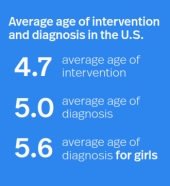
 Autism by the Numbers data also show variation between states in access to diagnosis and early  intervention. 

Infographic showing average age of intervention and diagnosis in the U.S.
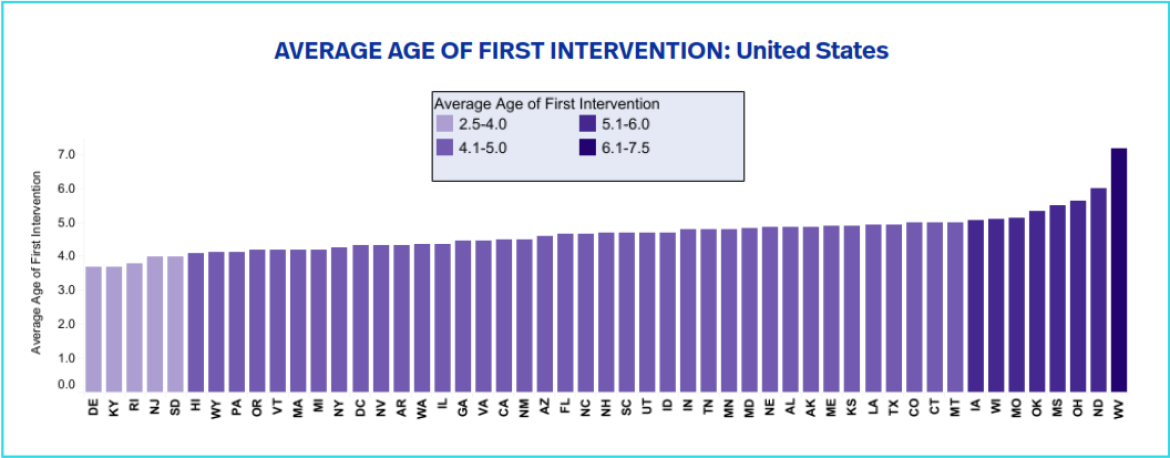
  • Average age of first intervention ranges from 3.7 to 7.2 years of age across states.
  • Average age of diagnosis ranges from 3.6 years to 7.6 years across states.
  • Delaware and Kentucky have the youngest age of first intervention, at 3.7 years in each state.
  • Oklahoma (5.3 years), Mississippi (5.5 years), Ohio (5.6 years), North Dakota (6.0 years) and West Virginia (7.2 years) show an average age of intervention above the national average, indicating a possible need to improve screening processes or access to intervention services.

More in-depth research is needed to understand why some states are able to effectively screen for ASD and provide early intervention services, while others experience significant delays in care.

Bar graph showing average age of first intervention by state in the U.S.

Friday, June 9, 2023

Access to Early Intervention (EI) and Early Childhood Special Education (ECSE)

 In The Politics of Autism, I write about social servicesspecial education and the Individuals with Disabilities Education Act

 A report from  The National Institute for Early Education Research:

The federal Individuals with Disabilities Education Act (IDEA) affords eligible children the civil right of access to special education.1 Access to Early Intervention (EI) and Early Childhood Special Education (ECSE) is essential to support children with disabilities at an early age, setting an early, strong developmental foundation, and putting them on a path towards success. As this report finds, not all young children are equally likely to have access to these important services. 

...

Our key findings are as follows. 

1.The Covid-19 pandemic resulted in fewer children receiving EI and ECSE services. Moreover, the pandemic led to a much larger decrease in EI services for Asian children and a much larger decrease in ECSE for Black children than for others. Such differential decreases cannot be justified, and steps should be taken to address the needs of children who missed out on services. 

2.Asian, Hispanic, and Black children areless likely to receive both EI and ECSE services than are White non-Hispanic children. For Black children, the disparities in access to services are especially large and cannot plausibly be explained by differences in need. These differences are indefensible and should be eliminated. 

3.Boys are twice as likely as girls to receive EI and ECSE. Potential reasons including biological differences need further study.4

4.The percentage of children served in EI and ECSE increases with state median income. Young children in states with the lowest incomes are least likely to receive IDEA services. Whether or not children receive EI and ECSE should not depend on the wealth of the state in which a child lives

 1 Early Childhood Technical Assistance Center (2023). Fact Sheet: Advancing Racial Equity in Early Intervention and Preschool Special Education. Retrieved from: https://ectacenter.org/~pdfs/ topics/racialequity/factsheet-racialequity-2023.pdf 

2 Natural Environments for infants and toddlers receiving early intervention refers to “settings that are natural or typical for a same-age infant or toddler without a disability, may include the home or community settings.” For additional information, see: https://sites.ed.gov/idea/regs/c/a/303.26 

3 The Least Restrictive Environment requirement in IDEA stipulates that “students with disabilities receive their education alongside their peers without disabilities, to the maximum extent appropriate.” For more information see the IRIS Center Information Brief: https://iris.peabody.vanderbilt.edu/wp-content/ uploads/pdf_info_briefs/IRIS_Least_Restrictive_Environment_InfoBrief_092519.pdf 

4 SkÃ¥rbrevik, K. J. (2002). Gender differences among students found eligible for special education. European Journal of Special Needs Education, 17(2), 97-107

Tuesday, January 31, 2023

Racial and Ethnic Disparities

In The Politics of Autism, I write about the experiences of different economicethnic and racial groups.   Inequality is a big part of the story

At JAMA Netw Open,  Bennett M. Liu and colleagues have an article titled "Racial and Ethnic Disparities in Geographic Access to Autism Resources Across the US."

Key Points

Question  Do autistic children belonging to minoritized racial and ethnic groups have access to fewer autism resources than White autistic children in the US and, if so, where are these disparities most significant?

Findings  In this cross-sectional study involving 530 965 autistic children and 51 071 autism services in the US, analyses by core-based statistical area revealed that American Indian or Alaska Native, Black or African American, and Hispanic or Latino autistic children had access to significantly fewer resources than White autistic children.

Meaning  These findings suggest that autistic children from minoritized racial and ethnic groups experience significant disparities in access to autism services, with certain core-based statistical areas having greater inequities than others, necessitating a prioritized response strategy to address these disparities.

Thursday, January 26, 2023

Prevalence and Inequality

Autism rates tripled among children in the New York and New Jersey metropolitan area from 2000 to 2016, according to a study published Thursday in the journal Pediatrics.

The authors, a team from Rutgers University, calculated the trend by analyzing Centers for Disease Control and Prevention estimates of the number of children who've been identified as having autism spectrum disorder by age 8.

Although there is no medical test for autism, the CDC has established a network of 17 sites across the country that estimate autism rates based on a combination of formal medical diagnoses and records from schools and health care providers.

Nationally, the rise in autism rates has been similar to the trend in New York and New Jersey, according to a 2021 CDC report. One in 54 children had been diagnosed with autism by age 8 in 2016, compared to 1 in 150 in 2000.

Advances in diagnostic capabilities and greater understanding and awareness of autism spectrum disorder seem to be largely driving the increase, the Rutgers researchers said. But there’s probably more to the story: Genetic factors, and perhaps some environmental ones, too, might also be contributing to the trend.

Precisely what those other factors are is still unknown, but researchers are at least clear on one fact: Autism has nothing to do with vaccines.

"We know for sure, for so many years now, that vaccines don’t cause autism," said Santhosh Girirajan, an associate professor at Pennsylvania State University who studies the genetic underpinnings of neurodevelopmental disorders and wasn't involved in the new study.
“One of the assumptions about ASD is that it occurs alongside intellectual disabilities,” said Josephine Shenouda, an adjunct professor at the Rutgers School of Public Health and lead author of the study published in the journal Pediatrics. “This claim was supported by older studies suggesting that up to 75 percent of children with autism also have intellectual disability.”

“What our paper shows is that this assumption is not true,” Shenouda said. “In fact, in this study, two-in-three children with autism had no intellectual disability whatsoever.”

Using biannual data from the New Jersey Autism Study, researchers identified 4,661 8-year-olds with ASD in four New Jersey counties (Essex, Hudson, Ocean and Union) during the study period. Of these, 1,505 (32.3 percent) had an intellectual disability; 2,764 (59.3 percent) did not.

Subsequent analysis found that rates of ASD co-occurring with intellectual disability increased two-fold between 2000 and 2016 – from 2.9 per 1,000 to 7.3 per 1,000. Rates of ASD with no intellectual disability jumped five-fold, from 3.8 per 1,000 to 18.9 per 1,000.

Shenouda said there may be explanations for the observed increases, though more research is needed to specify the precise causes.

“Better awareness of and testing for ASD does play a role,” said Walter Zahorodny, associate professor at the Rutgers New Jersey Medical School and senior author on the study. “But the fact that we saw a 500 percent increase in autism among kids without any intellectual disabilities – children we know are falling through the cracks – suggests that something else is also driving the surge.”

ASD prevalence has been shown to be associated with race and socioeconomic status. The Rutgers study identified that Black children with ASD and no intellectual disabilities were 30 percent less likely to be identified compared with white children, while kids living in affluent areas were 80 percent more likely to be identified with ASD and no intellectual disabilities compared with children in underserved areas.


Tuesday, December 6, 2022

The Cost of Red Tape

Uncertainty and complexity are major themes of The Politics of Autism.

Political scientist Steven M. Teles has coined a term that comes in handy for any discussion of autism services: kludgeocracy. In computing, a “kludge” is a system consisting of ill- matched elements or parts made for other applications. Engineers patch it together and hook it up to an existing system in order to solve a new problem. Kludges are complicated, hard to understand, and subject to crashes. Teles says that this description fits much of American public policy: “From the mind-numbing complexity of the health care system … our Byzantine system of funding higher education, and our bewildering federal-state system of governing everything from the welfare state to environmental regulation, America has chosen more indirect and incoherent policy mechanisms than any comparable country."

 Steven M. Teles, “Kludgeocracy: The American Way of Policy,” New America Foundation, December 2012. Online: https://static.newamerica.org/attachments/4209-kludgeocracy-the-american-way-of-policy/Teles_Steven_Kludgeocracy_NAF_Dec2012.d8a805aa40e34bca9e2fecb018a3dcb0.pdf


 Justin Schweitzer, Emily DiMatteo, and Nick Buffie at the Center for American Progress:
Just as it is expensive to be poor, it is expensive to be disabled. Households with disabled adults need 28 percent more income, on average, to achieve the same standard of living as adults without a disability. Moreover, the added costs of medicines and medical procedures, accessibility accommodations in homes and transportation, and many other regular expenses are exacerbated by the fact that disabled workers—if they are able to work and are employed—earn just 74 cents for every dollar earned by their nondisabled counterparts; Black and Hispanic disabled workers, in particular, earn 60 and 61 cents, respectively, for every dollar earned by nondisabled, full-time white workers. The extra cost of living for disabled people is often referred to as the “disability tax.”

Administrative burdens within programs intended to help people with disabilities add another dimension to the disability tax, often financially but also through additional drains on disabled people’s time, energy, and physical and mental well-being. Broadly speaking, experts have identified three categories of costs that administrative burdens impose: 
  1. Learning costs derive from the complexity of these systems and a lack of public education and awareness about a program’s existence, eligibility, benefits, and rules as well as how best to navigate the entire process.
  2. Psychological costs are the health impacts of the stress, stigma, and lack of autonomy that come with navigating these programs’ administrative processes.
  3. Compliance costs are all the time, energy, and money spent completing administrative requirements. These have also been referred to as the “time tax.”
The disability community often uses a metaphor called the “spoon theory,” coined by writer Christine Miserandino, to describe how people with chronic illness have limited energy to spend on daily tasks. This energy—symbolized by spoons—can vary on a given day depending on the individual’s medical condition and other variables. According to this metaphor, each activity uses up a spoon, forcing individuals to make difficult decisions about what activities, no matter how small, they can do. Specifically, administrative burdens often sap what little energy disabled people have, which can make it challenging for them to complete the rest of their daily responsibilities.
  1. .