Search This Blog

Showing posts with label social services. Show all posts

Monday, May 25, 2026

Literature on Older Autistic Adults

In The Politics of Autism, I write about the everyday struggles facing autistic people and their families.  The struggles of autistic adults have not received enough scholarly attention.

Nicholas, D.B., Nelson, H., Shafai, F. et al. Examining the Lived Experiences of Older Autistic Adults: A Synthesis Review of Qualitative Literature. J Autism Dev Disord (2026). https://doi.org/10.1007/s10803-026-07343-y

This review reflects literature published from 2013 to 2024, with a focus on aging, older adulthood and autism. Themes in this literature addressed ways of being and sense of self (Hickey et al., 2018; Hwang et al., 2017; Moseley et al., 2020), relationship with others (Hickey et al., 2018; Mason et al., 2019; Hwang et al., 2017, 2023), pathways to meaning and enjoyment (Hickey et al., 2018; Hwang et al., 2017, 2023; Mason et al., 2019; Moseley et al., 2020; Waldron et al., 2022), and daily life at home or in the community (Hickey et al., 2018; Hwang et al., 2017, 2023; Mason et al., 2019; Moseley et al., 2020; Waldron et al., 2022). Notably, positive experiences and outcomes generally related to personal experience and meaning-making, whereas negative outcomes consistently were associated with healthcare challenges and service gaps.
The literature highlighted gaps in services and service provider knowledge about aging with autism (Barber, 2015; Heijnen-Kohl et al., 2022; Mansour et al., 2024; Moseley et al., 2020). Stigma and bias were noted to result in negative experiences with healthcare professionals (Mansour et al., 2024; Moseley et al., 2020), barriers to accessing supports (Moseley et al., 2020) and reduced individualized service provision (Hwang et al., 2023). Inaccurate diagnoses negatively impacted treatment plans and eligibility for needed services (Mansour et al., 2024), resulting in an overall dearth of systemic support (Barber, 2015; Hwang et al., 2017; Mansour et al., 2024; Moseley et al., 2020).

Reflecting on such gaps, improved support across the lifespan was strongly recommended, including the need to cultivate greater trust among autistic people in their healthcare providers, based on findings that earlier experiences influence later engagement and trust (Moseley et al., 2020). Training for service and healthcare providers was advocated (Trollor et al., 2022), with attention to processes of aging, autism and the experiences of older autistic adults (Barber, 2015; Heijnen-Kohl et al., 2022; Moseley et al., 2020).

Tuesday, July 16, 2024

State of the States on IDD

The Politics of Autism includes an extensive discussion of insurance and  Medicaid services for adults with intellectual and developmental disabilities

Kansas University Center on Developmental Disabilities, and director, State of the States in Intellectual and Developmental Disabilities project
In FY2021, 87% of the total public funding for IDD services was distributed through Medicaid-related services.
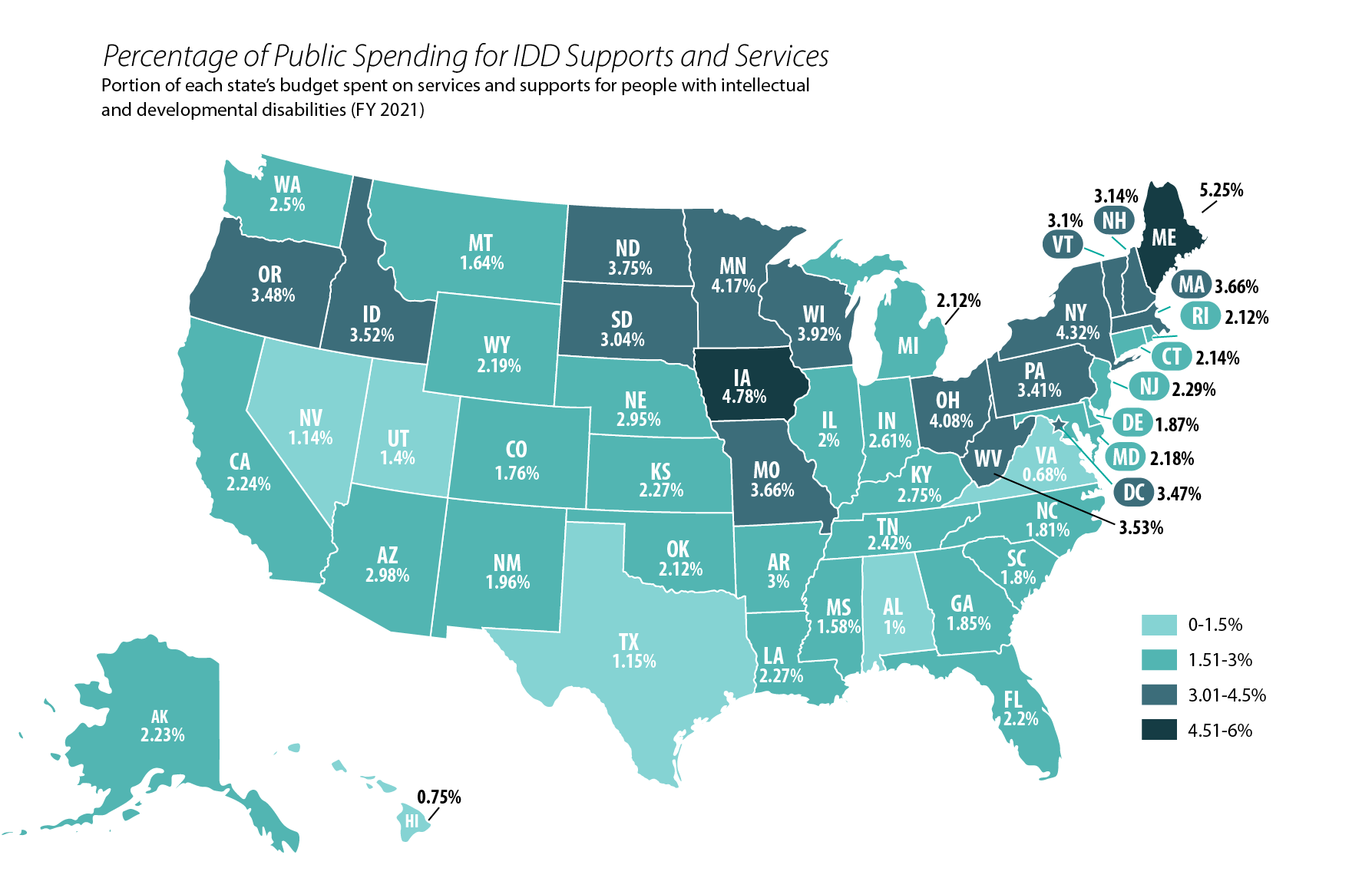
As a percentage of each state’s budget, supports for intellectual and developmental disability services make up between less than 1% and up to 6% of any state’s budget, or an average of 2.57%. This is illustrated in the map below.

This map of the United States shows the percentage of public spending in each state for IDD supports and services, ranging from .75% in Hawaii to 5.25% in Maine.


After Olmstead, funding shifted away from congregate settings:


Saturday, March 30, 2024

Autism CARES Reauthorization

 In The Politics of Autism, I discuss the congressional role in the issue.

Anne Roux at the Policy Impact Project of the AJ Drexel Autism Institute:
The federal Autism CARES Act, which has existed for the past 17 years, is due for renewal by September 30, 2024. This law authorizes funding and guidance for autism surveillance, training, and research programs. Before these programs began in the early 2000s, there was little to no policy that directly addressed autistic people’s needs. Thanks to the establishment of the CDC’s Autism Developmental Disabilities Monitoring (ADDM) program, research and policy activities have grown exponentially, as ADDM quantified the dramatic increase in autism prevalence – now 1 in 36 children.

Findings from scholarly activity, and the aging of the earlier cohorts of autistic youth, have generated new thoughts regarding the focus of Autism CARES Act investments. In recent months, leading autism advocacy organizations have issued statements and provided testimony with recommendations for updates to the Autism CARES Act.*
...

Some proposals also call for restructuring how recommendations for autism research funding are made and how autism policy is coordinated.

Our own services research at the Policy and Analytics Center receives funding through the Autism CARES Act. This funding is critical because services research, which focuses on services that are needed and used by autistic people, has always been allocated less than 10% of autism research funding. This means there is limited research funding focused on improving people’s functioning and quality of life. We have used this funding to advance understanding of the needs of autistic transition-age youth, the needs of autistic individuals who have been historically under-represented in research, and physical health issues common among autistic people. This funding also partly supports publication of the National Autism Indicators Reports which advise decisionmakers and advocates on how autistic individuals and their families are faring. As such, we are uniquely positioned to speak to how the Autism CARES Act could better address the needs of autistic transition-age youth and adults.

Our recommendations:
We concur with the need for increased services research and policy initiatives focusing on:
  • autism care, particularly in the areas of adult diagnosis, which is often prohibitively expensive yet required for program eligibility; mental health; and delivery of physical health services in ways that are appropriate for the sensory and cognitive needs of autistic individuals
  • the communication needs of non-speaking individuals
  • daily life challenges of autistic adults, including accommodations for sensory needs
  • an emerging crisis stemming from limited systems-level capacity to support autistic individuals as they age, particularly those who have aging care partners
We concur with the need for research to improve the system of care for autistic individuals who require round-the-clock support (both long-term and intermittent, depending on people’s needs); and we add the need for research to also improve the system of care for autistic individuals who do not meet eligibility requirement for care given absence of a discrete intellectual disability (but who often have severe and persistent mental illness that interferes with functioning).
We further recommend research and policy focusing on:
  • Effective supports (e.g., financial, respite, training, emotional) for families who are the primary providers of care for autistic people who cannot live on their own, or who cannot find or fund accessible and safe living arrangements in a place of their own. These needs are exacerbated by long wait lists for Medicaid home- and community-based services, a significant shortage of direct support workers, and difficulty finding affordable housing and funding for rental assistance.
  • Understanding of capacity and efficacy of public health insurance mechanisms which are the primary funding source for care of autistic individuals, including investigation of the large numbers of young autistic persons receiving dual Medicaid-Medicare benefits.
  • Cross-system capacity to deliver services and supports in the areas of employment, housing, and planning for the transition into adulthood.
*We reviewed recommendations from the Autism Society of America, the Association of University Centers on Disability, Autism Speaks, and the Autism Science Foundation

.

Monday, February 26, 2024

Autism, COVID, and Inequality

 In The Politics of Autism, I discuss the day-to-day challenges facing autistic people and their families. Those challenges were especially tough during the pandemic.

Anderson, K.A., Radey, M., Rast, J.E. et al. The Economic Impacts of COVID-19 on Autistic Children and Their Families. J Autism Dev Disord (2024). https://doi.org/10.1007/s10803-024-06280-y

Abstract

Purpose

We used data from the National Survey of Children’s Health to (1) examine differences in economic hardship and safety net program use after the implementation of federal relief efforts, and (2) assess whether the COVID-19 pandemic exacerbated autism-based disparities in hardship and program use.
Methods

We examined five dimensions of economic hardship (poverty, food insecurity, medical hardship, medical costs, and foregone work) and four safety net programs (cash assistance, Supplemental Nutrition Assistance Program (SNAP), Special Supplemental Nutrition Program for Women, Infants and Children (WIC), and free or reduced-cost meals). First, we calculated adjusted prevalence and odds ratios to compare pre-COVID (2018–2019) and during COVID (2021) outcomes by autism status. Next, we calculated the adjusted odds of each outcome among autistic children compared to those of children with and without other special healthcare needs at both time points.
Results

COVID-19 exacerbated autism-based disparities in food insecurity, SNAP, and public health insurance, but alleviated inequities in medical hardship, foregone work, and cash assistance. Autistic children did not experience declines in food insecurity or increases in SNAP like other children; medical hardship and foregone work decreased more for autistic children; and the magnitude of autism-based differences in public coverage significantly increased during the pandemic.
Conclusion

Federal relief efforts likely improved economic outcomes of children; however, these effects varied according to type of hardship and by disability group. Efforts to promote economic well-being among autistic populations should be tailored to the financial challenges most salient to low-income autistic children, like food insecurity.

Tuesday, January 16, 2024

Policy Priorities and Navigation

 In The Politics of AutismI discuss the difficulties facing families of newly-diagnosed children.

Patricia Wright at Psychology Today:

The federal government has increased attention to the needs of the autism community for the past couple of decades. But there is much more to do as these issues remain:

  • High rates of underemployment and unemployment for autistic individuals
  •  Families and caregivers report tremendous stress and lack of access to services and supports
  • Students with autism underperform in school
  • Community service providers struggle to attract and retain talent
  • The deeply rooted stigma and stereotypes about autistic people are pervasive

Addressing access to care is a reasonable first step to promoting well-being. The burden of accessing care is tremendous for families. Indeed, family navigation is the first service noted in the Report to Congress.

To repeat from a December post:

 The U.S. Department of Health and Human Services (HHS) has released the 2022 Report to Congress on Supportive Services for Individuals with Autism. This report was requested by the U.S. House of Representatives Committee on Appropriations in House Report 117-96.

From pp. 76-77 of the report:
The complexity of the supportive services landscape points to one important area of need: family navigation supports to help families identify and coordinatecare among the various providers, service types, and forms of coverage. Services are often fragmented among many different providers and in some cases, families may not be aware of the types of supports that are available to them. Families who are already facing significant functional impairments and disabilityassociated life stressors may have to shoulder additional burden of navigating complicated gatekeeping requirements before even identifying whether appropriate supports and services are actually available in their community. In some instances, providers may receive conflicting guidance on whether or not they are able to serve a person with autism, or if they should be referred to other services specific for those with DD. As a result, autistic individuals’ co-occurring conditions, such as mental health conditions, may go unaddressed. Family navigation services have been found to be effective in improving access and adherence to services over time,371 but tools designed specifically for families following a diagnosis of autism are currently limited.372 To be offered starting in October 2022, a new Medicaid health home benefit for children with medically complex conditions is a step towards meeting this need. This benefit will help state Medicaid programs provide person-centered care management, care coordination, and patient and family support. Fragmentation of the service system may be further improved by enhanced “wrap-around” or “continuum of care” services. Wrap-around services refer to the practice of providing all the various services that anindividual may need over time across different areas in their life (e.g., home, school, community). Wrap-around service delivery is a team-based, collaborative case management approach where a number of professionals work together to provide a holistic program of supports. This coordinated approach can help to improve outcomes for individuals and their families.373,374

Sunday, December 31, 2023

IACC Summary of Advances in Autism Research


From the Interagency Autism Coordinating Committee 
The Interagency Autism Coordinating Committee (IACC) has released its 2022 Summary of Advances in Autism Research. This publication provides short, plain language summaries of the top 20 advances in autism biomedical and services research selected by members of the IACC. In addition, the IACC has released an accompanying easy-read version that summarizes the full publication in a briefer, more accessible format.

The 20 studies selected for 2022 highlight potential ways to improve early screening and diagnosis of autism, including through the use of telehealth, and insight into brain differences that may contribute to autism and impact social communication, language development, and sensory processing. The studies also improve our understanding of disparities between autistic adults from different racial and ethnic backgrounds. In addition, a study using data from CDC’s Autism and Developmental Disabilities Monitoring (ADDM) Network found significant racial and ethnic disparities in the receipt of early intervention services. However on a positive note, a separate ADDM study found that the number of U.S. children identified early in life has increased greatly since 2002, providing greater opportunity for the receipt of early intervention services and supports. Lastly, several studies selected for the Summary of Advances investigate important lifespan issues such as disruptions in Medicaid services, vocational outcomes, and differences in the prevalence of co-occurring conditions between autistic individuals diagnosed as children versus those diagnosed as adults.

Articles in the Summary of Advances are grouped according to the topics represented by the seven Questions of the 2021-2023 IACC Strategic Plan for Autism Research, Services, and Policy. Citations for the articles selected for the Summary of Advances, as well as a complete listing of nominated articles, are included in the publication. The 2022 Summary of Advances meets the requirements of the Autism Collaboration, Accountability, Research, Education, and Support (Autism CARES) Act of 2019.

Among the research findings that the publication summarizes:

  • Less than half of the children in New Jersey diagnosed with autism between 2006 and 2016 received early intervention services, and significant socioeconomic and racial/ethnic disparities were observed, underscoring the urgency to address disparities and increase access to early intervention. 
  •  Pediatricians can identify early mental health concerns in school-age children with autism through screening during well-child appointments, and opp
  •  International survey results indicate several barriers, particularly communicating with providers and sensory challenges in waiting rooms, that may affect autistic adults in scheduling and completing primary care visits, leading to worse health outcomes. 
  • Factors measured in childhood such as IQ, adaptive functioning, and degree of autistic traits may predict levels of independence, employment and education, and, to a lesser extent, physical health in autistic adults. 
  • Autistic people diagnosed as adults are more likely to have co-occurring psychiatric conditions than those diagnosed as children, highlighting the importance of mental health supports across the lifespan and the need for research on how timing of diagnosis affects well-being. 
  • Work readiness skills (e.g., adaptability, success in daily routines) may improve employment outcomes for autistic adults. 
  • Medicaid data suggest that co-occurring health conditions among autistic adults, which occur more often than in non-autistic peers, differ based on race and ethnicity. 
  • Lack of lifelong Medicaid coverage for autistic adults in many states leads to higher rates of coverage loss and lower re-enrollment compared to non-autistic peers with intellectual disabilities. 
  • The number of autistic children identified early increased substantially between 2002 and 2016 in the United States, though racial and ethnic disparities remained; analyses suggest median age should not be used to measure progress. 


Friday, December 29, 2023

Autistic Person Is MD Coordinator of Autism Strategy

In The Politics of Autism, I write:  "Support from the general public will be an important political asset for autistic people. Another will be their sheer numbers, since a larger population of identified autistic adults will mean more autistic voters and activists."  

Maya Lora at The Balitmore Sun:
When Maryland publishes its plan for addressing the needs of autistic people next year, it will largely be due to the efforts of one of the community’s own.

Victoria Rodríguez-Roldán is an autistic, Latina trans woman with over a decade of combined experience in the government and nonprofit sectors, according to her biography, who has written for academic journals on the intersection of autistic and LGBTQ+ identities.

In August, Democratic Gov. Wes Moore appointed Rodríguez-Roldán as the state coordinator for autism strategy for the Maryland Department of Disabilities, which recommended Rodríguez-Roldán for the position after a national search.

“We were really impressed with her work in government and nonprofits and really advocating policy changes for many underserved communities,” Secretary Carol Beatty said, adding that one of Rodríguez-Roldán’s most important qualifications is her lived experience. “Our department feels very strongly in how important representation is to the disability community.”
...

According to her LinkedIn, Rodríguez-Roldán previously chaired the board of directors for the Autistic Self Advocacy Network, a Washington, D.C., based organization run by autistic adults. Zoe Gross, the director of advocacy for the network, said when she saw Maryland was looking for a state coordinator for autism policy, she “was really hoping that it would go to an autistic person” because the conversation around autism has been long-dominated by family members of autistic people or non-autistic professionals working in the field of autism.

Sunday, December 24, 2023

Caregivers of Autistic Adults Face Red Tape

 In The Politics of Autism, I write:

When disabled people reach their 22d birthday, they no longer qualify for services under IDEA. ... People in the disability community refer to this point in life as “the cliff.” Once autistic people go over the cliff, they have a hard time getting services such as job placement, vocational training, and assistive technology. IDEA entitles students to transition planning services during high school, but afterwards, they have to apply as adults and establish eligibility for state and federal help. One study found that 39 percent of young autistic adults received no service at all, and most of the rest got severely limited services.
Samara M. Wolpe, Amanda R. Johnson, Sunny Kim have an article at The Journal of Autism and Developmental Disorders titled "Navigating the Transition to Adulthood: Insights from Caregivers of Autistic Individuals." They conducted ten semi-structured interviews with caregivers of autistic young adults focused on transition to adulthood.
The difficulty of locating appropriate services for their child was a frequently expressed sentiment among participants. Many participants expressed the sentiment that, even when they found a seemingly suitable service that they thought would benefit their child, there was so much bureaucratic red tape that they were unable to obtain the service in time to use it and spent much of their free time fighting with service coordinators or attempting to get through to service professionals. One parent best summarized the experiences of wading through the restrictions put in place to limit access to services:
It's a constant battle with Regional Center to get anything that you know benefits your kid. It’s so hard because they control everything, so you have to be polite… it's this constant churning of emotion because you want more for your kid and then you also understand why it's hard to get it, so there's this constant feeling like you're always in battle.” (Natalie)
Additionally, parents expressed frustration with navigating the Regional Center’s vendoring system. One participant stated:
“It’s so exhausting for the families, and then there's so much red tape… For example, they publish their list of vendors, but it's alphabetized, and for consumers of all age ranges for example, birth to 60 … well that's not helpful! I don’t need to know the name of the vendor. I need to know which vendors offer Adult Services, and what services they offer.” (Natalie)
Even those parents and caregivers who are able to get in touch with Regional Center coordinators and add themselves to the waitlist reported difficulty actually obtaining services. One parent (Liza) explained, “He's still living at home and we're in the process of trying to get him into supportive living, you know, we have an agency that agreed to work with us, but everybody's having a really hard time finding staff now so they're long waiting lists.” Even when services have been identified and the organization has agreed to provide the service, families still recalled waiting inordinate amounts of time to have the promised service come to fruition.

Sunday, November 26, 2023

Costs and Benefits of an Autism Diagnosis


In summary then, receiving an autism diagnosis can act as a permission slip, for belonging in the autistic community, for relief from judgement (by self and others), and for access to tailored services and workplace adjustments. However, an autism diagnosis is a double-edged sword and may also come with costs (Ruiz Calzada et al., 2012). For example, autistic people diagnosed in adulthood have reported their experience of being diminished in others’ eyes, especially in the workplace (Romualdez et al., 2021). Such negative experiences may be exacerbated if the thing that drove them to seek a diagnosis was some sort of crisis: mental ill-health or burnout. As a result, many autistic people choose not to disclose their identity at work, fearing negative effects (not without reason) and thus missing out on some of the potential practical benefits (Thompson-Hodgetts et al., 2020). Most strikingly, recent research reports that one-third of autistic doctors had disclosed to no one at all at work (Shaw et al., 2023). Another example of a diagnosis having the precise opposite of the desired effect occurs in mental health services which require a primary or solitary psychiatric diagnosis such that an autism diagnosis becomes an exclusion criterion for access.

Wednesday, September 13, 2023

Broken Employment System

In The Politics of Autism, I write:

Many analyses of autism speak as if it were only a childhood ailment and assume that parents are the main stakeholders. But most children with autism grow up to be adults with autism, and they suffer uniquely high levels of social isolation. Almost 40 percent of youth with an autism spectrum disorder never get together with friends, and 50 percent of never receive phone calls from friends. These figures are higher than for peers with intellectual disability, emotional disturbance, or learning disability. When school ends, many adults with autism have grim prospectsThough evidence is sparse, it seems that most do not find full-time jobs. Compared with other people their age, they have higher rates of depression, anxiety, bipolar disorder, and suicide attempts.
Studies show that autism services can be complicated, creating difficulties for autistic people and their families

Anne Roux and Lindsay Shea have an article at Scientific American titled "A Broken Employment System Leaves Autistic Adults Stranded."

By our estimates, among autistic adults who likely needed job supports, only 1.1 percent received public employment services in 2016 through Medicaid or state vocational rehabilitation programs. These systems are among the only public employment support options for autistic individuals. They are a central focus of Employment First initiatives to bolster disability employment policy in U.S. states. Given deep cracks in the system that provides services for those with developmental disabilities, we suspect that 99 percent of autistic people who need these services are still without them in 2023.

...
The federal government invests $15 billion annually in special education to supplement state and local funding, with the express goal of facilitating employment for people with disabilities. This investment is somehow expected to mature on its own; there is no mandated funding for services after high school. It can be difficult for autistic youth to qualify for adult employment services through vocational rehabilitation or Medicaid-funded home- and community-based services. Families must navigate a confusing array of service systems with no roadmap and no guarantees. Autistic youth with average intelligence are less likely to qualify for services, while those with greater needs may be deemed unemployable. It is no surprise, then, that 42 percent of autistic youth don’t have jobs during early adulthood.

...
Policymakers have attempted to address these gaps. The Build Back Better Act included funds for ending deplorable wait lists for Medicaid home- and community-based services and increasing access to mental and behavioral health care. Reimbursement rates for services temporarily increased during the COVID pandemic. Ultimately, however, these remedies failed to pass or were discontinued.

Tuesday, July 11, 2023

Abandonment in Colorado

In The Politics of Autism, I discuss health care issues and state social services for people with intellectual and developmental disabilities.

Sometimes, emergency rooms are a place of abandonment.

Shaun Boyd at CBS News Colorado: 

A 13-year-old boy with Autism has been forced to live at UCHealth Longs Peak Hospital in Longmont for three weeks after his dad abandoned him and human service workers told hospital employees it would take months to secure placement for the boy due to a lack of resources.

A hospital employee emailed state Rep. Judy Amabile of Boulder last week asking her to intervene.

The employee said Boulder County Human Service workers initially agreed to take custody of the boy and then refused saying he was safe in an emergency department.

"Boulder County DHS has not spent more than five minutes with this child since his arrival three weeks ago," the hospital employee wrote.

Thursday, June 8, 2023

Aging Out in Massachusetts and Pennsylvania

When disabled people reach their 22d birthday, they no longer qualify for services under IDEA. ... People in the disability community refer to this point in life as “the cliff.” Once autistic people go over the cliff, they have a hard time getting services such as job placement, vocational training, and assistive technology. IDEA entitles students to transition planning services during high school, but afterwards, they have to apply as adults and establish eligibility for state and federal help. One study found that 39 percent of young autistic adults received no service at all, and most of the rest got severely limited services.
Maura Sullivan is with ARC, an advocacy group for folks with intellectual and developmental disabilities. She says the situation is dire, a real crisis. "I would say it's gone really beyond crisis and we're looking at a real systemic failure for adults with autism and intellectual and developmental disabilities," Sullivan said.

The ARC estimates there are more than 5,000 in Massachusetts who are not getting all of the help they need. The state tells us, about 70% of those who turned 22 in the last three years are getting some services.

Maura understands the challenges, she is not only an advocate with ARC, she also has two sons with autism. Maura says her son is 22 and has profound autism. She wants him to have a life with dignity and independence where he can go to the bathroom and shower by himself. "These are the little things that I don't know how much other people recognize when you have a child with a more profound disability," Sullivan said.

From WQED Pittsburgh

Autism: Aging Out travels across Pennsylvania to show the successes and challenges individuals and families face when a person with Autism Spectrum Disorder (ASD) turns 21 and navigates new pathways to joining the workforce; living situations; health and wellness; and social engagement. Among the organizations featured in the documentary: Autism Urban Connections Inc., Community Integrated Services, Autism Runs, and Achieva. To see related videos and to explore a list of resources, visit https://www.wqed.org/autism.


Tuesday, January 31, 2023

Racial and Ethnic Disparities

In The Politics of Autism, I write about the experiences of different economicethnic and racial groups.   Inequality is a big part of the story

At JAMA Netw Open,  Bennett M. Liu and colleagues have an article titled "Racial and Ethnic Disparities in Geographic Access to Autism Resources Across the US."

Key Points

Question  Do autistic children belonging to minoritized racial and ethnic groups have access to fewer autism resources than White autistic children in the US and, if so, where are these disparities most significant?

Findings  In this cross-sectional study involving 530 965 autistic children and 51 071 autism services in the US, analyses by core-based statistical area revealed that American Indian or Alaska Native, Black or African American, and Hispanic or Latino autistic children had access to significantly fewer resources than White autistic children.

Meaning  These findings suggest that autistic children from minoritized racial and ethnic groups experience significant disparities in access to autism services, with certain core-based statistical areas having greater inequities than others, necessitating a prioritized response strategy to address these disparities.

Wednesday, August 10, 2022

Closures and Waiting Lists

In The Politics of Autism, I discuss state services for people with intellectual and developmental disabilities.

 Dan Goldberg at Politico:

Private agencies that provide services for the intellectually and developmentally disabled have long warned that, without fresh state and federal funding, they would be unable to provide housing and staff support to the growing number of Americans who need care.

Over the last 12 months, the Covid-19 pandemic’s lingering effects and once-in-a-generation inflation have turned dire predictions into sobering truths, and agency directors, who for years hobbled along on shoestring budgets, have done in 2022 what not long ago would have been unthinkable: closed their doors.

...

Across the country, more than three-quarters of providers said they’ve turned away referrals, and more than half have discontinued programs, according to a survey from the American Network of Community Options and Resources, an advocacy group.

What happens to the residents? They live with siblings or their elderly parents, some who are themselves in need of care, or they become wards of the state, sent to live in larger and larger facilities, the kind of institutionalized settings the country swore off nearly 50 years ago.

...
Most agencies rely on state and federal Medicaid money to pay employees and can’t increase salaries to compete with the retail or food-services industries because Medicaid rates are set by the state. Though that’s always been a challenge, it’s exacerbated during periods of high inflation when wages in other sectors rise and the cost of living increases, making it that much more tempting for employees to take a new job that pays a couple dollars more an hour.

...

Turnover rates have climbed to nearly 50 percent nationally, meaning half of all employees need to be replaced every year, a huge expense in time and training.
...

Most states were helped by last year’s American Rescue Plan, which temporarily boosted federal matching funds for home- and community-based services. Many providers used the bump to supplement wages or offer pandemic signing bonuses, but that money was never intended to be a permanent fix.

“We’ve offered bonuses, but [employees] know that’s not permanent,” Wilush said. “When Target goes to $24 an hour, it’s really hard to compete with that.”

The Biden administration sought to shore up those programs, proposing $400 billion in new money for home- and community-based services in the Democrats’ social spending package. House Democrats put about $150 billion in their version that passed last year — but it was not included in the reconciliation package that the Senate passed this week, meaning it is unlikely providers will see new money any time soon.

Friday, May 13, 2022

Federal Policy on ASD

In The Politics of Autism, I write:

When disabled people reach their 22d birthday, they no longer qualify for services under IDEA. ... People in the disability community refer to this point in life as “the cliff.” Once autistic people go over the cliff, they have a hard time getting services such as job placement, vocational training, and assistive technology. IDEA entitles students to transition planning services during high school, but afterwards, they have to apply as adults and establish eligibility for state and federal help. One study found that 39 percent of young autistic adults received no service at all, and most of the rest got severely limited services.
 
Highlights
  • Public policies shape the practical realities of those affected by autism.
  • Socially constructed understandings of autism are embedded in policies.
  • Federal ASD-specific policies reinforce ASD as a largely medicalized construct
  • Initial ASD policies framed children with ASD as “worthy” of recognition.
  • Later ASD polies conferred material resources on medical research and surveillance.
Abstract
Public policies play an influential role in shaping public opinion about health conditions, who is affected by them, and potential pathways for identification and intervention. This study draws upon a social constructionist perspective of policy design and disability to examine how autism spectrum disorder (ASD) has been framed in United States federal legislation. Qualitative content analysis of autism legislation passed between 1973 and 2019 indicates that policies reinforced ASD as a largely medicalized, neurobiological condition of childhood; this was reflected in both the policy aims, sources of knowledge and groups prioritized to address ASD; and the symbolic or material resources committed (or not committed) by enacted federal legislation to specific constituencies. Policy aims of early ASD legislation were symbolic in nature, focusing predominantly on framing children with ASD as a group worthy of public recognition. More recent legislation, in contrast, conferred material resources – albeit in targeted ways. Funding for surveillance and medical research on causation, early detection, treatment, and health professional training were prioritized with little attention to either service delivery needs of individuals with ASD and their families, supports over the lifecourse, or the social factors influencing ASD.

From the article:

Enacted federal legislation also pays little attention to addressing the “service cliff” individuals with ASD can face in early adulthood (Cheak-Zamora et al., 2014; Volkmar et al., 2017) or subsequent needs that may arise throughout one's lifecourse (Chan and Leung, 2021; Gillespie-Lynch et al., 2021). More than hortatory attention to adults did not appear until CARES 2014 and it remained limited. For example, despite surveillance of ASD in adulthood being added into recent policies such as CARES 2014 and 2019, population-based estimates (state and national) do not exist due to the paucity of surveillance programs funded for this purpose (Dietz et al., 2020).

Lack of attention to adults with ASD and caregivers in the allocations that are supported by federal ASD policy might stem in part from the issue context around ASD originally being established and dominated by pediatricians (Happé and Frith, 2020). Ensuing legislation and awareness campaigns revolved around children, despite decades of evidence suggesting that ASD characteristics can persist over the lifespan (Howlin and Magiati, 2017; Nicolaidis et al., 2014). The dominant frame of ASD as a childhood disorder may also reflect differences in societal views about who is deemed worthy of policy intervention, as well as different processes of social monitoring and control that vary over the lifecourse (Collins and Mead, 2020). Children's perceived deservingness may dissipate with age, underscoring the variability of group constructions and power over time (Collins and Mead, 2020). The dominant framing could ultimately send the message that ASD is not a lifespan issue, undermining the challenges many adults and their caregivers report facing.


Saturday, January 22, 2022

Texas Is a Tough State

In The Politics of Autism, I write about special education and the Individuals with Disabilities Education ActSome states do a reasonably good job with education and social services, but Texas has not been one of them. A 2016 Houston Chronicle investigation revealed that tens of thousands of disabled students  were refused access to services because of a de-facto enrollment cap.

Lauren Castle at The Fort Worth Star-Telegram:

Forty-six percent of Texas children ages 9 months to 35 months received a developmental screening, according to 2018-2019 data from the Annie E. Casey Foundation. The Centers for Disease Control and Prevention recommend that all children should have a developmental screening and formal test even if there are no concerns.
While pediatricians are able to help families with concerns on child development, continuous health care can be a challenge for some families. Dr. Christina Robinson, medical director at the University of North Texas Health Science Center’s pediatric mobile clinic, has noticed patients facing multiple barriers to care.
...
“We have noticed that there is usually not just one barrier, but layers of barriers our families are struggling with,” Robinson said. “When one barrier may not exist one time, the next time you see them another barrier might be there when the other one hasn’t resolved.”

 The state’s Early Childhood Intervention program underwent a federal investigation that concluded in 2020. The US Department of Education determined that not all of the young children eligible for the agency’s programs were provided services, according to an Oct. 2020 letter sent to the Texas Health and Human Services Commission.

Texans Care for Children, a policy organization, stated in a 2020 report that the state program overall was under-enrolling infants and toddlers across the state, and disparities were seen among children of color. “In 2018, Texas [Early Childhood Intervention] served 2.34 percent of children under age three, compared to the national average of 3.74 percent, ranking the state 46th in the nation,” the Texans Care for Children report stated. “While Texas [Early Childhood Intervention] enrollment is low for children of all backgrounds, it is disproportionately low for Black children.”


Sunday, January 16, 2022

Serious Problems in Pennsylvania

In The Politics of Autism, I discuss the day-to-day challenges facing autistic people and their families.  One is a shortage of caregivers and direct support professionals, which is likely to get worse.  

An editorial in The Pittsburgh Post-Gazette:

Sandi Shaffer lost her house because her daughter is disabled.

That sentence should make every politician in Pennsylvania sick. It represents a catastrophic failure of the commonwealth’s services for those with intellectual disabilities and autism (ID/​A) — services it is bound by law, not to mention basic human dignity, to provide.

The catastrophe is ongoing, and worsening every day.

According to the state, there are about 58,000 people with ID/​A currently receiving services from direct support professionals (DSPs) across Pennsylvania. Some of these people only require infrequent check-ins with their care providers, but others — about 12,000 — are getting intensive support in the day-to-day business of staying safe, clean and healthy.

But due to chronic underfunding, exacerbated by the coronavirus pandemic, 6,500 Pennsylvanians with ID/​A have lost services in the past 18 months. And 12,000 are on a waiting list — an interminable queue from hell that seems, to families who are on it, like an elaborate and cruel joke.

Of those on that eternal list, 5,000 have an emergency need. But there are no DSPs to care for them.

That’s where Ms. Shaffer and her daughter, Kate, find themselves. Kate, who is non-verbal and requires 24/​7 supervision, graduated from the Children’s Institute of Pittsburgh in 2017. She has been on a waiting list for a state-funded DSP for 16 years.

Ms. Shaffer lost her full-time job because she couldn’t be in two places — at work and with her daughter — at once. She couldn’t keep up on her mortgage. She now rents in Westmoreland County, holds down two part-time jobs, cobbles together care for Kate during the hours she can’t be present and cares for Kate when she is present — all while also caring for her elderly mother.

Saturday, January 8, 2022

Disabilities, COVID, and Food Insecurity

In The Politics of Autism, I discuss the day-to-day challenges facing autistic people and their families.  One is food insecurity.

The pandemic burdened the disability community even more severely. The U.S. Census Bureau’s COVID-19 Household Pulse Survey data from March 2021 revealed that 55.7 percent21 of disabled Medicare recipients under the age of 65 reported not having enough food or not having access to the foods they wanted. Additionally, the U.S. Department of Agriculture (USDA) calculated that, in 2020, disabled adults faced food insecurity at more than twice the rate22 of their nondisabled counterparts—with nonworking disabled adults three times more likely to be food insecure than nondisabled adults—due to the numerous adverse impacts of the pandemic. These additional challenges include concerns among disabled people who are at higher risk of COVID-19 complications about the increased risk of exposure that comes with shopping in person at the grocery store,23 as well as difficulties with food delivery programs such as financial strains and inconvenient delivery times.24

21.Carli Friedman, “Food insecurity of people with disabilities who were Medicare beneficiaries during the COVID-19 pandemic,” Disability and Health Journal 14 (4) (2021), available at https://www.ncbi.nlm.nih.gov/pmc/articles/PMC8436149/.

22.US Department of Agriculture Economic Research Service, “Interactive Charts and Highlights,” available at https://www.ers.usda.gov/topics/food-nutrition-assistance/food-security-in-the-us/interactive-charts-and-highlights/#disability (last accessed November 2021).
23. Kendra Crighton, “Immunocompromised community call for more options to get groceries during COVID-19,” Nanaimo News Bulletin, April 6, 2020, available at https://www.nanaimobulletin.com/news/immunocompromised-community-call-for-more-options-to-get-groceries-during-covid-19/.
24. Melissa L. Caldwell, “Why people with disabilities are at greater risk of going hungry during the pandemic,” PBS News Hour, May 7, 2021, available at https://www.pbs.org/newshour/health/why-people-with-disabilities-are-at-greater-risk-of-going-hungry-during-the-pandemic.

Tuesday, December 7, 2021

Lancet Commission on Care and Research

In The Politics of Autism, I discuss evaluation and diagnosisI also discuss international perspectivesComparative public policy on autism services and research needs far more study.

Recommendations from  the Lancet Commission on the future of care and clinical research in autism
Although autism affects at least 78 million people worldwide, formal documentation of their existence is limited to a subset of countries. Formal documentation through governmental health-care, education, and social care systems for people with autism would be a first step in determining the needs and addressing the potential inequalities faced by these individuals.

Autism is a complex but common neurodevelopmental disorder that requires personalised assessments and intervention strategies. A stepped care and personalised health model to assess and direct interventions can increase the effectiveness of approaches. Governments and health-care systems must recognise the need for integration across systems to support the needs of autistic individuals and their families across development.

Autism is a neurodevelopmental disorder that changes with and affects development; a single assessment or a single treatment is never sufficient. Follow-up assessments and personalised treatment plans that focus on individual strengths, difficulties, and changes in contexts and expectations across the life span are needed.

Interventions for autism and for co-occurring conditions should begin as soon as signs are noticed and then monitored with more comprehensive assessment once begun. No one should wait for months or years to start treatment because they are unable to find an appropriate assessment. However, within a reasonable period of time (depending on age and context), assessments do need to be supported and undertaken to identify personalised needs.

Focused research strategies at the government or institutional level should be prioritised with an emphasis on clinical practice that can increase the understanding of what interventions work, for whom, when, how, with what general outcomes, and at what cost. National and international infrastructures should be developed to help such projects to move beyond single investigator-led (albeit multisite) studies to more integrated attempts that take into account individual differences within autism. Infrastructures should also support studies that build on each other and provide evidence for broader community implementation and effectiveness, rather than simply showing that an intervention is better than a waiting list or treatment as usual.

Governments and services should monitor access to provision to ensure that underserved groups, including those who are minimally verbal, girls and women, minority ethnic groups, from socially disadvantaged backgrounds, or with severe co-occurring conditions, have equitable access to appropriate services.