Search This Blog

Tuesday, June 27, 2017

Medicaid in South Carolina

In The Politics of Autism, I discuss health care issues and state Medicaid services for people with intellectual and developmental disabilities.

In Columbia, SC, Ashleigh Holland reports at WIS-TV:
Palmetto Autism Intervention (PAI) in Columbia is closing on June 30. The center provides therapy like Applied Behavior Analysis (ABA), a treatment many consider critical for those with autism.
The center is one of few that takes Medicaid patients. But they blame the slightly higher reimbursement plan for putting them out of business, saying a rise from $13.58 per hour to $17.28 per hour just isn't enough.
Autism Speaks advocate and parent Lorri Unumb takes up for the treatment center.
"They are people who spend their days sometimes being spit upon and sometimes scratched, and it’s a very, can be a very demanding job. These providers are being reimbursed at such a low rate that they literally cannot afford to serve Medicaid children," Unumb says.


wistv.com - Columbia, South Carolina

Senate Trumpcare Update


Mitch McConnell has postponed the Senate vote on Trumpcare.  One reason for the bill's extreme unpopularity is its impact on people with disabilities.

Darla Mercado at CNBC:
If you depend on Medicaid to supplement the cost of care for your special needs child, now is the time to reassess your long-term plans.
Some 11.2 million children in the U.S. have special needs — and of these, nearly 5 million rely on coverage from Medicaid and its Children's Health Insurance Program, according to the Kaiser Family Foundation.
Now, funding to those programs is imperiled as the House and Senate debate their health-care bills. The House proposal, the American Health Care Act, would reduce Medicaid spending by $834 billion from 2017 to 2026, according to the Congressional Budget Office.

Meanwhile, under the Senate bill, known as the Better Care Reconciliation Act, federal spending on Medicaid would decrease by $772 billion from 2017 to 2026, according to the Congressional Budget Office. The bill phases out Obamacare's Medicaid expansion program.
Dr. Lynne Williams at The Pittsburgh Post-Gazette:
While Medicaid is the sole health insurance for low-income families, it also serves as secondary insurance for families of all income levels whose children have “medically complex conditions” that require life long specialized health care. Medicaid supports children with cancer, cystic fibrosis, diabetes and autism, among a long list of serious conditions.
With Medicaid funding, children receive ventilators so they breathe, insulin to regulate their blood-sugar levels and behavioral health counseling to help them learn to engage with their families. Medicaid supports kids in school, too, providing additional learning support and therapists.
Thanks to Medicaid, these children receive comprehensive and preventive health care services to keep them healthy and out of the hospital. Without it, many families would face bankruptcy. Or worse, children would suffer and not get the care they need.

The proposed U.S. Senate version of the House’s American Health Care Act has been clear about one thing: Medicaid will be capped and cut. The legislation effectively would transfer all the financial risk to our state government — already running a budget deficit of more than $1 billion — which would be left to its own devices to figure out who gets help and who gets hurt.
Harold Pollack at Slate:
Within the disability community, block grants establish a poisonous zero-sum dynamic across different constituencies that have wildly varying needs and that command very different levels of resources. My own family receives intellectual disability services within Medicaid’s Home and Community Based Services program. Many medically fragile kids do the same, as articulated by Natalie Weaver in this poignant video. Such programs serve many middle-class families with politically potent connections and family stories. Less influential, cute, or cuddly constituencies may be elbowed aside within the Darwinian politics that block grants promote.

These dangers are compounded because BCRA weakens federal oversights. BCRA does require states to offer a basic package of Medicaid services. Yet its 142 pages are notably silent regarding granular details that give these requirements real meaning. These details include how states managed eligibility requirements and waiting lists, how often Medicaid will allow a growing child with cerebral palsy to replace her wheelchair, Medicaid reimbursement levels to specialty physicians, and more. Block grants pressure states to nickel-and-dime patients and providers on each of these matters.

Legal scholar Nicholas Bagley notes that BCRA gives governors breathtaking powers to demand essentially nonrevocable eight-year waivers to alter insurance provision and regulation in their states. The ACA imposes a reasonably stringent process through which the Department of Health and Human Services oversees state waivers. BCRA instead requires the HHS secretary to grant a waiver as long it does not “increase the federal deficit.”

Monday, June 26, 2017

California: "You've got your heart strings and you've got your purse strings"

In The Politics of Autism, I write about special education and the Individuals with Disabilities Education Act.

Harold Pierce reports at The Bakersfield Californian:
In 2013, the Kern High School District had 3,173 students with Individualized Education Programs. It's projected to serve almost 1,000 more next year. The Bakersfield City School District saw 64 new autistic students last year, bringing the total number of its special ed students north of 3,100 — a 4 percent increase over the prior year.
...
“We’re drowning,” Roberta Joseph, a speech language therapist at Leo G. Pauly Elementary School said.

Some disabled students cost more to educate than others. But on average, KHSD paid about $19,170 to accommodate each of about 3,800 special education students last year. BCSD educated 3,146 students at $16,326 apiece.
...

“We don’t get to control the funding that comes in and we are obligated, and want, to provide the best services possible to meet student needs,” said Sandy Niday, KHSD’s Special Education Local Plan Area, or SELPA, director.
Next year, KHSD is projecting the state will cover just 31 percent of the cost to teach special ed students, and the federal government less than 10 percent. That leaves KHSD footing the rest of the $73 million bill, or about $44 million, according to Niday.
...

“If parents say we need a communication board and our response is that we don’t have access to it, that’s not OK,” Joseph said, explaining that it leaves the district vulnerable to lawsuits for straying from student individualized education plans. “I wish there were more funds.”

The fact is, “special education goes to the front of the line,” said KHSD trustee Mike Williams, expressing dissatisfaction with the way funding is planned for those students. “It’s taking up a bigger and bigger piece of the pie … and these kids need the help they’re getting. You’ve got your heart strings and you’ve got your purse strings.”

As bad as things are now, school officials fear they will get worse as U.S. Secretary of Education Betsy DeVos has proposed a $113 million cut to federal spending on special education programs.

Sunday, June 25, 2017

Waiting In South Carolina


At The State, Jamie Self reports that there are long Medicaid waiting lists for ABA.
Behind the delay is South Carolina’s lowest-in-the-nation reimbursement rate for the therapy, advocates and providers say.

▪ Rates are so low – $13.58 an hour – that providers are backing out of the program, refusing to take on new patients like Zeph, who are covered by Medicaid, the joint federal-state insurance program for the poor and disabled
▪ A 27 percent increase — to $17.28 an hour — that goes into effect July 1 will leave South Carolina still in dead last, trailing the rates paid by the second-lowest state by about $13 an hour. The national average is $43 an hour, according to Autism Speaks, a national advocacy group.
▪ Making matters worse, an expansion of the program next month to include older patients could add hundreds of children and adults to the list of Medicaid patients awaiting autism treatment.
Of coruse, the problem will get worse if Congress carries out Trumpcare cuts in Medicaid.


Saturday, June 24, 2017

IDEA Full Funding

Today, Representatives Jared Huffman (D-CA), David McKinley (R-WV), Tim Walz (D-MN), Dave Reichert (R-WA), Kurt Schrader (D-OR), and John Katko (R-NY) introduced the bipartisan IDEA Full Funding Act, H.R. 2902, to level the playing field for children with disabilities and provide them with a high quality education.
In 1975, Congress passed the Individuals with Disabilities Education Act (IDEA), with the goal of guaranteeing that every child with disabilities would have the opportunity to reach his or her full potential. At that time, the federal government committed to pay 40 percent of the average per pupil expenditure for special education. Unfortunately, that pledge has never been met: current federal funding makes up just 15.7 percent. The bipartisan IDEA Full Funding Act would require regular increases in IDEA spending to finally meet the federal commitment to America’s children and schools, relieve the burden on states and local school districts, and ensure educational opportunities for all students with disabilities.
“The law guarantees every student the right to a free and appropriate public education, but Congress needs to provide the resources to make that guarantee meaningful.” said Rep. Huffman. “That’s why I’m joining with my colleagues from across the aisle to introduce the IDEA Full Funding Act, because we know that providing our children with a first-class education should not be a partisan issue. The bottom line is this: no child should ever be denied a quality education, or be kept from reaching their full potential, because they have a disability. The IDEA Full Funding Act, which is supported by teachers, parents, school leaders, and disability advocates, would ensure our schools have the resources they need to support students with disabilities, and that Congress finally meets its commitments to all students.”
“The Individuals with Disabilities Education Act created a commitment to children with special needs and their families,” said Rep. McKinley. “This is a promise the federal government has failed to keep until now. The IDEA Full Funding Act puts us on a path towards fulfilling the promise we made to our children and grandchildren”
“As a teacher, I believe every child deserves a shot at the American Dream and the chance to reach their full potential,” said Rep. Walz. “The federal government needs to hold up their end of the bargain to ensure this promise can be reality. This legislation helps us uphold one of our nation’s core values: every child deserves the opportunity to succeed.”

“In four decades, we’ve failed to keep up with our own promise, as Congress mandated by law, to fund education programs for students with disabilities,” said Rep. Schrader. “This is unacceptable for every one of our students. It’s the schools that have to pick up the tab where we’ve fallen short. That not only costs our school districts money, but it takes away from other programs, diminishing the overall quality of education our communities can provide. Our bill will finally fulfill that promise and relieve our schools, giving them the ability to better fund programs like Advanced Placement, CTE, and STEM.”
"After over 40 years of the Federal Government failing to fulfil its promise to students of all abilities throughout our country, I am proud to work with my colleagues to introduce this crucial piece of legislation,” said Rep. Katko. “This bill will require the Federal Government to finally meet its commitment to support special education and the teachers who work tirelessly to ensure all of our children have an opportunity to succeed."
Rep. Huffman also introduced the IDEA Full Funding Act in the 114th Congress.
Senator Van Hollen (D-MD) plans to introduce companion legislation in the United States Senate.
The IDEA Full Funding Act  is supported by teachers, school administrators, parents, and disability advocates, including: AASA, The School Superintendents Association, American Council for School Social Work, American Federation of State, County & Municipal Employees, American Federation of Teachers, American Music Therapy Association, American Occupational Therapy Association, American Physical Therapy Association, American Psychological Association, American Speech-Language-Hearing-Association, Association of School, Business Officials International, Association of Educational Service Agencies, Council of Administrators of Special Education, Council of Great City Schools, Council for Exceptional Children, Council for Exceptional Children (Teacher Education Division), Council of Parent Attorneys and Advocates, Higher Education Consortium for Special Education, Learning Disabilities Association of America, National Association of Elementary School Principals , National Association of Secondary School Principals, National Association of Social Workers, National Association of School Psychologists, National Association of State Directors of Special Education, National Center for Learning Disabilities, National Center for Transgender Equality, National Disability Rights Network, National Down Syndrome Congress, National Education Association, National PTA, National Rural Education Advocacy Consortium, National Rural Education Association, National School Boards Association, School Social Work Association of America, Software & Information Industry Association, TASH, and The ARC of the United States.

###

Friday, June 23, 2017

Tim Kaine on Autism, Medicaid, and School


Senator Tim Kaine of Virginia has commented on Medicaid cuts.  In Hampton Roads, Jane Hammond reports at The Daily Press:
"My sense is in the discussion about health care, three things have gotten huge attention: jeopardizing the status of people with pre-existing conditions; the number of Americans that would lose health care, the millions; and premium effects, especially on seniors," Kaine said Thursday. "But I think the Medicaid cuts and the effect on children have not gotten the attention that they deserve. 
"If you're a child is in a school system and you have an IEP (Individualized Education Program, a document developed for students with special needs), because you have a specified disability, the school systems are getting reimbursed by Medicaid for most of what they do for youngsters," he said. "If you are the mom of a kid with autism, and the child is getting some special services at an autism provider, that's likely paid for with Medicaid."
A Wednesday release from Kaine's office:
Today, U.S. Senator Tim Kaine released a district-by-district report on the importance of Medicaid to Virginia’s public schools and how the $1.3 trillion combined cuts to Medicaid in the Trump budget and the Republican health care plan – known as TrumpCare – would harm schools and the children who attend them. In Virginia alone, for the most recent reporting school years, school districts received nearly $33 million in federal Medicaid funding for school-based services for students. Schools use Medicaid dollars to cover health-related services for eligible children and for services provided in a child’s special education plan under the Individuals with Disabilities Education Act (IDEA).
The Trump Administration’s proposed cut to Medicaid would put these funds for Virginia schools in jeopardy. In Virginia, more than one million individuals, including 600,000 kids, rely on Medicaid for health care coverage. In schools, Medicaid dollars are used for both primary and preventive care such as vision and hearing screenings, diabetes and asthma diagnosis and management, occupational and physical therapy, nursing care, mental health evaluation and services, special education aides and instructors in classrooms, and other services and personnel provided to students with disabilities.

Thursday, June 22, 2017

Protesting Senate Trumpcare

In The Politics of Autism, I discuss health care issues and state Medicaid services for people with intellectual and developmental disabilities.

For many Americans, Medicaid means welfare, which means handouts to lazy bums.  Opponents of Medicaid cuts have to show who actually benefits.

From The New York Times:


Disabled people protested outside Mitch McConnell's office:

Wednesday, June 21, 2017

Trumpcare and Perceptions of Medicaid

In The Politics of Autism, I discuss health care issues and state Medicaid services for people with intellectual and developmental disabilities.

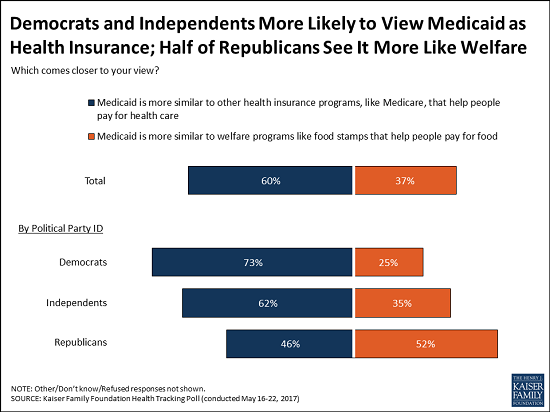
If critics of Trumpcare want to move public opinion, they need to change the image of Medicaid as a handout to lazy, able-bodied adults. In particular, they need to show that many beneficiaries are people with autism and other disabilities.

Some background:

The Kaiser Family Foundation reports on a survey:
When asked whether Medicaid is more similar to other health insurance programs or to welfare programs, more people see Medicaid as health insurance (60%) than welfare (37%). There is a significant partisan divide in these perceptions, with most Democrats and independents viewing Medicaid as health insurance and a narrow majority of Republicans viewing it as welfare.
 medicaidchart2.png


Portland Student Can Go to the UN After All

In The Politics of Autism, I discuss the civil rights of people with autism and other disabilities. 

Grant Butler reports at The Oregonian:
After months of whirlwind emotions, a Portland teen who won a trip to the United Nations, but then had the trip denied because he has autism, has learned that he will be able to go on the trip after all.
Niko Boskovic, 15, finished first in an essay contest sponsored by North Portland's Peninsula Odd Fellows Lodge. As the winner, he was given the opportunity to join 300 other winners from around the world for next month's 10-day United Nations Pilgrimage for Youth in New York City and Washington, DC.
But shortly after winning, Niko's invitation to attend the event was withdrawn by the national board overseeing the trip. After his family worked
with Disability Rights Oregon to advocate for his inclusion, the trip is back on.
"We finally got all the details ironed out this week, and the issues have been resolved between the parties," said Loreta Boskovic, Niko's mom, noting that details of the agreement are confidential.

Tuesday, June 20, 2017

Texas Law on Licensing Behavior Analysts

In The Politics of Autism, I discuss the day-to-day challenges facing autistic people and their families.

Sebastian Herrera reports at The Houston Chronicle:
Specialists who treat children with autism in Texas will soon be required to obtain licenses after Gov. Greg Abbott recently signed an amended version of Senate Bill 589 into law.
The bill, by Sen. Eddie Lucio Jr., D-Brownsville, will require licenses for applied behavior analysts, therapists most known for their treatment of autism. After easily passing in the Texas Senate on May 1, the bill also swiftly passed in the House on May 23 before heading to Abbott's desk.

"Because of the tireless work behind SB 589, our most vulnerable Texans who benefit from applied behavioral intervention - such as children with autism, along with those with developmental, intellectual, and physical disabilities, and with brain injuries - will now be protected by SB 589, which will reduce the probability and the possibility of them being harmed by unqualified practitioners," Lucio Jr. said in a statement.

The bill's supporters have said a law is needed to regulate the profession. Texas has now joined more than 25 other states requiring licenses for behavior analysts.

Monday, June 19, 2017

Police Involvement

In The Politics of Autism, I discuss interactions between police and autistic people.  Police officers need training to respond appropriately.  When they do not, things get out of hand.

At Pacific Standard, David M. Perry explains why schools escalate behavior problems into law enforcement issues.
But schools do punish people when they are panicking, and Sam Crane, an attorney and the director of public policy at the Autistic Self Advocacy Network, is afraid she knows why. Behavior intervention plans, she explains, are part of disability-rights education legislation. Once you have a plan, you have all kinds of added rights as a member of a protected class of American citizen. If you charge someone with a crime, though, schools can skip right past disability law. "Under the IDEA," Crane writes me, "[a] student would be entitled to a manifestation determination, to decide whether his behavior was a manifestation of a disability. There's no such requirement when referring a kid to law enforcement." Crane believes that, around the country, schools are pushing teachers and other staff to press charges.
Ami Tint and colleagues have an article titled "Correlates of Police Involvement Among Adolescents and Adults with Autism Spectrum Disorder" at the Journal of Autism and Developmental Disorders.  The study involved Ontario, Canada. The abstract:
This study aimed to describe police interactions, satisfaction with police engagement, as well as examine correlates of police involvement among 284 adolescents and adults with autism spectrum disorder (ASD) followed over a 12- to 18-month period. Approximately 16% of individuals were reported to have some form of police involvement during the study period. Aggressive behaviors were the primary concern necessitating police involvement. Individuals with police involvement were more likely to be older, have a history of aggression, live outside the family home, and have parents with higher rates of caregiver strain and financial difficulty at baseline. Most parents reported being satisfied to very satisfied with their children’s police encounters. Areas for future research are discussed in relation to prevention planning.
From the article
A history of aggression differentiated individuals who did and who did not interact with police in the observation period. Aggressive behaviors commonly occur in ASD (Kanne and Mazurek 2011; Matson and Rivet 2008; Mazurek et al. 2013), with rates reported to occur in up to 68% of affected individuals at some point in their lives (Lecavalier 2006). These behaviors can result in negative physical, emotional, and financial consequences for family members (Hartley et al. 2012; Hodgetts et al. 2013). Despite a high need and the recognized existence of effective empirically based interventions, there is often a lack of professional knowledge and community-based resources to assist individuals with ASD and their families deal with aggressive behaviors (Hodgetts et al. 2013; White et al. 2012). In the current study, an individual’s history of aggressive behavior, caregiver strain and police contact were associated with each other, further highlighting the need for appropriate community-based family supports

Sunday, June 18, 2017

Pleas on Medicaid and Autism


Tennessee dads recently gathered in Nashville to send a message to Senators Bob Corker and Lamar Alexander. Andy Spears writes at Common Dreams:
The assembled dads each had letters about the importance of Medicaid for their own children.
One of the dads, John Shouse, had this to say:
Senator Alexander, Senator Corker, we gather here today as fathers, with Father’s Day mere hours away, to share with you our concerns with the course of action currently being set in Washington. We are fathers of children with disabilities. We are imploring you to vote to save Medicaid, and the other 'lifeline programs' that are currently facing unprecedented funding cuts. This is a course that, left unchecked, WILL have dire negative consequences for our sons and daughters.
Whether they are young children, or adults trying to find their way in the world now that their school years are over, our sons and daughters face tremendous challenges because of disability. Challenges that most people … even fathers such as yourselves … can hardly imagine.
Shouse spoke of his own experience, having a son with autism who benefits from Medicaid-funded programs.
An autistic person writes The Daily Gazette in Schenectady, New York:
I am 33 years old and I have Aspergers Autism, executive function disorder and I suffer from depression and anxiety.
I’m disabled on Social Security and Medicaid at the moment, I live alone but I get help with transportation and daily chores through an non-for profit called Wildwood.
For most of my adult life, I’ve been unemployed and very depressed. However, in recent years because of therapy, support from wildwood, and my medication I’ve begun to turn my life around. I’m going back to school to earn a culinary degree, I have part-time employment at a local business and am I much happier, healthier person.
Someday I want to get off disability, pay taxes, own a home and run a small business.
However, without my medication and support at moment I can’t do this. These past few years have been the best of my adult life. I can see my goals getting closer and closer to fruition. But if the Trump health care bill goes through, none of this will happen. I will sink back into depression and in action. I need Medicaid and I need the support right now or I will stay in the system forever.

Saturday, June 17, 2017

Medicaid Cuts in Texas, Missouri, and Pennsylvania

In The Politics of Autism, I discuss health care issues and state Medicaid services for people with intellectual and developmental disabilities.

Ashley Lopez reports at KUT-FM:
In a matter of weeks, the U.S. Senate could be voting on a Republican plan to repeal the Affordable Care Act. On Wednesday, 25 health care advocacy groups in Texas sent a letter to Republican Sens. John Cornyn and Ted Cruz raising concerns about the plan.

The groups worry Medicaid per capita caps could be carried over from the House bill, known as the American Health Care Act. For simplicity’s sake, this means spending per person in the Texas Medicaid program could be capped according to how much the state spent in 2016.

Anne Dunkelberg, an associate director with the Center for Public Policy Priorities, said using 2016 Medicare spending as a starting point for what states get could create a lot of problems.
For example, she said, "in 2016 we had axed those [pediatric] rate cuts, and we had many children with developmental delays and disabilities not able to access the services they need.”
In addition, Texas hadn’t effectively made lifesaving hepatitis C treatments available last year in the Medicaid program. Behavioral therapies, which are often used by children with autism, also weren’t rolled into the program by 2016.
Kate Kasper writes at The St. Louis Post-Dispatch:
According to the Center on Budget and Policy Priorities, 602,000 children in Missouri get their health care through Medicaid. This means that two out of five kids in our state are able to see a doctor when they are sick, get vaccinations and important screenings they need to stay healthy. The AHCA’s Medicaid provisions would make it especially hard for children with special health care needs, including those with disabilities, to get the care they need to stay healthy, remain in their communities, and succeed in life. Medicaid is a lifeline for children with disabilities and their families, serving 40 percent of all children in America with special health care needs such as autism.
Alecia Deal, a community health worker in St. Louis and mother of three, relies on this lifeline for her 14-year-old autistic son. Without Medicaid, her son would not be able to receive therapy of any kind, psychiatric treatment or medications. In fact, he would be unable to attend his school for children with special needs because Medicaid pays for that as well.
Steve Tawa reports at KYW-AM:
Pennsylvania U.S. Senator Bob Casey says the bill could trigger major cuts to Medicaid. The School District of Philadelphia, for example, could lose more than $11 million, and all told, Casey says Medicaid funding for the Commonwealth could be cut $135 million.
“None of those dollars should ever be at risk because a group of extreme ideologues in Washington think they have a better way to do this,” said Casey
He waved a letter he received from Pamela Simpson of Coatesville, whose 5-year-old son, Rowan, is diagnosed with Autism Spectrum Disorder, and ADHT. She shared her family’s story, with Rowan in tow.

“We measure success with tiny things that most parents take for granted,” said Simpson. “Will my child be able to use the bathroom by himself? Will be he able to tell us what he did at school today? Will he be able to use a spoon? Those therapies are crucial to help us answer questions like this, with the answer, yes!”

Simpson points out without Medicaid benefits, occupational, physical, and speech therapy, and medication would be inaccessible for her young son.

In Casey’s words, this is “about our basic values, and we’re better than that.”